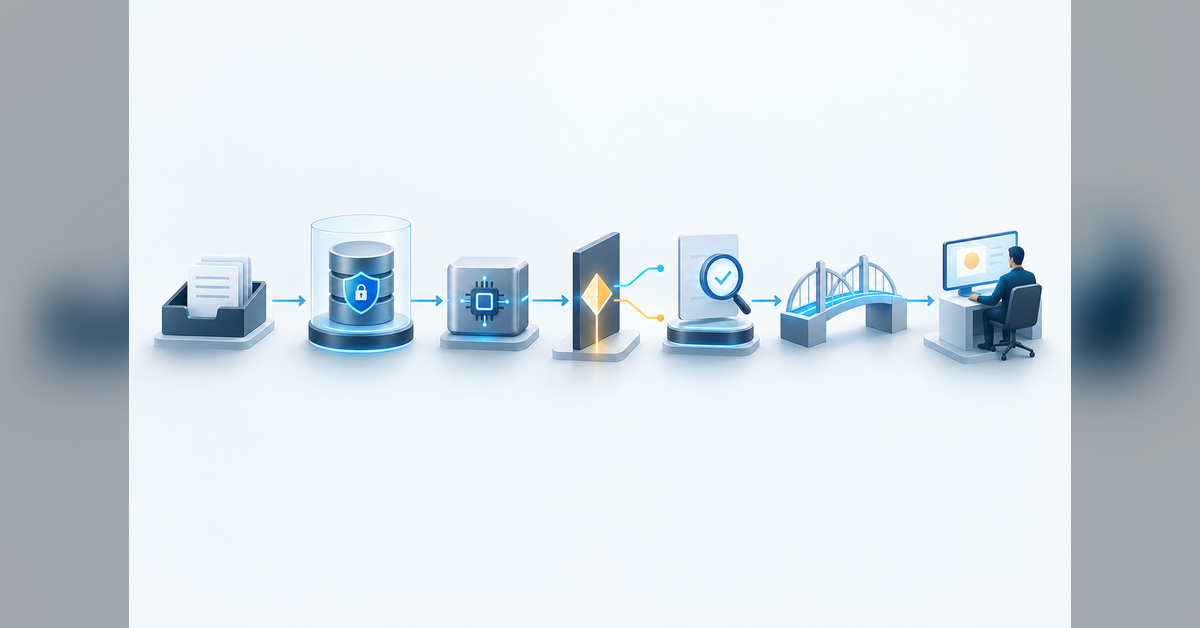

Agentic AI development services should be bought around a defined job, permitted actions and a named human owner—not the most impressive demo. If your starting point is AI marketing agents, use that business context to choose a bounded workflow before comparing build proposals.
A useful proposal makes the handoff explicit: what the system can read, what it can change, how you will test it and who responds when it fails. Before requesting estimates, use the acceptance matrix below to write your pass-or-stop criteria.
What are agentic AI development services?
Agentic AI development services design, integrate, test and support systems that use models and tools to carry out a defined workflow. The engagement should specify data access, action permissions, human approvals, evaluation criteria and operating ownership. Autonomy is a scoped design choice, not permission to act without boundaries.
What should agentic AI development services deliver?
A development engagement should leave you with a testable operating process, not just a conversational interface. The scope should connect a business outcome to working integrations, permission boundaries, acceptance evidence and a support handoff. Ask to see those deliverables in the proposal before choosing a framework or committing to a larger rollout.
- Workflow specification: the trigger, required inputs, intended output, exclusions and accountable business owner.
- Integration scope: named systems, permitted fields, authentication responsibilities and actions the system may take.
- Acceptance package: representative cases, failure cases, release thresholds and retained test results.
- Operational handoff: monitoring, escalation, recovery instructions and responsibility for changes.
- Exit materials: agreed access to code, configuration, evaluation cases and exportable operational records.
For revenue-facing work, translate “improve follow-up” into an observable handoff: an appropriate inquiry reaches the right person with enough context to respond. Percepture’s guide to AI agents in RevOps provides a related ownership lens. Keep the business result separate from the technical event that precedes it: creating a task is not the same as creating a qualified opportunity.
Choose the smallest system that can do the job
Start with the decision the workflow actually requires. If inputs and routing rules are stable, specify deterministic automation first. If the job is one bounded interpretation or drafting step, evaluate a single model call. Add agentic behavior only where choosing a next step or using tools serves the task.
Ask a prospective builder to show the simplest viable design alongside the proposed agent design. Compare what each can complete, where each needs a person and what additional coordination you would have to maintain. “More agents” is not an acceptance criterion.
Use Microsoft’s agent design-pattern guidance and the AWS agentic AI pattern framework as architecture references when discussing those choices. Bring the conversation back to your workflow: which design is sufficient, and what evidence will demonstrate that?
Outcome-to-Operation: a Percepture scoping framework
Use this planning sequence to turn an operational problem into a proposal you can evaluate. Each step should produce a concrete decision or artifact.
- Defined job: write the trigger, desired result and excluded decisions.
- Source permissions: identify the records and fields the system may read.
- Minimum viable architecture: choose rules, a model call or an agent workflow.
- Action contract: define allowed inputs, approvals and external changes.
- Evaluation: specify test cases and release thresholds.
- Controlled rollout: agree review stages, pause conditions and rollback.
- Ongoing owner: name the people responsible for incidents and changes.
Keep this brief small enough that the business owner, IT lead and delivery partner can explain the same workflow. If you later need repeatable delivery across several workflows, use the AI agent factory discussion to examine what should be reusable and what still needs workflow-specific testing.
Separate source access from permission to act
A system’s ability to read a record should not imply permission to change it. Specify access and actions separately: which identity is used, which fields are available, which changes are allowed and which decisions require human approval. Put these boundaries in the implementation scope, not only in a prompt.
For example, an inquiry-triage workflow might read a service description and selected account fields while being prohibited from changing account ownership, exporting records or sending a message. A person can approve the next action without granting the system broader access.
Use an agentic AI governance framework to organize approval rights, escalation and accountability. The difference between bot governance and AI agent governance is also worth addressing in the proposal: review not just fixed rules, but the boundaries around a system’s choice of tools and next steps.
Include a negative requirement alongside each permission. “May draft a response” should be paired with “must not send it without approval” when that is the agreed boundary.
Require tool contracts and durable task state
Before adding more agents, ask the builder to define how each external action is requested, validated and recorded. A tool contract should describe accepted fields, authorization, approval requirements, timeout handling and the evidence that an action completed. Task state should distinguish a suggestion from an approved, attempted or completed action.
Do not accept “the agent remembers” as the recovery plan. Require a durable record that an operator can inspect after interruption. Establish what happens when a tool rejects a field, an approval expires or an external service returns an ambiguous response.
Keep retrieved material separate from action authority. A document or incoming message may provide context, but it should not grant new permissions or bypass an approval. Test that boundary with deliberately conflicting instructions in sample inputs.
Write acceptance tests before accepting the build
Agree what passes before implementation begins. The test set should represent ordinary work, missing information, forbidden actions and interrupted execution. Record the workload, input conditions and thresholds so that a polished demonstration cannot substitute for evidence under the conditions your team will actually operate.
| Criterion | Test to request | Release evidence |
|---|---|---|
| Task success | Run agreed normal and edge cases against expected outcomes. | Case-level results, including exceptions—not just an aggregate score. |
| Factual grounding | Provide supported, missing and conflicting source information. | Traceable source use and the agreed handling of unavailable answers. |
| Permission boundaries | Attempt an out-of-scope read or action. | Denied access or blocked execution, with an inspectable record. |
| Input validation | Submit malformed fields and disallowed destinations. | Rejection or safe escalation before an external change. |
| Duplicate prevention | Replay an event and simulate a timeout after an action request. | Action history, deduplication behavior and reconciliation of uncertain outcomes. |
| Latency and cost | Run the agreed workload, including retries and human review. | Measured completion times and operating usage against contracted thresholds. |
| Handoff and recovery | Interrupt execution and transfer the task to its human owner. | A usable queue, sufficient context and a demonstrated recovery procedure. |
Choose thresholds with the process owner. Set firm gates for prohibited actions, then define acceptable performance for the remaining cases. Record which version of the model, instructions, tools and source configuration produced the results.
For a deeper operational discussion, see AI agent reliability. Re-run the relevant tests when changing a model, permission, integration or workflow rule; an earlier acceptance result should not stand in for testing a changed system.
Worked example: authorized B2B inquiry triage
Consider an illustrative workflow for a company receiving business inquiries. Its job is to prepare a routing recommendation and an internal follow-up task. A human owns the relationship and approves the action. This example describes a design to evaluate, not a deployed client system or a measured result.
- Receive the inquiry. Assign a stable inquiry identifier and collect only the fields required for routing.
- Retrieve permitted context. Read approved service information and the account fields included in the access scope.
- Prepare a recommendation. Classify the need, identify missing information and draft a reason for the proposed handoff.
- Validate the proposed action. Check required fields, allowed destinations and the applicable approval rule.
- Obtain approval. Show the recommendation and supporting context to the designated person before creating the task.
- Record and reconcile execution. Associate the approved action with a stable idempotency key and retain its status and external identifier.
Now introduce the failure case: the task-creation request times out after the CRM may have accepted it. The workflow should reconcile the external result before blindly retrying. Require the builder to demonstrate action-level deduplication, including concurrent attempts, and explain what happens if the destination cannot safely resolve the uncertainty.
An internal status record alone is not enough evidence that the external change did or did not happen. Route unresolved cases to a person with the information needed to investigate.
This is where CRM lead routing and AI sales agents become relevant business discussions. Measure correct routing and usable human handoff separately from later qualification and revenue.
Compare delivery models by ownership, not presentation
Compare agentic AI development services by who owns process design, engineering, deployment and ongoing support. An agency-led engagement, an engineering specialist and a managed platform can represent different purchasing models. The table below compares responsibilities to investigate, not tested provider performance or a ranked supplier list.
| Model | Buyer fit | Scope and boundaries | Implementation owner | Evidence to request | Proposal question |
|---|---|---|---|---|---|
| Percepture: business and marketing workflow approach | Marketing or RevOps buyers starting with a customer-facing process and human handoffs. | Request business scoping, content requirements and handoff design; specify technical build responsibilities explicitly. | Name Percepture, internal IT and any engineering partner by responsibility. | A workflow brief, permission map and acceptance plan relevant to the proposed job. | Which design, build and support responsibilities are included in this engagement? |
| Engineering specialist | Buyers whose procurement centers on custom software and integration requirements. | Specify application code, integration work, deployment, tests and documentation. | Name the supplier’s technical lead and your internal system owner. | Relevant implementation artifacts and a recovery demonstration. | Who owns production incidents and changes after handover? |
| Managed platform | Buyers evaluating a product configuration rather than an entirely custom build. | Check supported actions, configuration limits, export options and additional services. | Allocate responsibilities between the platform, configurator and internal administrator. | Documentation and a demonstration using the intended workflow. | What remains our responsibility when a workflow fails or we leave? |
For Percepture’s published service context, review its AI systems and omnichannel marketing pages together. Use the proposal—not a broad service description—to establish the integrations, engineering work and support actually included.
Budget for operations and a clean exit
The price of agentic AI development services should be evaluated alongside the cost of running, reviewing and maintaining the workflow. Request separate assumptions for discovery, implementation, model usage, infrastructure, human review, support and change work. Compare proposals using the same workload and risk boundaries.
The AI agent development cost guide is a useful companion for organizing those questions. Ask how retries, unusually large inputs, evaluation runs and integration changes enter the operating budget. Establish who can pause spending and who approves a scope increase.
Roll out in stages: inspect recommendations before allowing approved actions, limit the initial workload and keep a documented stop procedure. Name both a business owner for process decisions and a technical owner for service health. Include coverage hours, escalation channels and recovery responsibilities in the agreement.
Monitoring means observing behavior and handling alerts. Optimization means changing the workflow and testing whether the change improves the agreed outcome. Budget for both without treating an alert dashboard as a maintenance plan. Before signing, also agree how to export records, revoke credentials and transfer ownership.
Keep public-answer visibility separate from agent performance
If the engagement also covers how your business appears in AI answers, scope that as a separate marketing workstream. Prime AI Visibility, a Percepture product, belongs in that visibility discussion—not in the acceptance test for whether a CRM action completed.
Review how Prime AI Visibility works before agreeing coverage. Specify which saved answers you will review, what page action a finding might justify and when to recheck. A brand mention, a source citation, a site visit and a qualified opportunity are different events. Report them separately.
Questions buyers ask before commissioning a workflow
How is agentic development different from a chatbot?
A chatbot describes a conversational interface; an agentic workflow concerns how a system chooses steps and uses tools to complete a task. The categories can overlap. Evaluate the proposed actions, retained task state and approval boundaries rather than relying on the label.
Do we need multiple agents?
Not by default. Ask what separate responsibility each agent serves and how coordination will be tested. If rules or a single model call can meet the acceptance criteria, require a clear reason before purchasing a more complex design.
What should an engagement deliver?
Specify workflow design, in-scope integrations, permission boundaries, acceptance tests, operating documentation and ownership. Include access to the agreed code, configuration and evaluation materials. Distinguish a discovery engagement or prototype from a contract that includes production implementation and support.
How much do agentic AI development services cost?
Request a scoped estimate rather than a generic range. Define the workflow, integrations, action risk, expected workload and support requirements first. Ask suppliers to separate initial implementation from model usage, infrastructure, human review, maintenance and incident coverage.
How do we prevent duplicate actions?
Require stable action identifiers, durable state, action-level idempotency and reconciliation of uncertain external results. Test replays, concurrent requests and timeouts after submission. If the destination cannot safely resolve an uncertain action, define a human investigation path instead of an automatic retry.
Who maintains the system?
The contract should name the business owner, technical operator and support provider. Assign monitoring, incident response, permission changes, integration maintenance and regression testing. State what is covered, when support is available and how responsibilities transfer if the engagement ends.
About Bob Generale

Bob Generale is President of Percepture, a global digital marketing, public relations and AI systems agency established in 2004. His work connects search strategy, digital PR, useful content and conversion planning around the questions buyers need answered. Bob’s approach starts with understanding the audience, learning how the business actually works and turning that expertise into clear explanations people can use. He advocates practical frameworks, coordinated execution and measurement that separates visibility from qualified opportunities and revenue. Prime AI Visibility is a Percepture product, reflecting his interest in making AI search insights actionable for marketing teams. In this article, he brings that operator perspective to evaluating options, clarifying tradeoffs and helping readers decide what to do next.