HVAC keywords are the words and questions people use to find heating, cooling, ventilation, maintenance, repair, installation, equipment, cost information and local contractors. Effective research groups those searches by intent, service, market, urgency, buyer and page purpose before assigning them to SEO, PPC, content, Maps or AI-search work.
A raw keyword list is not a keyword strategy. The job is to decide which demand the company should pursue, which page or channel should own it, what evidence the buyer will require and how the result will be measured.
See how Percepture turns technical knowledge into visible demand
OPTK Networks works in fiber, telecom and data-center markets where buyers expect clear technical proof. This case study shows how Percepture connects expert knowledge, search visibility and a practical conversion path. It is not presented as an HVAC result or a promise that every campaign will move at the same speed.

OPTK Networks
“They understand the technical side, but they also understand how to make the market care.”
Cody Clegg on Percepture’s ability to connect technical expertise with market visibility.
Search strategy works better when the market context is understood
Percepture has worked across construction, telecom, data centers, staffing and complex B2B markets since 2004. That experience helps the team separate useful demand from keywords that look attractive but do not fit the business.





What are HVAC keywords?
HVAC keywords are search queries connected to heating, cooling and ventilation needs. A useful strategy classifies each query by meaning and business fit, then maps it to one canonical page, campaign or exclusion instead of treating every phrase as a separate content idea.
The operating view
Start with business reality
Document the services, markets, equipment, buyers, availability and capacity the company can support before prioritizing HVAC search terms.
Group meaning, not spelling
Related heating and cooling search queries can share a page when the same buyer, proof, service and action satisfy them.
Choose the right surface
Organic search, local results, paid search, video and AI answers serve different moments in the buying journey.
Measure completed outcomes
Rankings and clicks are early signals. The operating review should continue through qualified contacts, bookings and completed work.
Who this guide is for
Owners and executives
Use the keyword clusters map to focus marketing on demand the company can serve and measure.
Marketing teams
Assign ownership for search demand across SEO, paid media, local search, content, PR and AI visibility.
Operations and sales
Apply territory, capacity, lead quality and job-outcome data before expanding demand around target queries.
Multi-location operators
Separate shared authority from local proof when assigning service-related searches so acquired brands and locations do not publish duplicate assets.
Why an HVAC keyword list is not a strategy
Competitor pages commonly lead with lists of dozens or hundreds of HVAC keywords. Lists can supply ideas, but they often mix repair demand, product research, jobs, training, DIY questions, residential service and commercial buying activity.
The best term is not always the one with the largest estimated volume. HVAC search terms must match a legitimate service, a serviceable market, a suitable page, available proof, a conversion path and current operating capacity. That is also why an integrated strategy and planning process should come before page production.
What the supplied dataset reveals about HVAC keywords
The supplied July 21, 2026 export contains 136 rows. It is a research input, not a complete view of homeowner, facility-manager or property-manager demand.
| Dataset finding | Rows | Operating implication |
|---|---|---|
| Total exported rows | 136 | Preserve the raw file before editing. |
| Zero reported volume | 84 | Do not interpret a tool’s zero as proof of no demand. |
| No intent label | 117 | Classify intent before clustering or publishing. |
| No difficulty value | 118 | Treat the field as unknown rather than zero. |
| No SERP-feature data | 117 | Review live result types before choosing an asset. |
| Brand or company-specific rows | About 50 | Separate brand demand from general service demand. |
The file also contains duplicates, near-duplicates and heating and cooling search queries unrelated to practical demand. Its main lesson is methodological: exported data must pass through relevance, intent, SERP and business-fit decisions before it becomes a plan.

The Percepture HVAC Search Demand Chessboard
The HVAC Search Demand Chessboard turns HVAC keywords into seven connected decisions. Each board produces an operating output that the next board can use.
Business Reality
record offered and excluded services, residential or commercial focus, equipment, territory, availability, capacity, margins, seasonality and financing. Output: Search Demand Eligibility Rules.
Searcher Intent
classify emergency, scheduled, commercial, informational, comparison, local, brand, employment, DIY and no-fit demand. Output: Intent Classification Register.
Query Anatomy
tag action, service, symptom, equipment, buyer, property, location, timing, economics and approved brands. Output: Query-Component Matrix.
SERP and Channel
inspect organic pages, local results, ads, video, questions and AI answer surfaces. Output: Search-Surface Decision.
Canonical Asset
improve, merge, create, test, monitor or exclude. Output: Keyword-to-URL Map.
Priority Score
score fit, urgency, serviceability, capacity, opportunity, authority, proof and measurement. Output: Keyword-to-Job Priority Score.
Outcome Loop
follow visibility through qualified contacts, bookings, dispatches, completed jobs and business value where reliable data exists. Output: Keyword-to-Job Performance Review.
Find the gaps in your HVAC keyword map
Bring your service list, markets, current pages and keyword export. KeywordIQ™ helps organize the terms by intent, business fit and the next action.
- See which keyword clusters deserve a page
- Find terms that belong in paid search or exclusions
- Connect priority keywords to measurable business outcomes
Build the research source stack
Keyword tools estimate demand. First-party systems show which keyword clusters real prospects typed, clicked and discussed. Use both, but give operating evidence more weight when the two disagree.
| Source | What it contributes | Main caution |
|---|---|---|
| Search Console | Queries, landing pages, impressions, clicks and positions | It covers existing visibility, not the whole market. |
| Paid-search terms | Actual queries that triggered ads and conversion signals | Match settings and campaign structure affect the sample. |
| Calls, forms and chats | Buyer language, urgency, objections and fit | Protect personal and customer information. |
| CRM and job records | Lead status, booking, completion and value fields | Attribution depends on consistent source capture. |
| Keyword platforms | Ideas, estimated volume, difficulty and bid context | Estimates are not guaranteed outcomes. |
| Live search results | Dominant page types, features and competing intent | Results vary by time, market, device and user context. |
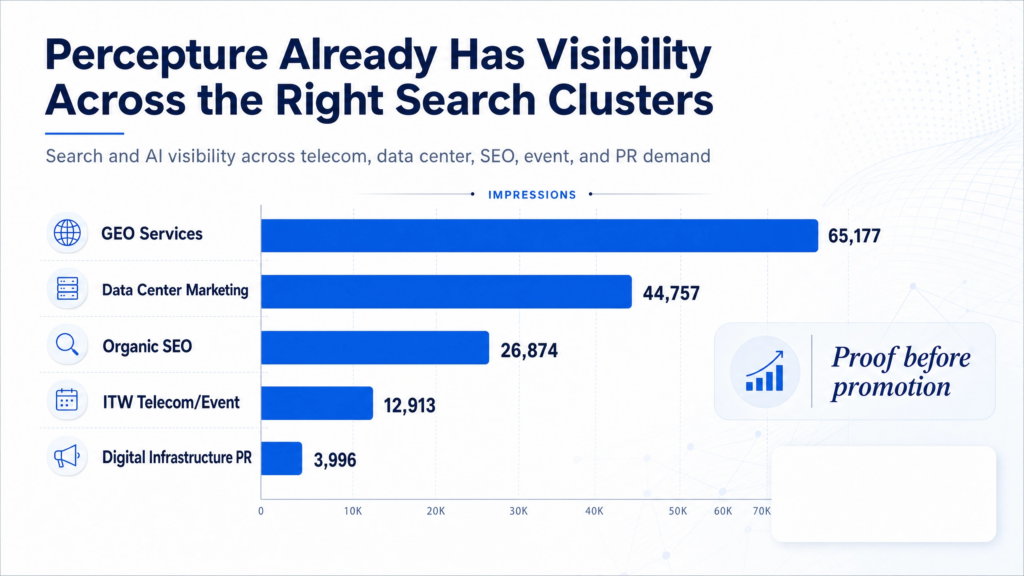
Percepture’s supplied Search Console data from March 24 through June 22, 2026 shows why search demand should be organized into query families. Individual pages can receive impressions from several close variants with different wording. That evidence supports intent clustering as a method, but it is not presented as HVAC-client performance.
Clean HVAC keywords before clustering
A repeatable normalization process
- Preserve: save the raw export with its source and collection date.
- Normalize: clean capitalization, spacing, punctuation, singular and plural forms, and obvious spelling variants.
- Qualify: tag service, problem, equipment, buyer, location, timing, intent, brand status and business fit.
- Inspect: compare live result overlap before merging near-duplicates.
- Decide: improve, merge, create, test, monitor or exclude each cluster.
Preserve meaningful differences among target queries. Repair and replacement often lead to different services and calls to action. Residential and commercial searches may require different proof. A missing metric is unknown, not zero. A term with zero reported volume can still reflect a specific and valuable question.
The main HVAC keyword categories
| Category | Representative query | Likely asset |
|---|---|---|
| Emergency and repair | AC not cooling | Urgent service page, local visibility and paid search |
| Installation and replacement | Heat pump installation | Service page, comparison guide and landing page |
| Maintenance | HVAC maintenance agreement | Maintenance or membership page |
| Problem and symptom | Frozen coil | Problem guide linked to the relevant service |
| Equipment and system | Mini-split repair | Equipment or service page |
| Cost and comparison | Repair versus replace | Dated decision guide with assumptions |
| Local discovery | AC repair in a named city | Service page, legitimate local proof and Business Profile support |
| Commercial | Commercial HVAC maintenance | Commercial solution or property-type page |
| Brand and model | Approved equipment brand plus service | Relevant section only when support can be stated accurately |
| Seasonal information | AC tune-up before summer | Seasonal article, video or campaign |
| Employment and education | HVAC technician salary | Career content or paid-search exclusion |
| DIY, parts and no-fit | Used HVAC parts | Educational content when useful, otherwise exclude |
Map HVAC keywords by intent, buyer stage and query anatomy
Intent explains what the searcher is trying to accomplish. Query anatomy explains the parts of the request. Together, they help teams understand service-related searches used before a person is ready to call, during active comparison and at the moment service is required.
| Intent | Buyer signal | Typical response |
|---|---|---|
| Emergency transactional | An urgent problem and immediate service need | Fast service path, local proof and clear call option |
| Scheduled transactional | A planned repair, tune-up or installation | Service details, availability and next step |
| Commercial investigation | Vendor, contract, system or property evaluation | Technical scope, process, proof and buying-committee support |
| Problem diagnosis | A symptom without a chosen solution | Safe explanation and route to the correct service |
| Cost or comparison | Budgeting or choice evaluation | Assumptions, tradeoffs and a commercial path |
| Local discovery | A provider is wanted in a specific area | Serviceability, local evidence and location relevance |
| Employment or education | A career or training goal | Career destination or campaign exclusion |
| No-fit or ambiguous | Meaning or business fit is unclear | Investigate, monitor or exclude |
Bob Generale’s approach looks beyond exact-match wording. KeywordIQ™ supports a semantic and intent-led view of HVAC search terms: identify the entities, problems, actions and audience behind the query, then match that meaning to the right information and conversion path. This helps a company address early research without forcing every early question onto a sales page.
Use an intent-to-asset map
| Keyword cluster | Intent | Stage | Canonical asset | Secondary channel | CTA | Required proof | Measurement |
|---|---|---|---|---|---|---|---|
| Broad service plus market | Local hiring | Action | Service page | Local search | Request service | Serviceability and local evidence | Qualified contacts and bookings |
| Urgent repair | Emergency | Action | Urgent service page | Paid search | Call now | Availability and scope | Answered calls and dispatches |
| Cost or comparison | Commercial research | Consideration | Decision guide | Video | Discuss options | Dated assumptions | Assisted inquiries |
| Symptom or question | Diagnosis | Awareness | Problem guide | AI answers | Find the service | Safe expert explanation | Engaged visits and service clicks |
| Equipment plus action | Service research | Consideration | Equipment or service page | Paid search | Check service fit | Supported systems and experience | Qualified inquiries |
| Commercial property type | Vendor evaluation | Consideration | Commercial solution page | Digital PR | Review requirements | Technical process and relevant proof | Opportunities and completed work |
| Jobs or training | Employment | Other | Career page | Paid negative | View careers | Accurate role information | Career actions |
| DIY or parts | Educational or product | Awareness | Existing article or exclusion | Paid negative | Read safe guidance | Safety boundaries | Relevant engagement |
One intent cluster should have one canonical URL
heating and cooling search queries belong together when the same buyer would accept the same answer, the live results substantially overlap and the service, market, proof and conversion action are the same. Minor word order, pluralization and conversational rephrasing are rarely reasons to create another page.
| Cluster on one page | Use separate pages |
|---|---|
| Singular and plural forms | Repair versus installation |
| Minor word-order changes | Residential versus materially different commercial intent |
| Close synonyms with overlapping results | Hiring intent versus cost research |
| Conversational versions of the same question | Distinct equipment requiring specialist evidence |
| Terms sharing service, proof and CTA | Legitimate local markets with unique evidence |
Before assigning keyword clusters to a new URL, audit the existing site. A technical SEO audit service can identify indexation, canonical and internal-link problems, while enterprise SEO governance helps larger portfolios control ownership across brands and locations.
Allocate search demand across SEO, Maps, PPC, content, PR and AI
The same search demand may inform several channels, but each cluster still needs a primary owner. A shared map keeps editorial work, paid search and landing-page development from competing against one another.
| Channel | Best use | Operating link | Main measure |
|---|---|---|---|
| Organic SEO | Durable, repeatable demand with a clear canonical asset | Organic SEO services | Qualified organic actions |
| Local search | Proximity-led provider discovery | Service and location evidence | Calls, direction actions and bookings |
| Paid search | Immediate demand, testing and seasonal pressure | Paid search management | Qualified conversion cost |
| Content and video | Questions, symptoms, costs, comparisons and maintenance education | Content marketing | Assisted service actions |
| Digital PR | Original data, expert commentary and authority topics | Digital PR | Relevant coverage and referral activity |
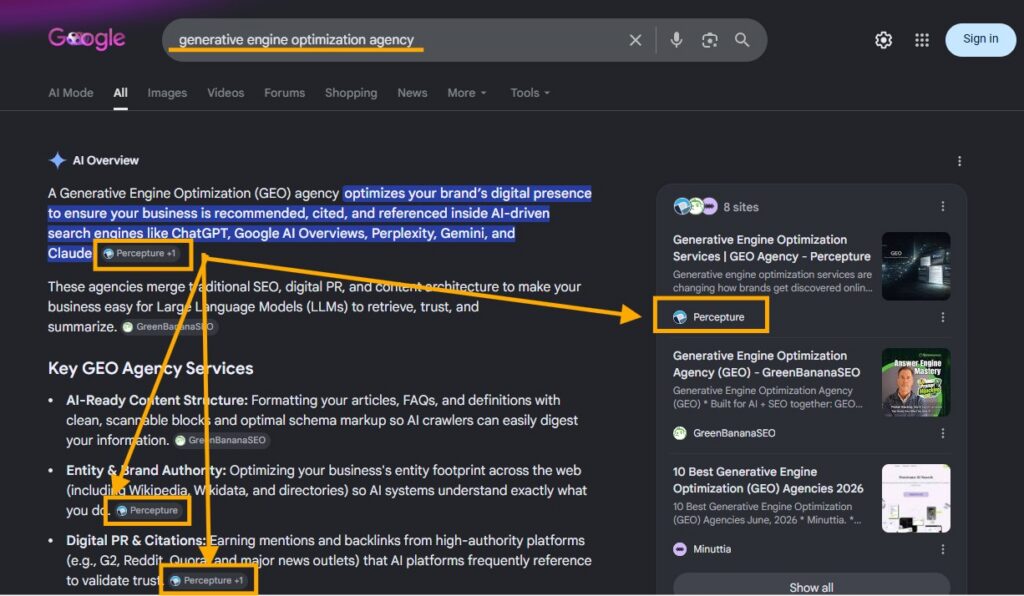
| AI search | Conversational questions, recommendations and comparisons | Generative engine optimization services | Answer visibility and qualified referrals |
| Omnichannel | Coordinated search, content, media and conversion journeys | Omnichannel marketing | Cross-channel contribution |
HVAC keywords comparison framework: page, campaign or exclusion?
| Decision | Choose it when | Cost or risk consideration |
|---|---|---|
| Improve an existing page | The intent already has a suitable owner | Usually reduces duplication and protects existing signals. |
| Merge pages | Several URLs compete for the same practical intent | Requires redirect, internal-link and content review. |
| Create a page | A distinct serviceable intent lacks a satisfying asset | Requires proof, maintenance and a conversion path. |
| Test with paid media | Demand is urgent or commercial value is still uncertain | Budget should include landing-page and search-term review. |
| Add a section | The term expands an existing topic without changing intent | Avoids thin pages but may require clearer navigation. |
| Monitor | Demand or business fit is uncertain | Creates a review obligation without immediate production. |
| Exclude | The business cannot serve the intent | Protects paid budget and topical focus. |
Investment in target queries depends on the number of markets, existing assets, technical condition, proof requirements and channel scope. Review current SEO pricing packages rather than using search volume or CPC as a budget verdict.
Separate paid negatives from organic decisions
Jobs, salary, school, DIY, parts, wholesale, free, used and out-of-area service-related searches often require paid-search exclusions. They should not be blocked blindly. A safe educational question can still support organic discovery even when the same theme wastes ad spend.
| Query type | Paid-search decision | Organic decision |
|---|---|---|
| Jobs, careers and salary | Exclude from service campaigns | Route to a career page if one exists |
| School and certification | Usually exclude | Publish only when education supports the business |
| DIY and manuals | Review or exclude | Answer safe questions with clear professional boundaries |
| Parts, wholesale and used equipment | Exclude when unsupported | Avoid unless products are part of the offer |
| Out-of-area markets | Exclude | Do not create location pages without serviceability |
| Unsupported services | Exclude | Do not target for traffic alone |
A disciplined media buying program should review search terms continually. The organic team should receive the same findings because poor-fit paid queries can expose unclear page language and missing audience distinctions.
Residential and commercial keyword maps are different
Residential HVAC search terms often center on symptoms, urgency, household cost, comfort and nearby service. Commercial HVAC search terms can add property type, system complexity, procurement, reliability, maintenance agreements and multiple decision-makers.
| Dimension | Residential example | Commercial example |
|---|---|---|
| Problem | AC running but not cooling | Rooftop unit reliability issue |
| Buyer | Homeowner | Facility or property manager |
| Timing | Same-day comfort need | Planned service window or incident response |
| Proof | Service area, process and customer reassurance | Technical scope, reporting and property relevance |
| Asset | Repair or problem page | Commercial solution or vertical page |
| Outcome | Booked residential visit | Qualified commercial opportunity |
Commercial operators can also use lessons from SEO for construction companies, especially where technical services, long buying cycles and multiple stakeholders shape search demand.
Govern local and multi-location demand
Do not multiply every service by every city when assigning heating and cooling search queries. A location page should reflect a real operating market and offer useful evidence that differs from the national or regional service page.
Multi-location groups need a central taxonomy for services, equipment, audience and intent. Shared educational topics can sit at the brand level. Local pages should own legitimate serviceability and market evidence. Acquisitions should be reviewed before inherited pages are merged, redirected or expanded.
Adjust HVAC keywords for seasonality and capacity
Monthly operating review
- Compare heating and cooling seasons by climate and market.
- Review maintenance windows, storms, freezes, smoke and heat events.
- Check technician, call-center and installation capacity.
- Review inventory, financing availability and service margins.
- Align commercial campaigns with budget and contract-renewal cycles.
- Pause or lower priorities the company cannot answer, dispatch or fulfill.
High-opportunity keyword clusters can be poor choices this month. Marketing should not create demand the field team cannot support. Owners, marketing, sales and operations should review the same calendar.
Score HVAC keywords with the 100-point priority model
| Factor | Maximum points | Question |
|---|---|---|
| Service and revenue fit | 20 | Does the query match work the company wants? |
| Intent and urgency | 15 | How close is the searcher to a useful action? |
| Market and serviceability | 15 | Can the company serve the location and buyer? |
| Capacity and timing | 10 | Can the team support added demand now? |
| Search-result opportunity | 10 | Is there a realistic content or channel opening? |
| Existing authority | 10 | Does the site already have relevant visibility and links? |
| Available experience and proof | 10 | Can the company support its answer credibly? |
| Conversion and measurement | 10 | Is there a clear action and outcome trail? |
80 to 100: build or improve now. 65 to 79: place in the next wave. 50 to 64: test, strengthen proof or use paid media first. Below 50: monitor, merge, exclude or deprioritize. Apply the same scoring standard to all search demand under review.
See the right scope for your HVAC keyword plan
Compare focused sprint, ongoing SEO, AI visibility, content and paid-search options before choosing a program.
- Match the service to the size of the problem
- See what is included before work begins
- Choose a clear starting point without overbuying
Turn the score into an editorial and campaign calendar
Give every approved cluster of target queries an owner, canonical URL, primary channel, secondary channel, required proof, CTA, launch date and review date. Sequence work around seasonal lead time rather than publishing after demand has already peaked.
Use monthly reviews for paid search terms, negatives, call quality and capacity. Use quarterly reviews to refresh Search Console data, inspect changing result types, re-score service-related searches and merge weak assets. Rebuild the taxonomy after major service, market, acquisition or brand changes.
Expand HVAC keywords into AI-search prompts
Short terms and conversational prompts should share the same entities and intent map. They do not need identical titles. Expand a seed into the questions a person asks before, during and after vendor comparison.
- Seed: commercial HVAC maintenance. Prompt: Which maintenance providers serve multi-location facilities in a named market, and what should a facility manager compare?
- Seed: heat pump installation cost. Prompt: What affects installation cost in a named market, and when should a buyer compare a heat pump with a furnace?
- Seed: AC not cooling. Prompt: What can a homeowner check safely, and when should a technician be called?
The content answer should define the problem, identify relevant entities, explain tradeoffs and route the reader to an appropriate next step. Percepture’s AI-search optimization services extend this mapping into answer-engine visibility and entity clarity.
Measure the full keyword-to-job path
Rankings alone do not show whether HVAC search terms produce useful demand. Connect query and landing-page data with call, form, CRM and completed-work fields only when those systems are configured consistently.
| Stage | Example measure | Decision it supports |
|---|---|---|
| Visibility | Impressions, result type and answer presence | Can the market find the asset? |
| Interaction | Clicks, calls and service-page actions | Does the result attract the intended buyer? |
| Qualification | Service, market, buyer and urgency fit | Is the inquiry relevant? |
| Booking | Scheduled appointment or accepted meeting | Can the team convert the inquiry? |
| Dispatch or opportunity | Field dispatch or qualified commercial opportunity | Did the lead enter operations or sales? |
| Completion | Completed job or closed engagement | Did the demand become delivered work? |
| Economics | Revenue or gross profit when reliable | Should the cluster receive more investment? |
Attribution and analytics can organize this handoff, while conversion rate optimization addresses page and journey friction after the correct audience arrives.
Common keyword planning mistakes
- Publishing an uncleaned export as a strategy.
- Treating estimated volume as exact market size.
- Treating missing data as zero.
- Selecting heating and cooling search queries by volume or CPC alone.
- Creating one page for every phrase or city-service combination.
- Mixing residential and commercial intent without distinct proof.
- Ignoring existing pages and current rankings.
- Using an organic list as a paid-search structure without negative review.
- Targeting services, equipment or locations the company cannot support.
- Counting calls or bookings as completed revenue.
- Publishing private search-term, call, CRM or customer data.
- Guaranteeing rankings, leads, bookings or AI citations.
When should an HVAC company hire an agency?
Consider outside help when ownership of keyword clusters is unclear, several vendors manage disconnected channels, local and corporate teams compete, or reporting stops at traffic. A useful partner should connect research, technical decisions, content, paid search, conversion and measurement without creating duplicate pages.
An SEO Sprint can address a defined search problem, while broader programs may require strategy, content, paid media and analytics working from one map. The scope should match the number of markets, assets and decision-makers involved.
Why Percepture uses a decision system
Method before volume
Percepture connects the semantics and intent of search demand with business reality. The team uses query data, page ownership, search-surface review, proof requirements and conversion paths to decide whether a cluster should be improved, merged, created, tested, monitored or excluded.
The supplied Search Console period also demonstrates a broader method: one strong page can earn visibility across a family of closely related queries. That supports topic systems and canonical ownership instead of thin pages for every variation. It does not establish HVAC-client results.
Readers evaluating broader search governance can also review Percepture’s explanation of corporate SEO.
Proof that search visibility can support qualified demand
Broadstaff Global recruits across telecom, wireless, data-center and infrastructure markets. The case study shows how specialized market knowledge, search visibility and a clear conversion path can work together. It is included as transferable B2B proof, not as an HVAC performance claim.

Frequently asked questions
What are HVAC keywords?
HVAC keywords are the queries people use to research heating, cooling, ventilation, repair, installation, maintenance, equipment, costs and contractors. A useful keyword plan groups them by intent, service, buyer, market and page purpose before choosing SEO, local search, paid media, content or AI-answer tactics.
What are the best keywords for an HVAC company?
The best HVAC keywords match services the company wants to sell, markets it can serve and demand it can fulfill. Search volume can help size an opportunity, but it should not override urgency, capacity, proof, conversion quality or completed-work data.
How do I find HVAC keywords?
Start with Search Console, paid-search terms, calls, forms, CRM notes, customer questions and technician interviews. Add target queries from keyword platforms and live search results. Clean the combined file, classify intent, check result overlap and score business fit before creating pages.
Should every HVAC keyword have its own page?
No. Close variants should share one canonical page when the same buyer, service, evidence and action satisfy them. Separate pages are more appropriate when repair and installation, residential and commercial, cost and hiring, or materially different equipment intents require distinct answers.
Can a zero-volume keyword still be useful?
Yes. Zero reported volume for service-related searches means a tool did not report measurable demand. It does not prove nobody searches the phrase. A specific query can still reveal a valuable problem, commercial need, seasonal event or AI-style question when first-party data and business fit support it.
What are negative keywords for HVAC paid search?
Common negative candidates among HVAC search terms include jobs, salary, school, certification, DIY, manuals, parts, wholesale, used products, unsupported services and out-of-area locations. Review each term before blocking it because a paid negative can still support useful organic education.
How do HVAC keywords become AI-search prompts?
Expand the seed term into a natural question containing the same service, problem, buyer, location and decision intent. Then answer the question clearly, explain tradeoffs, identify relevant entities and provide a sensible next step. The prompt and page title do not need identical wording.
How often should HVAC keyword research be updated?
Review paid-search terms, lead quality, seasonality and capacity monthly. Refresh major heating and cooling search queries, result types, AI prompts and priority scores quarterly. Rebuild the taxonomy after a new service, acquisition, rebrand, market expansion or major operational change.
How do HVAC companies rank for competitive keywords?
Start with a technically sound site, one clear page for each distinct intent cluster, useful local or commercial proof, strong internal links, expert content and relevant third-party authority. Rankings are not guaranteed, so measure progress through qualified traffic, calls, bookings and completed work.
Should HVAC companies use SEO or PPC for high-value keywords?
Use SEO for durable demand that deserves a permanent page and paid search for immediate demand, testing, seasonality or markets where visibility is needed now. The strongest plan assigns each keyword cluster a primary channel and prevents SEO and PPC from working against each other.

Want a clearer plan for your HVAC keywords?
We can review your services, markets, existing pages, paid-search terms and AI-search questions. You will leave with a simple list of what to improve, create, test or exclude.
Schedule a Call