
AI agent latency is the elapsed time between a user’s request and the completion of the task the agent was asked to perform. That time can include network transport, model inference, retrieval, tool execution and retries. A fast ping measures only one part of that journey.
Before buying more bandwidth or a different connection, identify where the agent runs and which dependent step keeps the task waiting. Buy against that bottleneck, not a dashboard number.
What is AI agent latency?
Start by choosing a finish line. For a research assistant, completion might mean delivering a sourced answer. For an operational agent, it might mean successfully updating a record and confirming the change. The first visible response and the completed business task are different milestones.
Time to first token measures how long it takes to receive the first generated token from a model, using a defined request boundary. It does not measure the time required to generate the rest of the response or finish downstream actions. Record whether your timer begins at the browser, the agent runtime or the model request.
Set a task-completion target alongside any responsiveness target. Otherwise, a streaming response can look faster while the underlying action still takes just as long.
Where does agent execution time go?
Break the trace into work the agent performs and time it spends waiting. Useful categories include:
- User-to-agent transport: the request and response path between the user’s application and the agent runtime.
- Runtime startup and orchestration: initialization, dispatch and coordination between steps.
- Model calls: request preparation, provider response and generation, with provider-side detail where available.
- Retrieval: searching, fetching and preparing information the agent needs.
- Tool execution: application, database or external service calls.
- Recovery: timeouts, backoff, retries and repeated work.
Do not label an entire model API span “inference.” Unless the provider exposes finer measurements, that span can contain transport and other waiting time as well as generation.
Use nested spans to avoid double-counting. A parent task includes its child operations; overlapping operations should not be added as though they ran one after another. Your AI agent latency breakdown should explain the wall-clock task duration, not produce a larger total from overlapping timers.
How parallel and serial calls affect completion
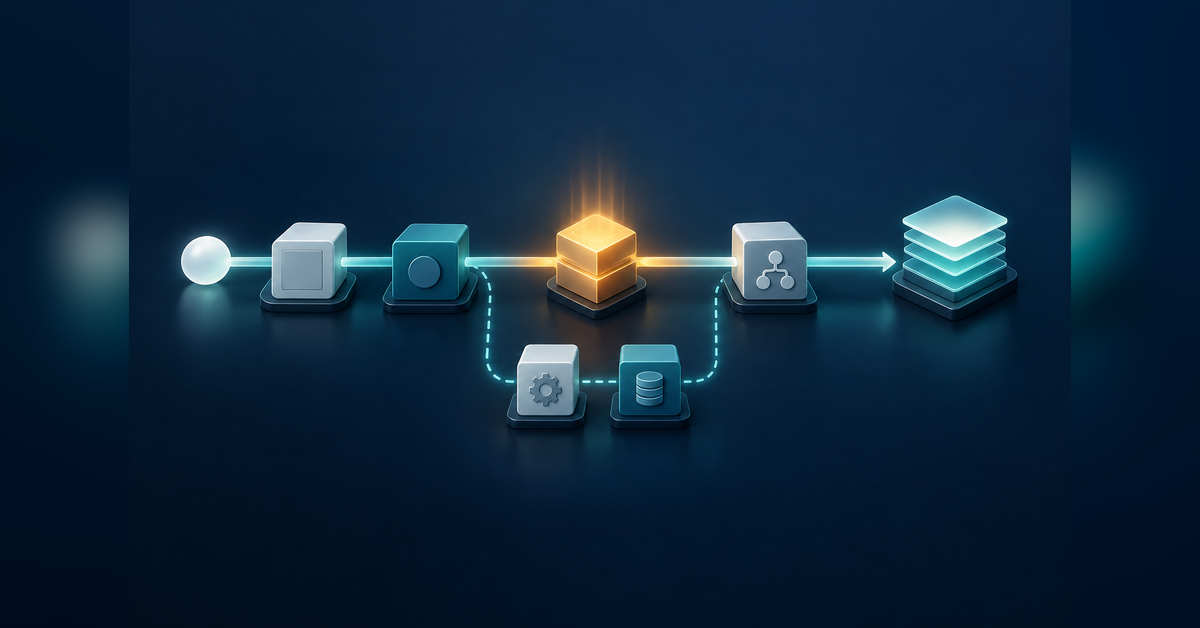
The critical path is the chain of dependent work that determines when the task can finish. Removing time from work outside that path may not move completion at all.
Consider a hypothetical agent that must retrieve two independent records before making a decision. If the lookups take two and three seconds, serial execution takes five seconds for those lookups. Parallel execution could reduce that stage to roughly three seconds, assuming neither lookup slows the other and coordination overhead is negligible.
But an inventory check and an order submission are not independent if the order requires the inventory result. Running dependent actions together changes the workflow rather than simply accelerating it.
Use these questions before introducing concurrency:
- Does either call require the other’s output?
- Could the calls change the same state or create conflicting side effects?
- Will shared capacity or rate limits make concurrent execution counterproductive?
- Does the task need every result, or can it safely proceed with fewer?
Use AWS’s Agentic AI execution-path guidance as an implementation reference for dependency and parallelization decisions. Measure the completed workflow after changing it, including correctness and failure behavior.
Map the runtime before changing the network
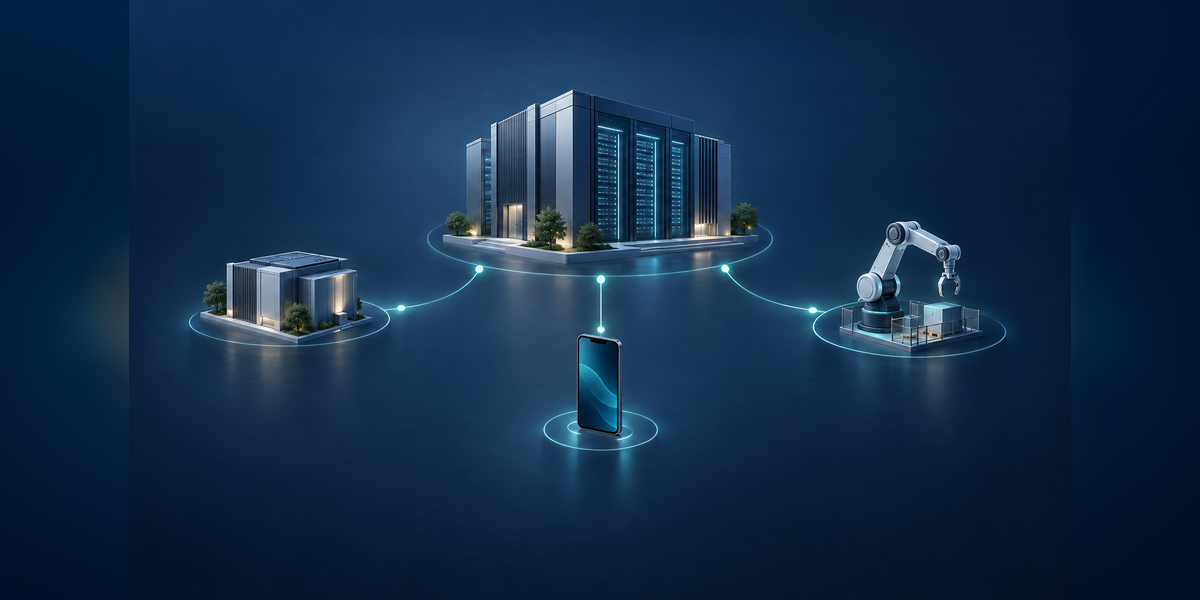
The agent’s execution location determines which network paths matter. Draw the user application, agent runtime, model endpoint, retrieval system and tools. Mark the actual regions or sites where known, plus public and private boundaries.
If the agent runs in a cloud environment, its calls to a model or database may not traverse the office connection. Improving that office circuit would not directly shorten those cloud-originated calls. It could still help the user-to-agent leg if that leg is the bottleneck.
If the runtime is on premises and repeatedly accesses remote tools, those outbound paths deserve separate measurements. The user’s browser location alone does not identify them.
For a broader topology review, keep Percepture’s AI network infrastructure guide alongside the application map. Teams using AgentCore can also reference AWS’s AgentCore Runtime networking patterns when reviewing that deployment’s connectivity.
Measure ping, API response and completed tasks separately
Each timer answers a different question. Record its starting point, destination, protocol and completion event before comparing results.
| Measurement | What it measures | What it does not establish |
|---|---|---|
| ICMP round-trip time | Elapsed time for an ICMP probe and reply between a particular origin and responding destination. | Model generation time, tool execution or completed task speed. |
| DNS and connection setup | Name resolution and connection establishment, with TLS measured separately where applicable. | The duration of application processing after setup. |
| Time to first byte | Time until the first response byte, using the chosen client timer boundary. | Complete response delivery or successful completion of the requested action. |
| Time to first token | Time until the first generated model token is received. | Full generation time, later tool calls or final task completion. |
| Full API response | Elapsed time until the API response is received in full. | Whether subsequent agent work or business actions have finished. |
| End-to-end task duration | Elapsed time from the defined user request to the defined successful business result. | The cause of a delay without supporting traces. |
What Stealth measures
Stealth’s live network latency dashboard presents ICMP measurements from its New York City vantage point to public endpoints. Treat those as network observations for that origin and those destinations, not measurements of model inference or your agent’s completed task.
A public destination may terminate at a CDN edge. Its response does not establish the location of the model backend. Nor does a fast response from that endpoint explain how long an authenticated application request will take.
This is why AI agents can remain slow with fast ping: retrieval, generation, dependent tools or retries can still dominate the task. Use low-latency networking for AI as a separate workstream when your application traces point to transport.
Keep retries inside the user’s stopwatch
Measure an entire task from its original request, not just the successful final attempt. Log attempt count, timeout duration and backoff within that trace. Otherwise, the reported successful-call duration can hide the wait the user experienced.
The p95 is the 95th-percentile duration for the population you measured. Define that population: task type, time window, concurrency and outcome. Report failures and timeouts separately rather than silently excluding them from the performance picture.
Retries can lengthen the slow tail when they affect tasks in that part of the distribution. Inspect those traces directly. Do not add component p95 values and present the sum as end-to-end p95.
Percepture’s Agent Critical-Path Audit
Use this editorial method to turn a latency complaint into a decision with an owner and a test.
- Trace
- Choose one representative business task and capture its dependent operations, attempts and completion event.
- Locate
- Map the runtime, model, data and tools. Identify which path each remote call actually uses.
- Measure
- Separate transport, application waiting, execution and recovery where instrumentation permits. Keep overlapping spans distinct.
- Assign
- Give the limiting step an accountable owner: application, model configuration, data platform, external service or network.
- Intervene
- Choose one change with a plausible causal connection to that step and an explicit success condition.
- Retest
- Repeat comparable tasks and compare completion time, correctness, failures and cost.
Keep credentials, access tokens and sensitive request payloads out of shared diagnostic exports. The decision record needs timing and dependency evidence, not unrestricted production data.
“Before improving the route, find out which part of the task actually takes it.”
Bob Generale, President of Percepture
Choose the intervention that matches the delay
A useful AI agent latency diagnosis should narrow the purchase decision. Ask what evidence would justify each intervention and what result would disprove it.
| Trace finding | Intervention to evaluate | Retest requirement |
|---|---|---|
| Independent calls run serially | Dependency-safe parallel execution. | Shorter task completion without conflicting actions or increased errors. |
| Model calls dominate the critical path | Fewer calls, different model configuration or shorter required output. | Completed task speed alongside output quality and cost. |
| Retrieval dominates | Query, index or data-placement changes; caching where freshness permits. | Retrieval duration plus answer relevance and freshness. |
| A tool repeatedly times out | Tool reliability, timeout and retry-policy changes. | Whole-task duration, attempt count and failure rate. |
| Startup dominates cold requests | Runtime initialization or lifecycle changes. | Cold and warm request cohorts reported separately. |
| Transport dominates the relevant path | Routing, placement, connection reuse or connectivity changes. | The same application task over the changed path, not ping alone. |
Calculate the improvement ceiling before spending
Consider a hypothetical 10-second critical path containing 0.2 seconds of transport time that a proposed change could remove completely. Holding every other component fixed, the maximum theoretical saving is 0.2 ÷ 10 = 2%. The task would still take 9.8 seconds.
That is a bound for this example, not a prediction for a real deployment. If transport problems also cause retries or timeouts, measure that additional contribution before estimating the opportunity. Do not treat a dashboard RTT as the removable share of your task.
The same discipline applies to bandwidth. Higher capacity is worth testing when transfer volume or congestion is delaying the relevant path. It does not, by itself, remove model generation or a slow database operation.
When to evaluate dedicated connectivity
Evaluate dedicated connectivity when your evidence identifies a material network contribution on a path the proposed service would actually change. Start with the runtime-to-resource map, not the office address or the name of the AI platform.
Percepture’s cloud on-ramp connectivity guide is a relevant next resource when that path crosses into a cloud environment. A connection to the cloud is not evidence of a private connection to every downstream model or tool.
Before approving a purchase, ask for a written scope covering:
- The path: exact endpoints, participating sites and the traffic that would use the service.
- The hypothesis: which measured delay the change is expected to address.
- The acceptance test: comparable completed tasks, including slow-tail behavior, errors and correctness.
- The commercial exposure: installation, recurring charges, equipment, applicable data-transfer charges, term commitments and exit conditions.
Compare the total commitment with the measured opportunity. A service-level commitment for a network segment is not a guarantee of end-to-end agent completion time.
The buying question is not whether a connection is faster in isolation. It is whether changing that connection removes enough delay from the agent’s critical path to justify the cost.