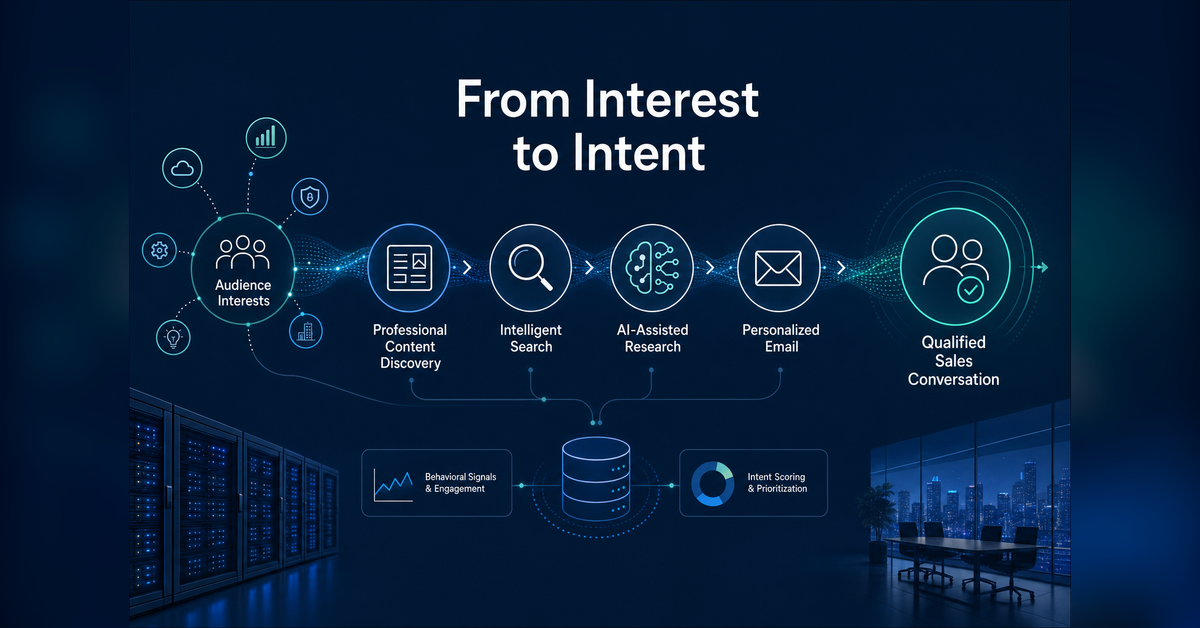

If you are asking What Is Interest Media?, the direct answer is that platforms can introduce content using signals about a person’s interests and behavior, not only the accounts that person follows. That creates a wider path to discovery, but it raises the standard for relevance, substance, and proof.
The social graph did not disappear. An interest graph was added on top. Relationships, followers, recognizable experts, search visibility, email, earned credibility, and a useful next step still determine whether the first moment of attention becomes trust or qualified demand.




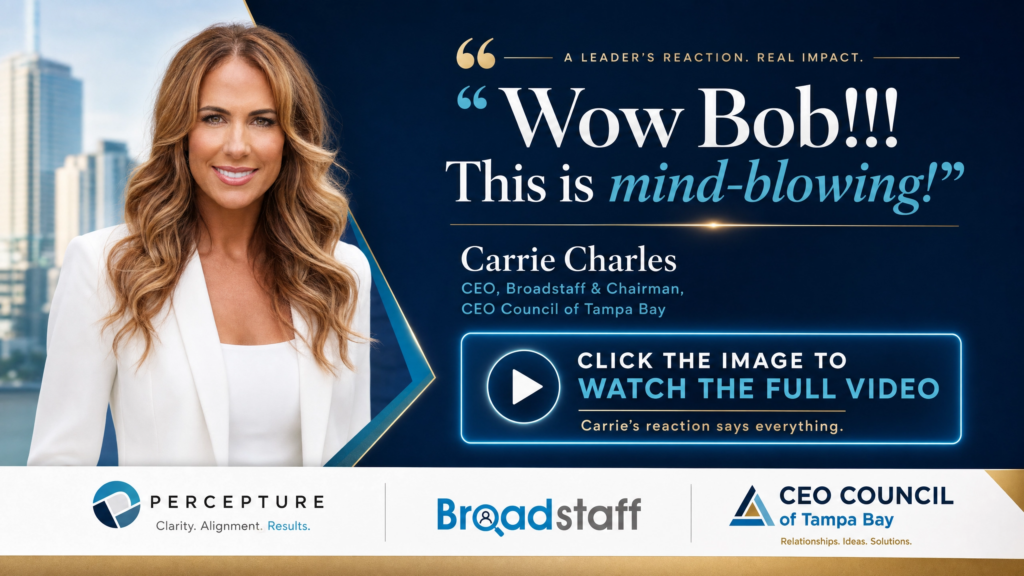
See how Percepture connected technical B2B expertise, search visibility, market credibility, and qualified lead generation in the Broadstaff Global case study.
What is changing in content distribution?
The answer to What Is Interest Media? is a distribution model in which platforms recommend content using signals about a person’s interests and behavior, not only direct social connections. It expands the opportunity to reach qualified non-followers, but the brand still needs substance, authority, owned proof, and a conversion path after the recommendation earns attention.
Executive summary
The operating change
A brand can reach people beyond its follower base when a platform sees a strong match between the content, subject, behavior, and viewer.
What did not change
Trust, community, repeat exposure, factual accuracy, brand recognition, and conversion design still determine whether discovery creates business value.
The buyer question
The real issue is not whether a post reached more people. It is whether the right people stayed, verified the source, and moved toward a useful next action.
The Percepture position
Content, social, search, GEO, PR, paid media, email, analytics, and lead routing should reinforce one buyer story instead of operating as unrelated channel calendars.
Who this guide is for
CEOs and owners
Use the guide to separate a meaningful distribution shift from another label for reach. The commercial question is whether attention can move into trust, demand, and a measurable next step.
CMOs and content leaders
Use it to align social, video, search, email, digital PR, paid media, experts, and conversion around a defined audience and buyer concern.
Sales leaders
Use it to define useful engagement, how interest becomes an identifiable signal, and what context sales receives when a buyer takes action.
Technical-market leaders
Use it to separate distinct interests around power, cooling, connectivity, construction, financing, staffing, community engagement, cybersecurity, compliance, or other complex decisions.
What Is Interest Media? Start by separating three meanings
Searchers do not always mean the same thing. A useful definition must distinguish the content model from organizations with similar names.
| Meaning | What it describes | Likely intent | Correct next step |
|---|---|---|---|
| Interest media as a model | Content discovery based on interests and behavior as well as social relationships | Understand how feeds and brand distribution are changing | Build a content, trust, and conversion strategy |
| Active Interest Media | An enthusiast publishing company | Find information about that publisher | Use the company’s official channels |
| Interest Media | A separate customer-acquisition company | Find or evaluate that organization | Use the company’s official channels |
This guide focuses on the first meaning: the recommendation and content-distribution model. Percepture is not affiliated with either similarly named organization.
The social graph and interest graph work together
The social graph connects people through accounts, followers, colleagues, friends, creators, and communities. The interest graph connects a person with subjects and content that appear relevant to current behavior or established preferences.
Treating one graph as the replacement for the other creates a weak plan. A recommendation may produce the first view. A familiar expert, colleague’s engagement, prior exposure, trusted company, or useful search result may make the viewer stay.
| Decision area | Social-graph emphasis | Interest-graph emphasis | Brand response |
|---|---|---|---|
| Initial distribution | Followers and network connections | People likely to care about the topic | Plan for relevant followers and qualified non-followers |
| Content test | Will the community engage? | Will the right viewer stop and continue? | Lead with one clear problem or payoff |
| Authority | Built through relationships and repetition | Inferred from relevance, response, and source quality | Connect content to experts, proof, and owned pages |
| Measurement | Follower growth and community response | Qualified reach, retention, and action | Measure relationship and intent signals together |
| Primary risk | Publishing only for the existing audience | Chasing reach without trust or conversion | Build discovery and capture into one system |
How major platforms fit an interest-led strategy
A brand should not copy the same asset everywhere and expect equal results. Each platform gives the viewer a different reason to stop, stay, search, comment, subscribe, or leave.
LinkedIn is useful when a topic can be tied to a job, industry, operating problem, professional decision, or trusted expert. Technical points should be written for the role that needs the information.
YouTube
YouTube supports recommendation-led discovery and deliberate search. A useful video can continue working when it answers a durable question and leads viewers to a deeper owned resource.
TikTok and Instagram
Short-form formats put pressure on the opening. The viewer needs an immediate reason to stop, but the remainder must deliver the promised value rather than reward only the hook.
Facebook and X
These networks combine relationships, communities, current events, discussion, and suggested content. The editorial plan should reflect the audience’s reason for using the platform.
Percepture’s guide to reducing platform dependence explains why reach on one network should not become the whole audience strategy.
Is your reach producing qualified interest?
Examine whether traffic and campaign response are moving toward useful sales actions before increasing content volume or paid reach.
Run a Lead Quality DiagnosticInspect company relevance, researched topics, contact quality, and the next action rather than reporting reach alone.
What followers still do for a brand
Followers create a base for repeat exposure. They can provide early feedback, referrals, comments, shares, recognition, and community participation. In a long B2B buying cycle, repeated contact can be more valuable than one large spike in anonymous views.
A technical company also needs continuity. Engineers, operators, investors, partners, stakeholders, candidates, and prospective customers may care about different subjects. A follower relationship gives the brand more chances to connect those interests to one coherent position.
What changed for brand content teams
“Post about the company” is not a useful assignment. The team needs one audience, one concern, one promise, one proof source, and one next step.
- Start with buyer signals. Use sales questions, search terms, account priorities, campaign response, and customer conversations to identify subjects with business relevance.
- Match one asset to one interest. A broad corporate message is harder to classify and easier to skip than a focused answer.
- Make the opening specific. State the problem, consequence, finding, or payoff before spending time on context.
- Deliver the promised value. A strong opening that leads to weak substance may create a view but not trust.
- Connect discovery to proof. Send the viewer to an expert page, useful article, case study, search result, pricing page, or clear service explanation.
- Offer a stage-matched action. A first-time viewer may want a checklist. An active buyer may want scope, pricing, or a working session.
- Feed sales outcomes back into editorial planning. Qualified conversations should influence what the team explains next.
This work is stronger when supported by an integrated content marketing strategy, an omnichannel marketing plan, and clear marketing strategy and planning.
The Interest-to-Intent Trust Engine
The six-stage methodology turns algorithmic discovery into a trusted relationship, an owned audience path, and a qualified next action.
- 1Buyer Signal
Find the topics, problems, roles, search terms, behaviors, and moments that reveal what the buyer cares about now.
- 2Content Match
Create one useful asset for one clear interest. Adapt the format to the platform without changing the factual core.
- 3Hook and Hold
Earn the opening seconds, deliver the promised value, and measure attention quality instead of views alone.
- 4Trust Transfer
Move attention into experts, useful pages, case studies, media coverage, search results, and clear brand signals.
- 5Intent Capture
Offer a next step matched to the buyer’s stage and route that action into a controlled sales or audience workflow.
- 6Learn and Scale
Connect content, campaign, lead, and sales data. Improve the message and expand the work that produces qualified action.
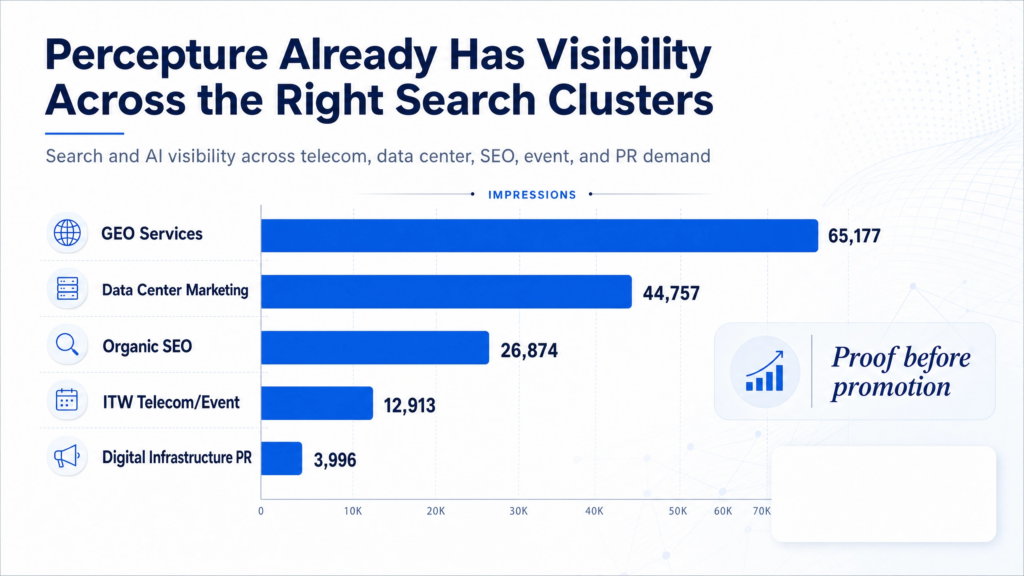
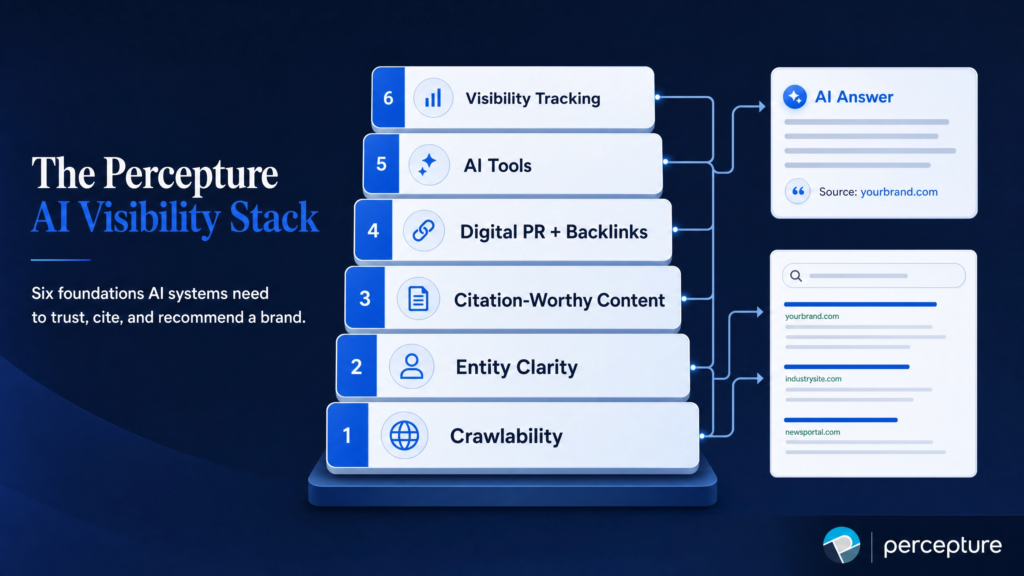
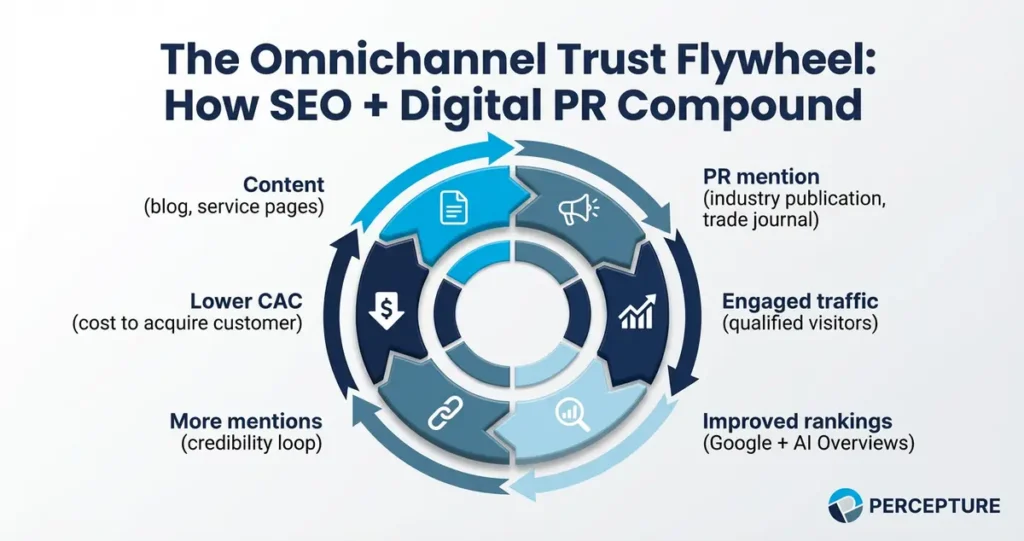
Search captures people who can already name a problem. Generative engine optimization services help structure clear explanations for AI-assisted discovery. Digital PR adds third-party credibility, while email marketing preserves the relationship after a platform makes the introduction.
Conversion rate optimization closes the loop by improving proof, friction, CTA clarity, and the next buyer decision instead of treating the click as the result.
A seven-step implementation plan
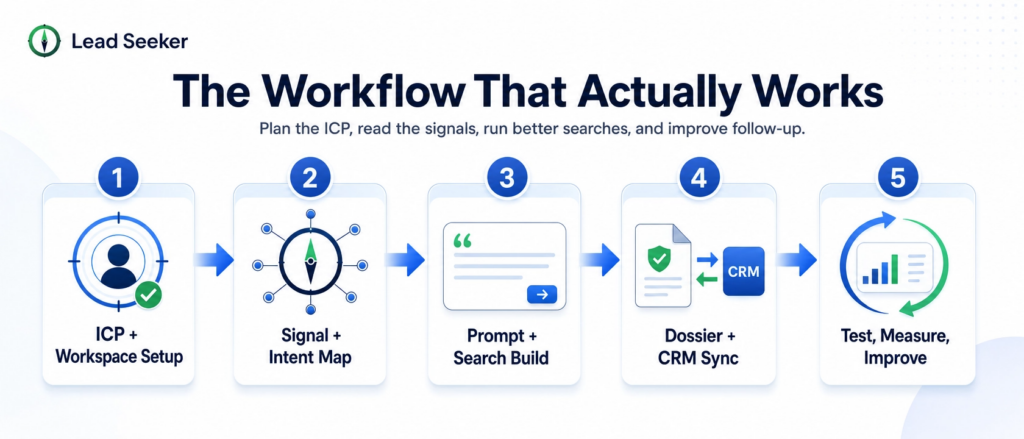
- Choose a commercial audience. Define the role, company type, buying situation, and problem. Broad labels hide different evidence needs.
- Build an interest map. Group recurring questions around the decisions the audience must make.
- Assign an expert and proof source. Decide who can speak credibly, what the company can show, and which claims require review.
- Create a platform-specific asset. Use the same factual core but adapt the opening, length, format, and detail to the viewing context.
- Build the trust path. Connect the post to a useful page, supporting article, expert, case study, or service.
- Define conversion and routing. Decide whether the action is a subscription, assessment, pricing visit, meeting, or sales handoff.
- Review at 30, 60, and 90 days. Compare reach, attention, site behavior, lead quality, opportunities, and sales feedback before scaling.
Applying interest media in data center and technical marketing
Data center companies often serve several expert audiences at once. A capital partner may care about financing structures and contracted demand. An enterprise buyer may care about uptime, connectivity, security, and deployment. A community stakeholder may care about land, water, energy, jobs, and local impact.
One generic corporate video cannot answer every concern. A stronger program creates separate assets around the interests of investors, customers, partners, candidates, operators, and communities while maintaining consistent facts, terminology, and positioning.
Relevant examples include Percepture’s articles on data center financing structures and data center community engagement. A broader digital infrastructure PR strategy can align technical content with executive visibility and stakeholder trust.
Buyer-fit diagnostic
Use an interest-led program when
Buyers have distinct technical concerns, the follower base reaches only part of the market, and the team can support content with credible experts and useful proof.
Strengthen owned media first when
You can attract attention but have no useful landing pages, email path, CRM routing, sales follow-up, or permission-based way to continue the relationship.
Fix positioning first when
The organization cannot explain who it serves, which problem it solves, or why its evidence is stronger than a general claim.
Add paid support when
The audience, message, proof, landing path, and measurement are clear enough to justify controlled amplification.
What a managed interest media program includes
A managed program should reduce fragmented work without becoming a black box. The client and agency need clear owners, inputs, review stages, publishing rules, measurement, and escalation paths.
- Audience, topic, and buyer-signal research
- Editorial strategy and a working content calendar
- Copywriting and creative coordination
- Platform and format planning
- Technical or executive review workflows
- Publishing or scheduling scope defined by package
- Paid amplification when separately scoped
- Landing-page and conversion coordination
- Reporting tied to qualified action
- Regular decisions about what to stop, improve, or scale
Percepture can connect that work with paid social strategy, intent-driven paid search, and attribution and analytics.
Interest media pricing and scope comparison
For buyers asking What Is Interest Media? from a budgeting standpoint, Percepture’s public social media packages begin at $2,500 per month. The listed package levels are Launch at $2,500 per month, Growth at $4,000 per month, Authority at $6,500 per month, and Enterprise at $10,000 or more per month.
| Package | Starting monthly price | Published summary | Best evaluation question |
|---|---|---|---|
| Launch | $2,500 | Foundational strategy, monthly calendar, 8 posts, 1 channel, copywriting, and basic creative coordination | Can one focused channel validate the audience and message? |
| Growth | $4,000 | Ongoing strategy, monthly calendar, 12 posts, 2 channels, and expanded coordination and management | Do two channels serve distinct parts of the buyer journey? |
| Authority | $6,500 | Advanced strategy, 20 posts, 3 channels, and stronger content output, reach, and management | Is the organization ready for sustained expert-led production? |
| Enterprise | $10,000+ | Custom channels, content volume, approvals, reporting, governance, and paid support | What governance and integration does a complex program require? |
Channel count, content volume, media spend, video production, community management, approval complexity, reporting, and governance can affect total cost. Review the current social media pricing packages and broader Percepture pricing options before comparing scope.
Compare the operating system, not only the post count
Review strategy, expertise, content development, channel roles, approvals, media, owned pages, lead routing, reporting, and sales feedback before selecting a package.
Evidence that discovery must connect to outcomes
Percepture’s supplied proof spans enterprise video, organic social reach, complex B2B lead generation, and social conversion work. Autodesk generated more than 20 million YouTube views through video-led content. A tourism program produced 92,000 in organic reach.
For Kame, Percepture reports more than 59,000 social interactions and approximately 1.65 million people reached. For a life sciences brand, Percepture reports fivefold growth in social conversions over six months and 220% traffic growth. The public Broadstaff Global case study says qualified leads tripled.
Broadstaff: visibility, trust, and qualified B2B demand
Broadstaff is an adjacent complex-B2B example rather than proof that every interest-media program will produce the same result. Its relevance is the operating connection between expert content, search visibility, market credibility, and qualified demand.
Search-visible authority
The program organized technical market expertise into pages and proof that buyers could find, understand, and use during evaluation.
Qualified demand
The supplied public case study reports that qualified leads tripled during the case-study period.
Common mistakes to avoid
- Declaring followers irrelevant. Recommendation-led reach is an added path, not permission to neglect the audience and relationships already earned.
- Making content for the algorithm instead of the buyer. Start with the decision the buyer faces, then shape the asset for the platform.
- Using a strong hook with a weak payoff. The opening must accurately represent what follows.
- Sending every viewer to the same CTA. Match the next action to the viewer’s level of intent.
- Stopping measurement at impressions. Track site behavior, return visits, subscriptions, meetings, lead fit, opportunities, and sales feedback.
- Ignoring technical review. Data center, telecom, healthcare, life sciences, and other technical markets require factual review.
A practical 90-day operating plan
Build the foundation
Choose one buyer group and three to five priority interests. Inventory experts, evidence, pages, videos, and case studies. Define channel roles, approval owners, baseline measures, and landing paths.
Publish and test
Produce focused assets around the approved interest map. Test openings, formats, expert voices, and calls to action. Connect posts with useful owned resources and sales follow-up.
Improve and scale
Compare qualified attention with raw reach. Expand subjects that attract the right roles and actions. Stop activity without useful response and add paid distribution only where the message is proven.
A 90-day test creates enough structure to learn without committing to endless production. It defines the audience, content hypothesis, trust path, conversion point, and review cycle.
Frequently asked questions
What Is Interest Media?
Interest media is a content-distribution model in which platforms recommend content using signals about a person’s interests and behavior, not only the accounts that person follows or direct social connections. It expands non-follower discovery, but brands still need recognizable experts, useful proof, owned resources, and a clear next step.
Is interest media replacing social media?
No. Interest-led recommendations expand social distribution rather than eliminate the social graph. Followers, communities, professional relationships, comments, referrals, and repeat exposure still shape recognition and trust after a platform introduces the content.
Do follower counts still matter?
Follower counts can indicate audience size, but relevance and relationship quality matter more than the number alone. Followers can support repeat exposure, feedback, referrals, community participation, branded search, and later conversion. Evaluate them with qualified reach, retention, site behavior, and business actions.
How should a B2B brand start using interest media?
Start with one buyer group and three to five high-value concerns. Assign a credible expert and proof source to each topic, create platform-appropriate assets, and connect every asset to a useful owned page. Review attention quality, lead fit, and sales feedback before increasing production.
How long does an interest media program take to evaluate?
A 90-day initial cycle provides practical checkpoints. The first 30 days establish audiences, topics, experts, workflows, landing paths, and baselines. The next 30 test content, hooks, formats, and calls to action. The final 30 compare qualified attention, site behavior, lead quality, and sales feedback.
What does an interest media program cost?
Percepture’s published social media packages begin at $2,500 per month, with additional listed levels at $4,000, $6,500, and $10,000 or more. Total cost can vary with channels, content volume, video, media spend, community management, approvals, governance, reporting, and related services.
How does interest media support search and AI visibility?
Interest-led distribution reveals which questions, experts, and messages hold qualified attention. Those findings can inform durable website content with definitions, evidence, entities, comparisons, and expert context. Search and AI visibility then give buyers another route to find and verify the brand.
Which metrics matter most?
Track qualified reach, retention, repeat exposure, branded search, site visits, subscriptions, pricing views, assessments, meetings, lead fit, opportunities, pipeline influence, and sales feedback. Views and impressions help diagnose distribution, but they are not the final business result.
How should a technical company use interest-led content?
Separate the audiences and decisions. Investors, operators, customers, partners, candidates, regulators, and community stakeholders may care about different facts. Create focused assets for each interest while keeping terminology, evidence, risk language, and company positioning consistent.
What is the Interest-to-Intent Trust Engine?
The Interest-to-Intent Trust Engine is Percepture’s six-part methodology: Buyer Signal, Content Match, Hook and Hold, Trust Transfer, Intent Capture, and Learn and Scale. It connects algorithmic discovery with owned proof, conversion, lead routing, and sales feedback.

Build a 90-day interest-to-intent plan
Percepture can turn interest-led discovery into a practical system across content, social, search, GEO, digital PR, email, analytics, conversion, and sales routing.
Book a Strategy ConversationStart with one buyer group, one set of interests, one proof path, and one measurable next action.
Key takeaway: the useful answer to What Is Interest Media? is not “more algorithmic reach.” It is a connected system that turns relevant discovery into recognizable expertise, owned trust, qualified action, and measurable business learning.