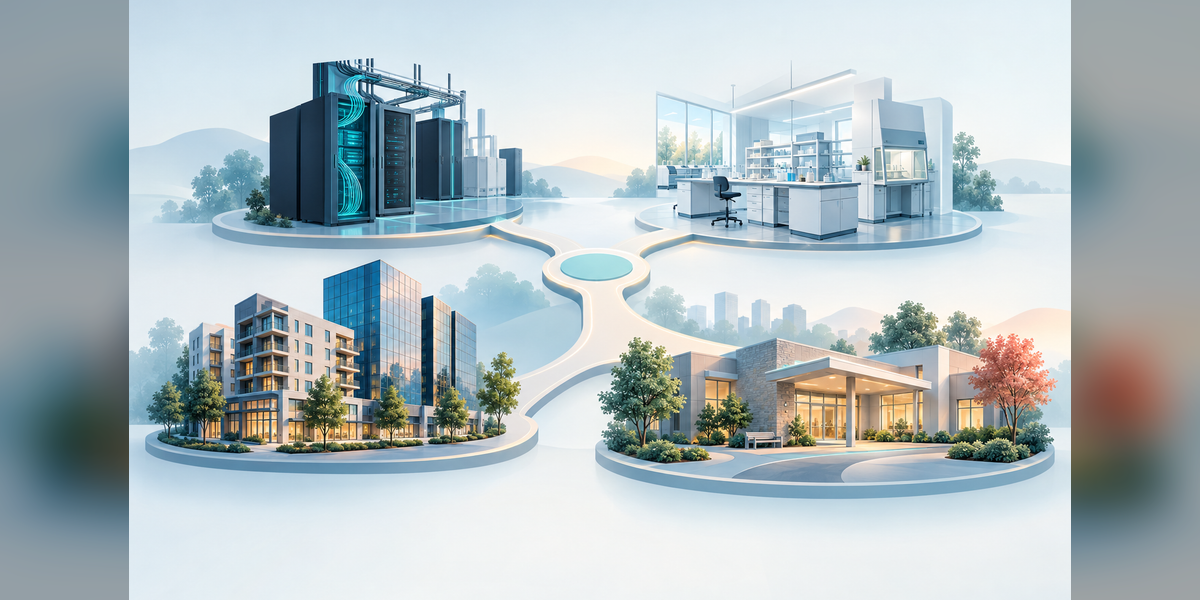
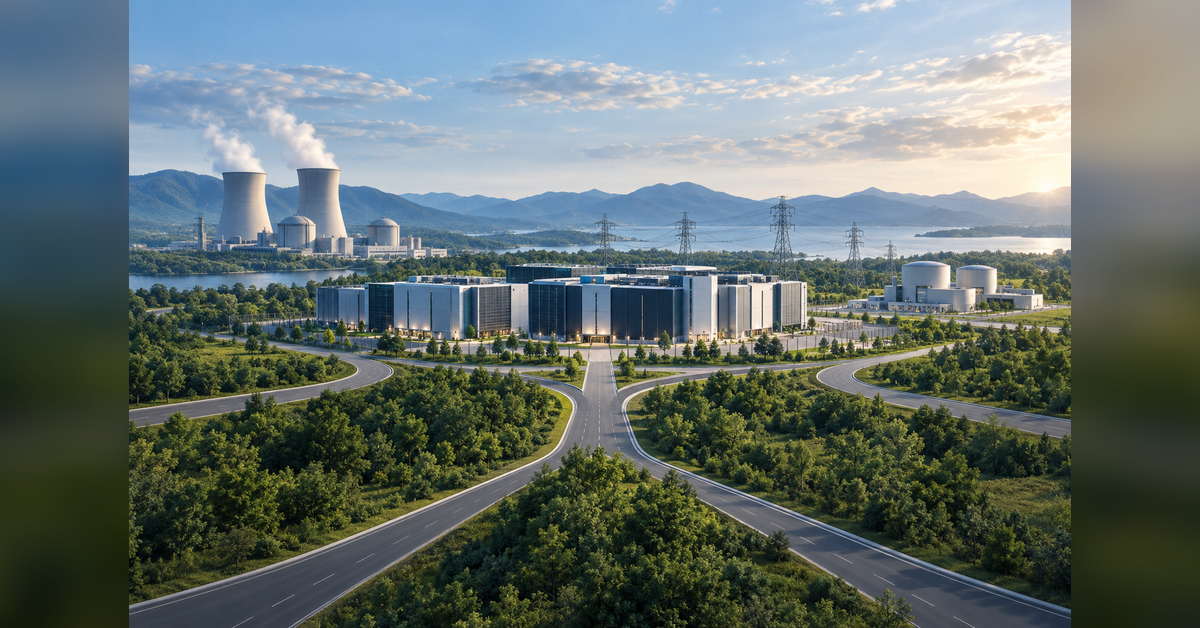

AI infrastructure plans can move faster than the power projects meant to support them. That mismatch makes timing, contracting and site readiness as important as the generation technology itself.
The useful question is not whether nuclear and SMR power for AI data centers sounds promising. Leaders need to know which options could support a real project, what must happen first and which risks remain outside their control.
Can nuclear energy support an AI data center?
Yes, but the path matters. Existing nuclear generation may be relevant through utility supply or a commercial agreement. Uprates and new reactors require additional development work. SMRs remain a longer-horizon option whose value depends on licensing, financing, fuel, construction and site-specific execution. Nuclear and SMR power for AI data centers should therefore be evaluated as several distinct strategies, not one product.
The decision in brief
Start with the required service date
A power option that arrives after the planned compute capacity has little near-term value, even if its long-run economics look attractive.
Separate existing assets from proposed assets
Existing plants, uprates, new large reactors and SMRs carry different development paths. Combining them under nuclear and SMR power for AI data centers hides the differences buyers need to see.
Test the full delivery chain
Generation is only one part of the decision. Transmission, interconnection, land, permits, contracts, financing and operational responsibility can change the result.
Use a delivery question instead of a headline question
For buyers, nuclear and SMR power for AI data centers is not a simple yes-or-no choice. A developer may announce an agreement, a reactor company may announce a design, or a data center operator may name a future energy goal. None of those events alone establishes when power will reach a particular campus.
A sound review of nuclear and SMR power for AI data centers starts with a service date and works backward. Ask when the first phase must energize, how much capacity it needs, whether demand will rise in stages and what bridge supply is acceptable. Then test each energy option against that schedule.
Keep a long-term supply strategy separate from a near-term interconnection problem. A future reactor may still have strategic value. It should not be credited with solving an earlier power gap unless the development path supports that conclusion.
The U.S. Department of Energy identifies both construction time and first-of-a-kind expense among the challenges associated with nuclear-powered data centers. Its overview is a useful starting point, but each project still needs its own commercial, regulatory and site review: DOE: Advantages and Challenges of Nuclear-Powered Data Centers.
Evaluate four different nuclear pathways
The phrase nuclear and SMR power for AI data centers can refer to several arrangements. Buyers should identify the actual pathway before comparing claims, schedules or prices.
1. Supply connected to existing nuclear generation
An operating nuclear plant is different from a proposed reactor. A data center may explore utility service, a power purchase agreement or another commercial structure associated with existing generation. The practical review still has to address deliverability, grid conditions, contract terms and whether the claimed supply aligns with the data center’s load profile.
Existing generation can make nuclear and SMR power for AI data centers feel like a near-term category, but the reactor’s operating status does not make every surrounding transmission or commercial issue immediate. The buyer should obtain a dated map of approvals, agreements and infrastructure work rather than relying on the age of the generating asset.
2. Uprates and changes at existing sites
An uprate seeks more output from an operating plant. It may avoid some elements of a new greenfield project, yet it is not merely a paper transaction. The buyer should examine the proposed scope, regulatory path, equipment work, outage coordination, transmission requirements and allocation of the added output.
For nuclear and SMR power for AI data centers, an uprate belongs in its own schedule lane. It should not be grouped with power already available, and it should not be judged by the same assumptions as a new reactor design.
3. New large nuclear reactors
A new large reactor can represent a substantial long-term generation strategy. It also creates a wide decision surface: site control, licensing, engineering, construction, financing, fuel, grid connection and operating responsibility.
That makes new large reactors a strategic rather than shorthand answer to nuclear and SMR power for AI data centers. A credible proposal should show who controls each development step, which milestones have been completed and what happens to the data center schedule if one milestone moves.
4. Small modular reactors
An SMR is a smaller reactor concept intended to use modular design and deployment approaches. The label does not remove project-specific questions. Buyers still need to examine the design’s regulatory status, supply chain, fuel plan, site requirements, financing structure, construction plan and operating model.
SMRs may become part of nuclear and SMR power for AI data centers, but a vendor target should not be converted into a buyer commitment date without a milestone review. Use the U.S. Nuclear Regulatory Commission’s public material to identify the applicable regulatory path and records for the design or project under consideration: U.S. Nuclear Regulatory Commission.
Scenario matrix for data center buyers
The clearest way to compare nuclear and SMR power for AI data centers is to separate asset status, commercial access and delivery dependencies.
| Pathway | First buyer question | Key dependencies | Planning role |
|---|---|---|---|
| Existing nuclear supply | Can contracted power be delivered to this load? | Utility structure, transmission, interconnection and contract terms | Potential near- or medium-horizon supply option |
| Uprate | What work and approvals precede added output? | Regulatory review, equipment, outage planning and grid delivery | Incremental capacity tied to an operating site |
| New large reactor | Who owns the complete development schedule? | Site, licensing, engineering, construction, fuel and financing | Long-horizon generation strategy |
| SMR project | Which milestones are complete rather than forecast? | Design status, licensing, supply chain, fuel, capital and operations | Future option requiring milestone-based review |
What could help before 2030, and what belongs later?
A useful timeline for nuclear and SMR power for AI data centers should use evidence gates rather than a single forecast. Use the date labels below as planning buckets rather than promises.
Near-horizon planning
For nuclear and SMR power for AI data centers, focus first on operating generation, available utility service, executable contracts and transmission or interconnection work that can be mapped to the campus schedule. Record which party controls each dependency and whether an alternate supply path exists.
Pre-2030 development cases
Place an option in this bucket only when project records support the required sequence. That sequence may include commercial agreements, regulatory activity, engineering, equipment procurement, construction and grid work. A press release without a complete dependency map is not enough for a capital plan.
Later-horizon options
New reactors and less mature deployment plans may still deserve land, partnership or portfolio analysis. Use milestone gates when reviewing those options. Do not let an attractive long-range concept replace the bridge-power plan needed for earlier phases.
Continuous review
Schedules change. Set review points tied to regulatory actions, contract execution, financing, major equipment and construction progress. The decision should become more committed only as the evidence becomes more concrete.
Put financing beside engineering
The economics of nuclear and SMR power for AI data centers cannot be assessed from an energy-price headline alone. The buyer needs to understand who funds development, who carries delay or performance exposure, when payments begin and what obligations survive if the data center schedule changes.
At minimum, the commercial team should ask:
- Is the arrangement utility service, a power purchase agreement, a development investment or another structure?
- Which party pays for transmission, interconnection and site-specific infrastructure?
- Are payments linked to milestones, availability, delivered energy or reserved capacity?
- What security, credit support or long-term commitment is expected?
- Who bears the cost if the generation project and data center campus move on different schedules?
- Does the structure preserve a practical bridge or exit path?
These questions belong beside the broader capital plan. Percepture’s guide to data center financing structures provides additional context for matching funding sources and project risks.
Check the site, not just the reactor
A plan for nuclear and SMR power for AI data centers can look strong while the site remains unready. Review land control, water strategy, transmission access, interconnection, construction logistics, local approvals, emergency planning responsibilities and the relationship between generation and campus phasing.
The review should also identify operating boundaries. Determine who owns the generating asset, who operates it, who supplies the data center, who manages outages and what backup architecture supports the load. These are separate questions, and the answer may involve several organizations.
Regional electricity information can help frame the market context, but it does not replace project records. The U.S. Energy Information Administration provides public energy data that teams can use as an input to regional research: U.S. Energy Information Administration.
Keep milestone language distinct from commitments
Marketing leaders reviewing nuclear and SMR power for AI data centers can keep public language aligned with the project’s stated maturity. A memorandum, application, site study, contract, construction start and operating asset should be described as distinct events.
Build communications around three layers:
- Completed fact: what has occurred and where the supporting public record can be found.
- Current plan: what the parties intend to do, including the dependencies that remain.
- Forward scenario: what may become possible if defined milestones are completed.
This structure gives executives a way to discuss strategy without presenting a forecast as delivered capacity. It also gives communications, finance, legal, development and operations teams a shared vocabulary for reviewing announcements.
For organizations managing a long buying cycle across investors, communities, partners and customers, an omnichannel marketing strategy can coordinate the message while keeping each audience’s information needs distinct.
Buyer readiness scorecard
- Load: Required capacity and energization phases are documented.
- Pathway: The proposal identifies an operating plant, uprate, new large reactor or SMR.
- Milestones: Completed actions are separated from targets and assumptions.
- Delivery: Transmission and interconnection dependencies have named owners.
- Regulation: The applicable licensing path and public records are identified.
- Commercial terms: Payment triggers, commitments and risk allocation are understood.
- Site: Land, infrastructure, approvals and operating boundaries have been reviewed.
- Fallback: Bridge power and schedule-change options are documented.
- Communications: Public claims match the maturity of the underlying project.
Use a weak result in any category to identify the next question that must be answered before treating the power plan as committed.
Make the decision in stages
A disciplined buyer does not have to choose between dismissing nuclear energy and accepting every forecast. Start with the campus service date. Classify the nuclear pathway. Map the regulatory, physical and commercial dependencies. Then increase commitment as evidence clears each gate.
A staged review of nuclear and SMR power for AI data centers protects the near-term data center schedule while preserving long-term options. It also gives executives a more accurate way to compare existing generation, uprates, new large reactors and SMRs without flattening them into one headline.
The final decision is project-specific. It should be based on dated records, accountable owners, executable contracts and a fallback plan—not on enthusiasm or skepticism alone.

About Bob Generale
Bob Generale is President of Percepture, where his role includes executive strategy. For technical infrastructure coverage, he approaches the subject as a strategist and editor rather than presenting himself as a nuclear engineer.
This guide is designed to help business and marketing leaders ask better questions, separate project milestones from promotional language and coordinate complex infrastructure communications. Connect with Bob on LinkedIn.