
When a tech giant announces a billion-dollar data center in your state, it sounds like a win. Jobs. Tax revenue. A slice of the AI gold rush.
But here’s the catch: Who pays when the power grid needs a $500 million upgrade to keep those servers humming?
In too many states, the answer has been you, the residential ratepayer. Your monthly electric bill quietly climbs to cover transmission lines, substations, and backup generators built for data centers that use as much electricity as a small city.
Now, two states are saying “enough.” Illinois and Florida have passed landmark legislation in early 2026 that flips the script on data center lead generation and development. The message is clear: If Big Tech wants the power, Big Tech pays for the power.
Do you have an electric bill? This may concern you, and here is what’s happening.
The Hidden Cost of the AI Boom
Data centers are the factories of the digital age. They store your photos, run your streaming services, and train the AI models behind ChatGPT and Google Gemini. But unlike a traditional factory, they never sleep. They run 24/7, gulping electricity and water at staggering rates.
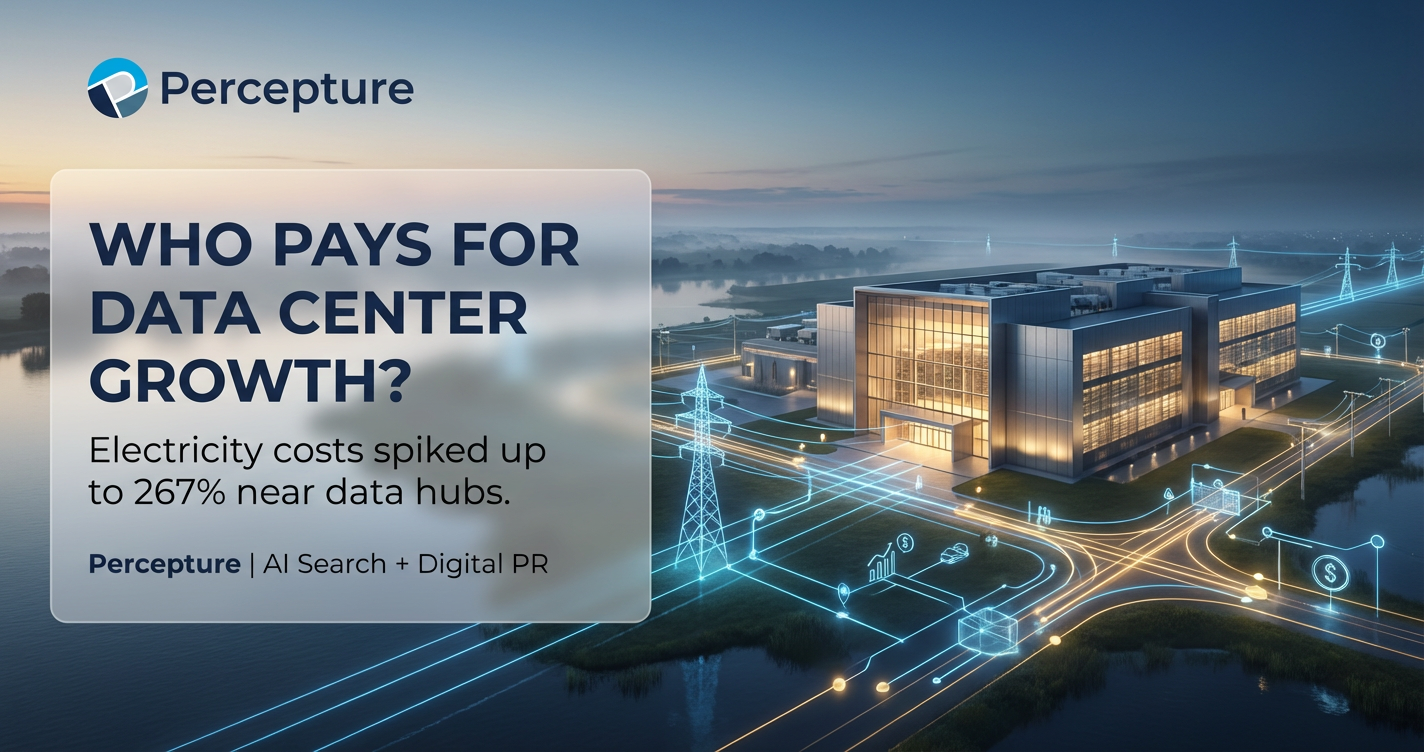
According to a Bloomberg investigation, electricity costs have spiked up to 267% in some areas near major data center hubs over the past five years. That’s not a typo. In parts of Virginia, Georgia, and Arizona, families are paying double or triple what they paid in 2020—largely because utilities are building infrastructure to serve hyperscale data centers.
Here’s how it works: A company like Amazon or Microsoft signs a deal to build a massive data center. The local utility agrees to provide power. But the existing grid can’t handle the load, so the utility builds new transmission lines, upgrades substations, and adds capacity. Then, in the next rate case, those costs get spread across all customers—including homeowners who never asked for a data center next door.
Harvard researcher Ari Peskoe calls this a “cost shift.” In plain English: You’re subsidizing someone else’s AI.
Illinois Steps In: The POWER Act
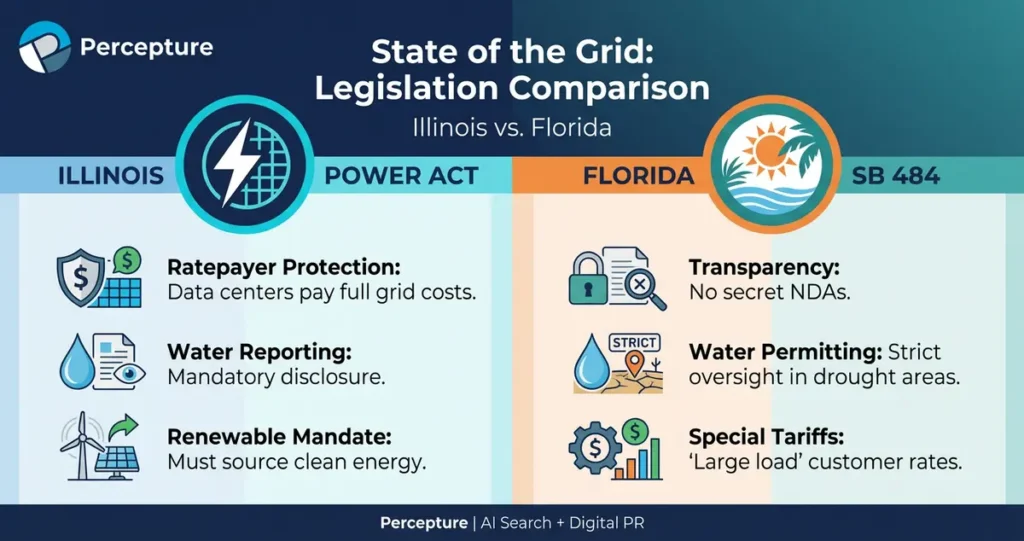
In February 2026, Illinois lawmakers introduced the POWER Act (Protecting Our Watts, Energy, and Ratepayers). The bill tackles three big problems:
- Ratepayer Protection: Data centers must pay the full cost of grid upgrades they trigger. No more spreading those bills to households.
- Water Reporting: Hyperscale facilities must disclose how much water they use for cooling. (Some data centers use millions of gallons per day.)
- Renewable Energy Mandates: New data centers must source a percentage of their power from wind, solar, or other clean energy.
The POWER Act is still moving through the Illinois General Assembly, but it’s already changing the conversation. Utilities can no longer assume ratepayers will foot the bill. Developers are rethinking site selection. And local governments are asking tougher questions before handing out tax breaks.
State Senator Sarah Lightner, a co-sponsor, put it bluntly: “We’re not anti-data center. We’re pro-fairness. If you’re going to use our grid, you’re going to pay your share.”
Florida Follows Suit: SB 484
Florida took a different approach—but with the same goal.
Senate Bill 484, signed into law in early 2026, focuses on transparency and accountability. Key provisions include:
- No More Secret Deals: Data center developers can’t sign non-disclosure agreements (NDAs) that hide power usage or grid impact from the public.
- Water Permitting Oversight: The state’s water management districts must approve—and can deny—permits for data centers in drought-prone areas.
- Public Service Commission (PSC) Tariffs: Utilities must create special tariff structures for “large load” customers (read: data centers) that reflect the true cost of service.
Florida’s law is especially significant because the state is a top-five data center market. Miami, Tampa, and Jacksonville are all seeing explosive growth. But so are concerns about water scarcity and hurricane-related grid resilience.
“Florida is a climate-vulnerable state,” says energy policy analyst Maria Gonzalez. “We can’t afford to lock in decades of fossil fuel infrastructure just to power AI training models.”
Why This Matters Beyond Illinois and Florida
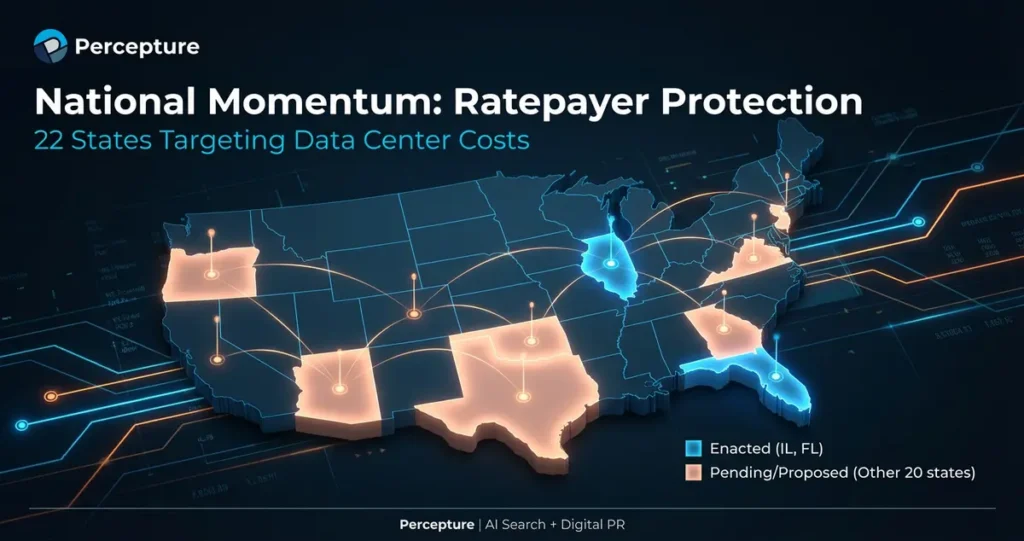
These two states aren’t outliers. According to the National Caucus of Environmental Legislators, over 60 data center bills were introduced across 22 states in 2025 alone. Most focus on ratepayer protection.
Here’s a snapshot:
- Texas SB 6: Requires data centers to contribute to grid upgrades.
- Oregon POWER Act: Creates a special tariff class for large energy users.
- New Jersey: Mandates a state study on whether data centers are unfairly subsidized by residential customers.
- Oklahoma: Introduced the Data Center Consumer Ratepayer Protection Act in January 2026.
The pattern is clear: States are waking up to the fact that data centers are not just economic development—they’re infrastructure decisions with 30-year consequences.
And those consequences are landing on kitchen tables. When your power bill jumps 15% in a year, you notice. When your local utility says it’s because of “system improvements,” you start asking questions.
The Developer’s Dilemma
For data center developers, this is a headache. Site selection used to be simple: Find cheap land, cheap power, and friendly tax incentives. Now, they’re navigating a patchwork of state laws, public hearings, and ratepayer advocacy groups.
But here’s the thing: The best developers are adapting.
Microsoft, for example, announced a “Community-First AI Infrastructure” framework in January 2026. The company pledged to cap electricity demand, invest in local workforce training, and partner with universities on AI research. It’s not altruism—it’s smart business. In a world where permitting delays can cost millions per month, community buy-in is the new currency.
OpenAI is taking a similar approach. Its “Stargate Community” plan includes AI research labs, compute donations to public universities, and workforce pipelines aligned with local industries. The company knows that if residents think their power bill is subsidizing someone else’s chatbot, the permitting clock turns into a political clock.
“The next era of data center development is not a race for land or capital. It’s a race for a cost model the public can tolerate. When households think their power bill is underwriting someone else’s AI, the permitting clock turns into a political clock.”
— Bob Generale, President & Partner, Percepture
What Happens Next?

The Illinois POWER Act and Florida SB 484 are just the beginning. Expect more states to follow in 2026 and 2027. The question is no longer if data centers will pay their fair share—it’s how much and how fast.
For utilities, this means rethinking rate structures. And for developers, it means building telecom marketing strategy that includes community engagement from day one. For local governments, it means asking harder questions before signing incentive deals.
And for ratepayers? It means your voice matters. Show up to public hearings. Ask your state representative where they stand. Because the AI boom is real—but so is your electric bill.
The data center gold rush isn’t slowing down. But thanks to Illinois, Florida, and a growing coalition of states, the rules of the game are changing. Big Tech is learning that access to the grid isn’t a right—it’s a negotiation.
And for the first time in years, ratepayers have a seat at the table.
Key Takeaways
- Illinois POWER Act requires data centers to pay full grid upgrade costs and report water usage.
- Florida SB 484 bans secret power deals and mandates special tariffs for large-load customers.
- Over 60 bills in 22 states are targeting data center cost-shifting to ratepayers.
- Developers are adapting with community-first frameworks and transparency pledges.
- Your power bill is political—and states are finally treating it that way.
FAQ
1. What is the POWER Act?
The POWER Act is Illinois legislation introduced in February 2026 that requires data centers to pay the full cost of grid upgrades, report water usage, and source renewable energy. It protects residential ratepayers from subsidizing data center infrastructure costs.
2. How do data centers affect your electric bill?
Data centers require massive grid upgrades—new transmission lines, substations, and capacity. Utilities often spread these costs across all customers, causing residential electric bills to rise even if you don’t use data center services.