
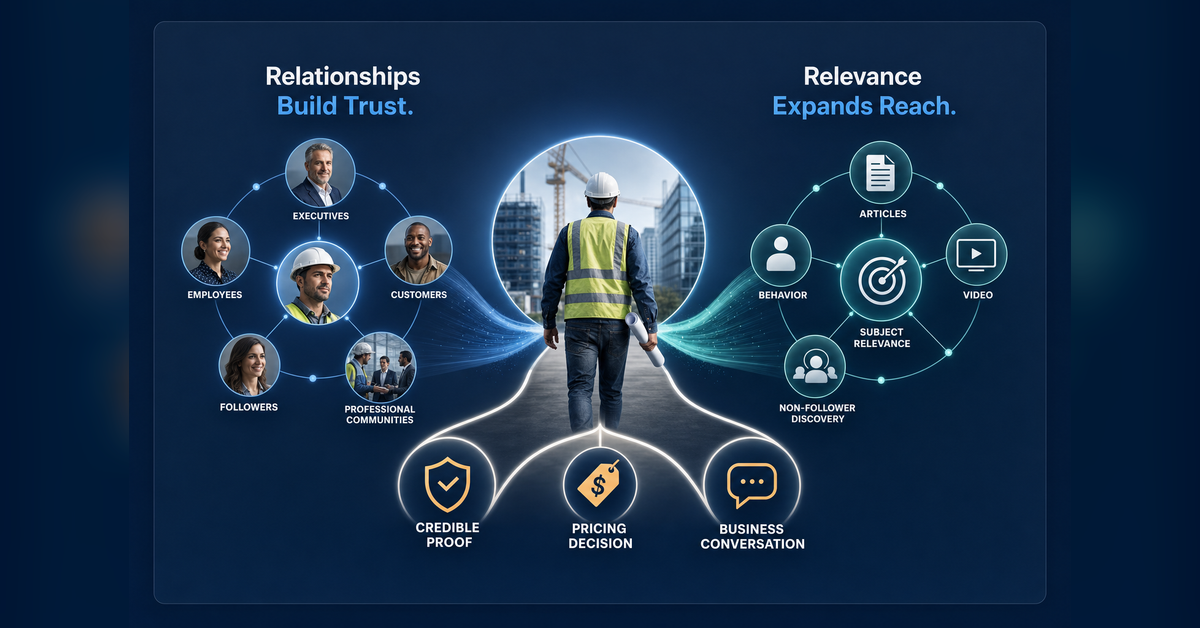

Social Media vs. Interest Media is not a choice between an old channel and a new one. Social media distributes content through relationships, identity, follows, and communities, while interest media adds recommendations based on topics, behavior, content meaning, and predicted relevance.
The practical answer is to use both. Relationships build familiarity and trust. Interest-based discovery helps useful content reach people who do not follow the company yet.

How do social media and interest media work together?
Social Media vs. Interest Media describes two layers of modern distribution: the social layer connects people and organizations through relationships, while the interest layer recommends relevant content beyond those connections. A strong program earns discovery through useful topics, then turns that attention into trust, website visits, leads, and sales conversations.
Executive summary
What changed
Platforms can recommend more content outside a person’s existing network. This gives clear, relevant material a path to non-follower reach.
What stayed
Followers, executive credibility, customer relationships, community participation, repeat exposure, and proof still help buyers decide whom to trust.
What leaders should do
Treat Social Media vs. Interest Media as one operating system. Connect expert content, organic publishing, paid distribution, search, PR, email, analytics, and sales follow-up.
Who this comparison is for
Business leaders
CEOs and owners who want category visibility without funding a stream of generic posts can use Social Media vs. Interest Media to balance trusted relationships with broader discovery.
Marketing leaders
CMOs and content teams can use Social Media vs. Interest Media to balance company pages, executive profiles, paid support, search visibility, approvals, and reporting.
Complex B2B brands
For construction and technical companies, Social Media vs. Interest Media clarifies how to explain expertise, projects, process, and proof to buyers outside their current audience.
Built for accountable marketing decisions
Social media and interest media solve different distribution jobs
Social media: the relationship layer
Social media distributes content through identity, follows, connections, customers, partners, employees, and communities. It builds familiarity, repeat exposure, and context around who is speaking.
Followers remain assets, but a follower count does not prove buyer quality or guarantee that every post will reach the right people.
Interest media: the recommendation layer
Interest media uses signals about topics, behavior, content meaning, and predicted relevance to recommend material beyond an existing network.
Non-follower reach improves when a post states the subject, problem, and value clearly enough for an unfamiliar reader to understand it immediately.
Social Media vs. Interest Media comparison
This Social Media vs. Interest Media scorecard separates the discovery sources, signals, risks, and business roles leaders should evaluate before changing channel investment.
| Factor | Traditional social emphasis | Interest-media emphasis | Modern hybrid recommendation |
|---|---|---|---|
| Main discovery source | Followers, connections, and communities | Topics, behavior, and predicted relevance | Relationships plus recommendations |
| Role of followers | Primary reachable audience | One signal among several | Useful for trust and repeat exposure, but not the only gate |
| Role of connections | Direct distribution path | Context for relevance | Relationship strength can support familiarity and response |
| Non-follower reach | Often secondary | Central discovery path | Earned when content is relevant and understandable |
| Content evaluation | Who published it and how the network reacts | What it is about and how people respond | Identity, meaning, relevance, and response work together |
| Shelf life | Often tied to the immediate feed cycle | Can continue while recommendations remain useful | Feed content works best when it links to durable proof |
| Key signals | Follows, connections, comments, and repeat engagement | Topic relevance, clicks, saves, shares, and viewing behavior | Audience quality, content value, trust, and buyer intent |
| Community role | Conversation and belonging | Shared topic interest | Community creates trust while recommendations expand discovery |
| Executive role | Known voice within a network | Expert source for a topic | Recognizable identity paired with useful expertise |
| Employee advocacy | Extends network distribution | Adds relevant human context | Voluntary, informed participation without scripted engagement |
| Paid support | Expands beyond organic followers | Targets interests, roles, and prior behavior | Amplifies proven messages and retargets qualified audiences |
| Measurement | Followers, reach, and engagement | Non-follower reach and content response | Audience quality, visits, leads, pipeline, and assisted influence |
| Conversion risk | Activity can remain inside the platform | Broad discovery can produce shallow attention | Every useful topic needs proof, a destination, and a next step |
| Best use | Relationships and community | Topic discovery | Discovery, trust, retention, and measurable action |
On smaller screens, swipe horizontally to review the full comparison.
What changed, what stayed, and what followers still do
Discovery can happen outside the network
Suggested content gives platforms more room to test useful material with people who may care about the topic even when they have no prior relationship with the publisher.
That raises the value of clear topics, strong openings, and useful explanations.
Trust still decides what happens next
A recommendation can create a first impression, but it cannot replace accurate claims, visible expertise, customer proof, a useful website, and a clear next action.
Community and familiarity still matter when buyers return later to compare options.
Quality matters more than raw audience size
Followers support repeat exposure, advocacy, early response, and retention. The mistake is treating follower count as either the entire strategy or a useless metric.
Measure who follows, who returns, who visits the website, and who moves toward proof or a business conversation.
Score your hybrid reach system
Review network strength, topic relevance, available proof, distribution, and buyer-intent measurement before adding more posts or media spend. Percepture can help identify whether the real constraint is reach, trust, conversion, or attribution.
The Percepture Social + Interest Hybrid Reach Model
The model diagnoses five signals that connect discovery to business action and gives Social Media vs. Interest Media teams a shared operating framework.
Network signal
Followers, executives, employees, customers, partners, repeat engagers, and community relationships create familiarity and repeat exposure.
Interest signal
Clear topics, useful explanations, content meaning, clicks, saves, shares, and viewing behavior help content reach relevant non-followers.
Trust signal
Named expertise, real projects, case studies, original insight, accurate claims, and third-party credibility give discovery substance.
Distribution signal
Company publishing, executive participation, ethical employee advocacy, paid amplification, search, PR, and email extend strong material.
Business action
The system works when discovery leads to qualified visits, proof use, meetings, pipeline, or another measurable next step.
Intent signal
Website visits, return visits, pricing views, case-study use, form activity, meetings, lead quality, and opportunity movement show what happened next.
Applied to Social Media vs. Interest Media, the model asks a simple question: where does the system break? A brand may have a network but weak topics, strong discovery but little proof, or high reach without a measurable conversion path.

Seven changes brands should make
Build topics, not isolated posts
A Social Media vs. Interest Media topic plan should connect buyer questions, company expertise, active projects, and useful proof. Revisit each topic from several angles so the market can associate the company with it.
Put real expertise in the content
Capture how executives, estimators, engineers, project leaders, and field teams make decisions. Generic summaries are easy to ignore because they offer no specific reason to trust the source.
Use executives and employees honestly
Give people useful material and room to add their own experience. Do not script fake comments or pressure staff to participate.
Write for non-followers
Social Media vs. Interest Media content should state the subject, problem, and value without assuming the reader knows the company, project, or earlier conversation.
Connect discovery to deeper proof
A short post can lead to a case study, project page, guide, video, pricing page, or expert interview. Percepture’s omnichannel marketing approach connects those touchpoints around one buyer journey.
Use paid support selectively
A paid social strategy can expand a proven message, target buyer roles, and retarget people who have already engaged or visited.
Measure intent and lead quality
Reach shows exposure. Visits, return behavior, pricing interest, forms, meetings, and qualified opportunities show whether the attention had business value. Attribution and analytics help connect those actions without overstating a single touchpoint.
These changes make Social Media vs. Interest Media useful as an operating decision rather than a label for a platform trend.
What brands should not change
Social Media vs. Interest Media does not reduce the importance of customer response, community care, editorial standards, executive credibility, or claim review. Faster distribution does not excuse weak governance. Technical and regulated subjects still need review by people who understand the work.
Do not change entity language every week to follow trends. Use consistent names for the company, services, experts, markets, and core topics. Clear entity relationships also support generative engine optimization services by making expertise easier for search and AI systems to interpret.
Do not abandon owned channels. Platform discovery is rented access. Email marketing helps preserve a direct relationship after a reader opts in, while a useful website gives the buyer a stable place to evaluate proof.
How construction brands can apply the model
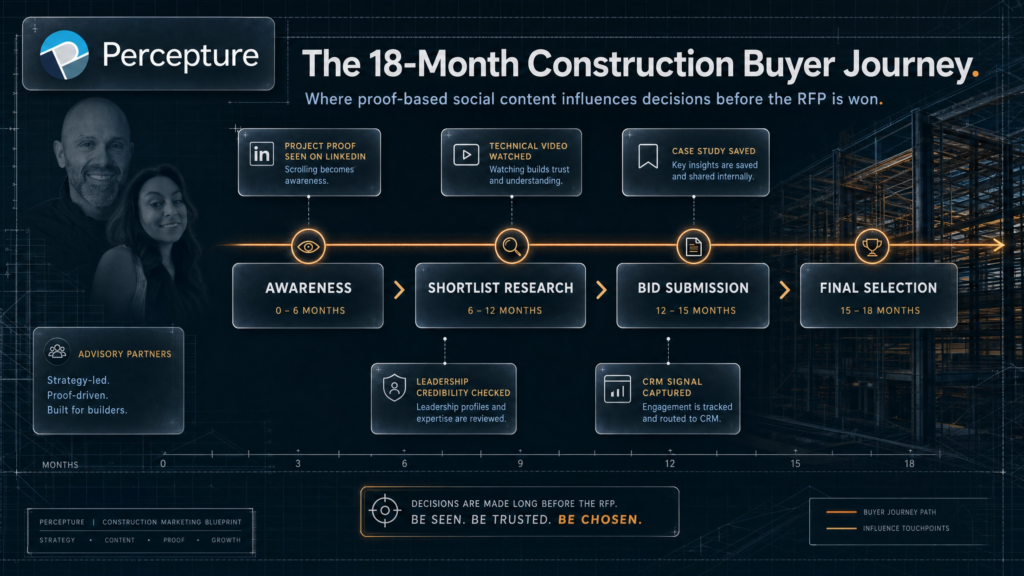
Construction companies often have strong raw material but weak explanation. A Social Media vs. Interest Media program should turn a project photo into an explanation of the constraint, choice, process, or result. Interest-based discovery works better when the content teaches a buyer what the team knows.
A contractor can turn project milestones, safety practices, procurement decisions, prefabrication methods, labor planning, and executive insight into a topic system. Percepture’s guide to social media for construction companies explains how project proof can become useful social material.
The website should carry the deeper answer. A supporting construction content marketing program can develop project stories and buyer education. SEO for construction companies gives durable answers a path to active search demand, while a broader construction digital marketing strategy connects those assets to paid, email, PR, and conversion work.
For construction leaders, Social Media vs. Interest Media is therefore less about choosing a feed style and more about turning real work into clear, reusable proof.
Organic and paid social have different jobs
Within Social Media vs. Interest Media, organic publishing tests subjects, language, experts, and formats while building familiarity over time. It can show which questions earn useful responses from customers, peers, prospects, and non-followers.
Paid social expands selected messages. It can target roles or accounts, retarget prior visitors and engagers, and support a campaign that organic reach alone cannot carry. Paid media spend should be budgeted separately from management fees, and both sides need clear measurement.
Neither organic nor paid activity should end at an impression. Each campaign needs a proof destination and a next step. That may be a guide, case study, pricing page, consultation, or another action matched to buyer readiness.
Employee advocacy without forced engagement
Employees and executives can add reach because their professional relationships remain part of the network layer. Their participation can also add context when they explain why a project, article, or decision matters.
Participation should be voluntary and useful. Avoid engagement pods, copied comments, and pressure to react to every company update. Give employees accurate source material, clear guardrails, and the freedom to add relevant experience in their own words.
Company pages and personal profiles also have different roles. The company page provides a consistent publishing record. People provide identity and firsthand perspective. Used together, they make Social Media vs. Interest Media a human distribution system rather than an automated posting exercise.
Connect social discovery to search, GEO, PR, email, and sales
Social Media vs. Interest Media is usually one part of a longer decision path. Enterprise SEO gives high-value explanations a durable destination that can capture active demand after a feed post fades.
GEO makes definitions, expertise, entities, and proof clear enough to be understood and cited. Digital PR services can add third-party credibility. Email preserves an opted-in relationship. Sales teams use the buyer’s content history and stated interest to guide relevant follow-up.
An effective lead generation program joins those signals instead of reporting reach in isolation. The goal is not more anonymous exposure. It is more qualified people seeing credible proof and taking a measurable next step.

What Percepture’s public proof shows
Percepture helped Autodesk-related video content generate more than 20 million YouTube views. The broader lesson is that a clear expert voice, repeatable category, distribution, and measurement can reach beyond an existing audience.
Percepture publicly reports 92,000 organic reach for a tourism campaign. This shows the role organic distribution can play when content and audience fit are aligned.
Percepture reports that Broadstaff tripled qualified leads and earned page-one visibility across most tracked terms through an integrated search, AI, content, and authority program. Social media alone did not produce that result. The Broadstaff qualified lead case study shows why channels must support one another.
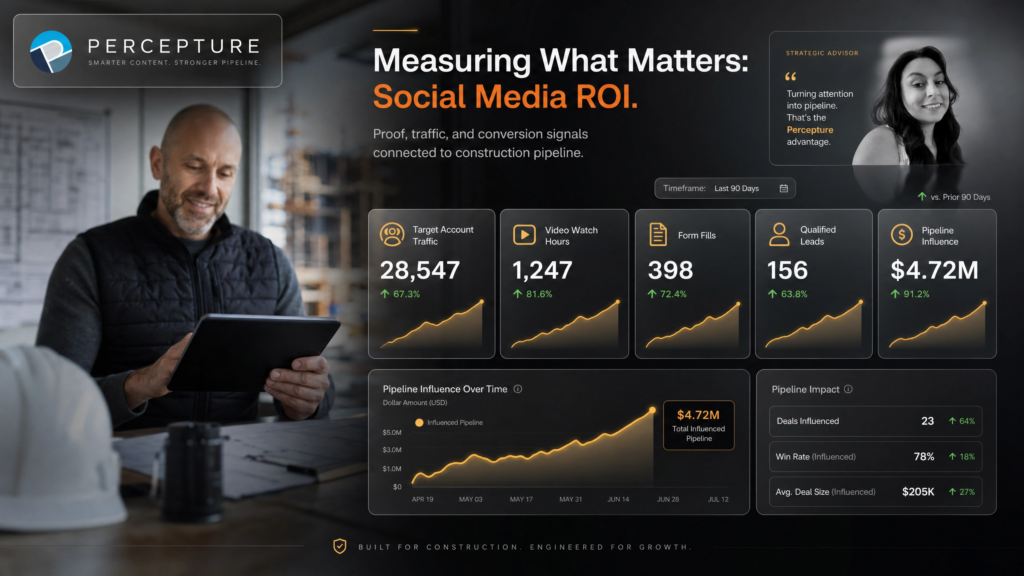
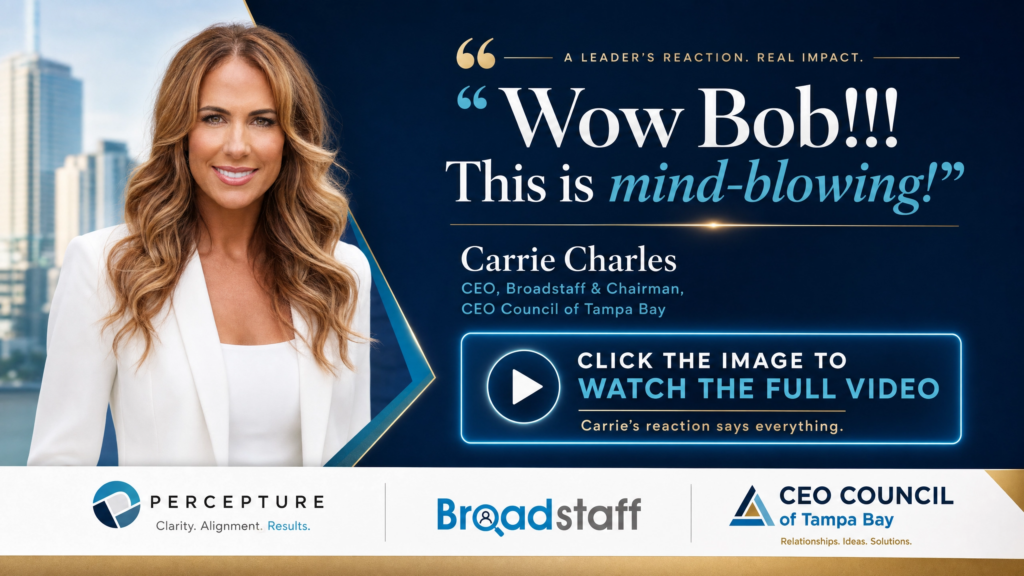
The proof supports a central point about Social Media vs. Interest Media: discovery becomes valuable when the brand has expertise, evidence, a destination, and a clear path forward.
What a managed program should organize
A managed program is more than a posting calendar. Confirmed Percepture capabilities include research, strategy, content calendars, copy, creative coordination, paid social, content, SEO, GEO, digital PR, email, analytics, and lead generation.
A Social Media vs. Interest Media operating flow should be easy to follow: gather expert input, create the draft, review claims, coordinate creative, approve the asset, adapt it for the channel, distribute it, measure response, and improve the next cycle.
Governance matters as much as production. The team should document who provides source material, who reviews technical claims, who approves publication, what is measured, and how changes are handled. This reduces late-stage rework and protects accuracy.
Social Media vs. Interest Media requires this operating discipline because more discovery creates more chances for unfamiliar people to see the content. The first impression must be understandable, accurate, and connected to proof.
Social Media vs. Interest Media pricing framework
Percepture’s current public social media package prices provide four starting points. Scope differences include strategy, calendars, post volume, channel count, copy, creative coordination, and management depth.
| Package | Starting monthly price | Planning consideration |
|---|---|---|
| Launch | $2,500 | A starting level for a defined social program with focused scope. |
| Growth | $4,000 | More program depth for brands expanding content and channel activity. |
| Authority | $6,500 | Greater management depth for brands building sustained category authority. |
| Enterprise | $10,000+ | Custom depth for larger programs, teams, channels, and governance requirements. |
Paid media spend, advanced production, and additional channels may be separate. Compare scope, channel count, production requirements, approval needs, reporting, and media budget before comparing price alone.
Build the right Social Media vs. Interest Media program
Percepture can help determine which topics, experts, channels, paid support, proof assets, and measurement systems belong in the program before your team commits to a larger publishing or media budget.
A practical 90-day hybrid reach plan
Days 1 to 30: diagnose and prepare
- Audit Social Media vs. Interest Media channels, followers, content, proof, and analytics.
- Map buyer questions and priority topics.
- Inventory projects, experts, case studies, videos, and sales assets.
- Define company, executive, employee, paid, search, and email roles.
- Set tracking and run the first content tests.
Days 31 to 60: improve and connect
- Refine openings, formats, and topic clarity.
- Publish deeper proof behind high-response posts.
- Add selective paid amplification and retargeting.
- Connect useful content to email follow-up.
- Review audience quality, website behavior, and lead quality.
Days 61 to 90: scale with evidence
- Expand the topics that attract the right audience.
- Improve landing pages and conversion paths.
- Add search and PR support where the evidence justifies it.
- Document outcomes and sales feedback.
- Stop, keep, or expand work based on measured performance.
The first 90 days should establish a baseline and testing rhythm, not a guaranteed outcome. Social Media vs. Interest Media works best when the team learns which topics, experts, formats, audiences, and destinations produce useful movement.
Common mistakes that weaken hybrid reach
- Declaring followers irrelevant because recommendations expanded.
- Copying one platform’s style across every channel.
- Posting project images without explaining the decisions or proof behind them.
- Forcing employees to comment or share.
- Chasing reach without a website destination.
- Measuring likes while ignoring audience and lead quality.
- Separating social activity from content, search, PR, email, and sales.
- Combining organic and paid results in one unclear number.
- Starting without claim review, approvals, access rules, or named owners.
- Making fixed claims about algorithms that continue to change.
A useful Social Media vs. Interest Media strategy avoids these shortcuts. It treats reach as an input and buyer movement as the result to investigate.
Frequently asked questions
What is the difference between Social Media vs. Interest Media?
Social Media vs. Interest Media separates two distribution emphases. Social media emphasizes relationships, follows, identity, and communities. Interest media emphasizes recommendations based on topics, behavior, content meaning, and predicted relevance. Modern feeds combine both. Relationships help create trust and repeat exposure, while interest-based recommendations help useful content reach people outside the existing follower base.
Is social media dead?
No. The relationship layer still supports identity, community, familiarity, executive credibility, customer interaction, and repeat exposure. What changed is that platforms can recommend more content beyond a user’s network. Brands should add interest-based discovery to their strategy rather than abandon relationships.
Do followers still matter?
Yes. Followers can provide repeat exposure, familiarity, advocacy, early response, and an audience the brand can serve over time. Follower count should not stand alone, however. Audience relevance, return behavior, website activity, lead quality, and opportunity movement provide a better view of business value.
What is the social graph compared with the interest graph?
In Social Media vs. Interest Media, the social graph represents people, companies, and communities a user follows or knows. The interest graph represents topics and content the platform believes the user may care about. A hybrid feed can use both relationship information and predicted topic relevance when selecting content.
Is LinkedIn social media or interest media?
LinkedIn illustrates Social Media vs. Interest Media as a hybrid feed. Its public materials describe signals that include professional identity, network relationships, followed people and companies, interests, activity, engagement history, content meaning, suggested posts, and predicted relevance. That makes it relationship-based distribution plus interest-based discovery.
Can company pages reach people who do not follow them?
Yes, modern recommendation systems can introduce content to non-followers. Reach is not automatic. The post must be clear enough for an unfamiliar reader, tied to a relevant topic, supported by useful expertise, and strong enough to earn a response from the audience that sees it.
Should organic and paid social work together?
They can serve complementary jobs. Organic activity can test topics and build familiarity. Paid social can expand selected messages, target buyer roles, and retarget prior visitors or engagers. Both require credible proof, a useful destination, separate reporting, and a measurable next action.
How much does managed social media cost?
Percepture’s public social packages currently start at $2,500 per month for Launch, $4,000 for Growth, $6,500 for Authority, and $10,000 or more for Enterprise. Paid media spend, advanced production, and additional channels may be separate, so buyers should compare the full scope.
The final decision
Social media remains the relationship layer. Interest media expands the discovery layer. Neither one can turn attention into demand without clear expertise, trusted proof, coordinated distribution, a useful destination, and measurement tied to buyer intent.
The right Social Media vs. Interest Media plan does not chase an algorithm. It builds a repeatable system around topics the company can own, people buyers can trust, and actions the business can measure.
Build your Social Media vs. Interest Media plan
Percepture can help turn Social Media vs. Interest Media into one buyer journey connecting expert content, relationship-based distribution, interest-based discovery, paid support, search, GEO, PR, email, analytics, and lead generation.
About Bob Generale
Bob Generale is President of Percepture. He guides digital strategy across search, content, social media, paid distribution, GEO, analytics, and conversion. His focus is connecting visibility to accountable business action.