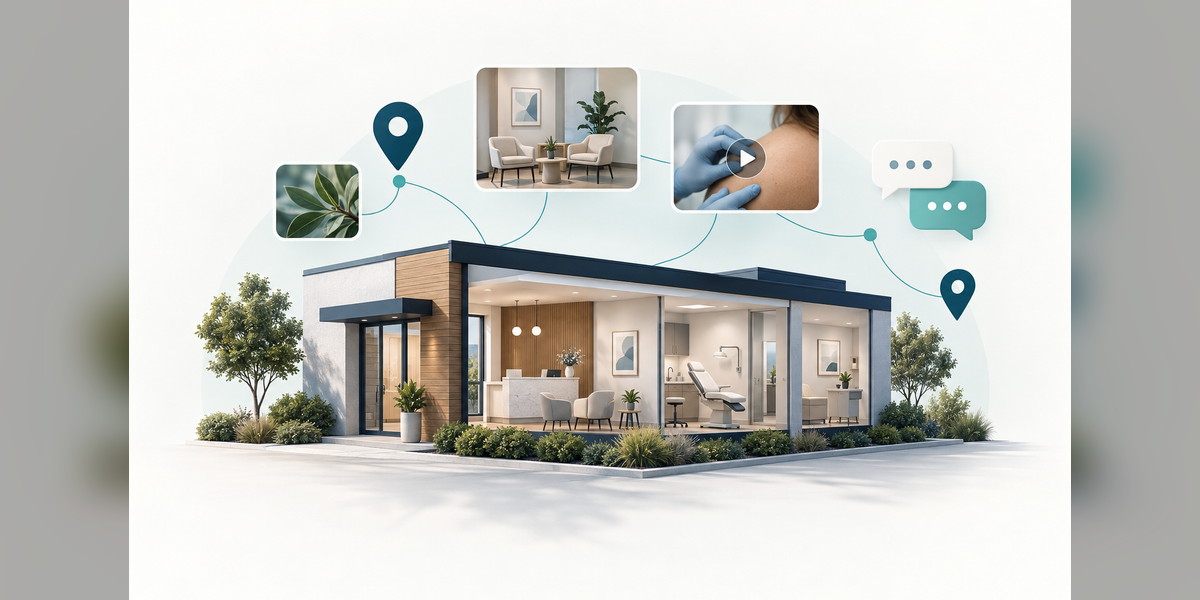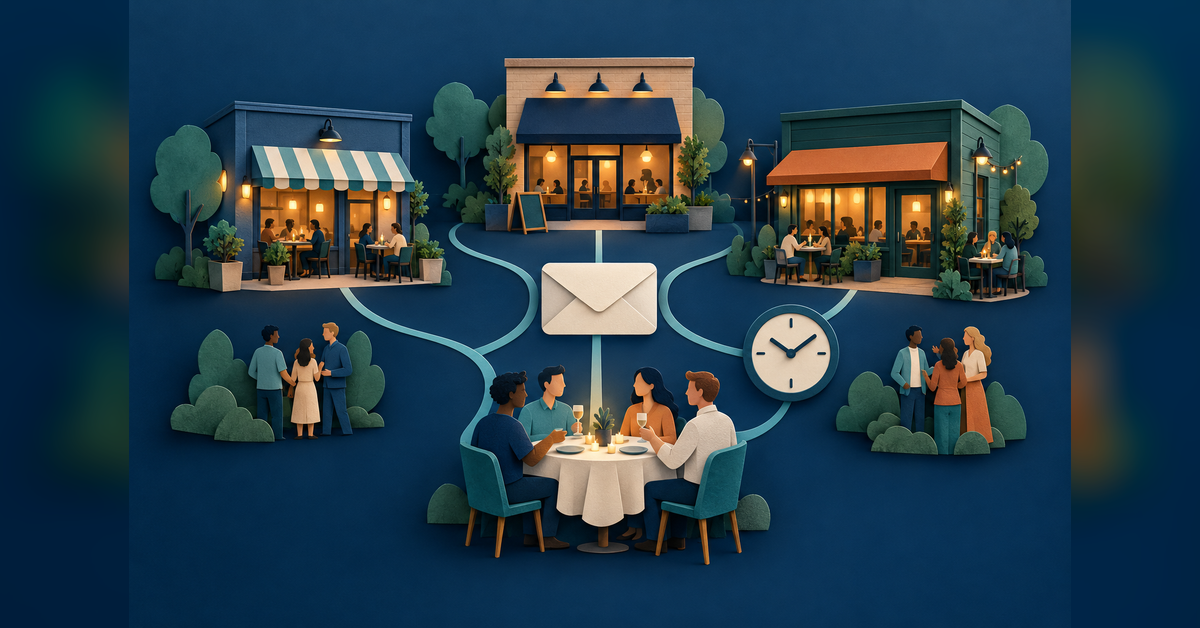

A franchise can have one brand and dozens of different reasons a guest returns. The restaurant franchise email marketing agency you hire should turn those differences into a workable plan for reservations, repeat visits and local accountability.
Start with a buying test, not a list of logos: can the agency explain who should receive an offer, which location should fulfill it, when to send it and how the restaurant will know whether it worked?
What is a restaurant franchise email marketing agency?
A restaurant franchise email marketing agency plans and operates email programs across restaurant locations. Its proposed scope should cover permission-based guest acquisition, segmentation, campaigns and lifecycle messaging, location approvals, and measurement tied to restaurant goals. The distinction from a general email vendor is the operating brief: shared brand standards with location-specific decisions.
Hire the operating model before the agency name
Write down the job before requesting proposals. A restaurant group seeking occasional announcements has a different brief from a franchise system coordinating guest records, local promotions, reservation journeys and private-event inquiries.
Percepture publishes this guide and offers email marketing services. Include our team in your evaluation when retention needs to connect with a broader omnichannel marketing plan. Require the same written scope, accountable owners and relevant references from every candidate.
- Campaign production partner: Consider this scope when your team already owns segmentation, platform administration and measurement, but needs reliable creative and campaign execution.
- Lifecycle operator: Consider this scope when the main assignment is building and maintaining welcome, birthday, repeat-visit, lapsed-guest and inquiry follow-up journeys.
- Integrated marketing partner: Consider this scope when email must share priorities with local discovery, paid campaigns, social content and public relations.
These are procurement categories, not quality rankings. A narrower partner may be the right choice when your internal team can cover the remaining work. Do not pay for an integrated promise while leaving the actual handoffs outside the contract.
Give every finalist the same restaurant operating problem
Use this hypothetical audition: two franchise locations share a guest who selected one preferred restaurant. One location has a different delivery radius, a birthday campaign is already scheduled, and the guest has just requested private-dining information. Ask each agency to show the proposed message sequence, exclusions, approvals and reporting.
Mark each response demonstrated, specified or absent. Demonstrated means the agency supplies a relevant example or shows the proposed workflow. Specified means the proposal names the work and its owner. Absent means the answer remains a general promise.
| Decision area | Ask the agency | What a usable answer contains |
|---|---|---|
| Guest permission | Which records are eligible for each message? | Documented eligibility rules, source fields and suppression handling. |
| Location ownership | Who controls the guest relationship and local offer? | A preferred-location rule, an approval owner and a cross-location exception process. |
| Campaign collisions | What happens when birthday, promotional and event messages overlap? | Priority rules, frequency controls and a named exception owner. |
| Data and integrations | Which booking or purchase events reach the email system? | A field map, update expectations, error handling and a test plan. |
| Restaurant outcomes | How will you distinguish an inquiry, booking and completed visit? | Separate definitions, identifiable data sources and a reconciliation process. |
| Account exit | What remains available if we change agencies? | Contract terms for account access, creative files, documentation and permitted data exports. |
Do not turn this into a contest for the slickest demonstration. Ask who will operate the account after the pitch, who handles a broken booking link on a Friday afternoon, and which changes require extra fees. Put setup, integrations, platform charges, creative production and ongoing management on separate proposal lines.
Build the brief around the Guest Timing & Value Loop
The Guest Timing & Value Loop connects six operating decisions. Use it to make the agency’s responsibilities explicit—not to prescribe the same campaign sequence for every restaurant concept.
- Capture permission with a clear exchange. Explain what guests will receive and how often you expect to contact them. If you offer a small signup perk, place eligibility and redemption terms beside the offer and include the incentive in the legal review.
- Segment by location, frequency, occasion and value. Start with information guests supplied and records you are permitted to use. Separate observed visits from inferred preferences. Define a lapsed guest relative to the concept’s normal return pattern rather than using one cutoff across the franchise.
- Test the planning window. Distinguish when a guest receives an email, makes a reservation and arrives. Build timing experiments around the decision you want to influence.
- Operate relevant lifecycle flows. Prioritize welcome, birthday, anniversary, VIP, lapsed-guest and private-dining journeys according to available data and restaurant capacity. Do not launch a flow simply because the platform provides a template.
- Offer a human handoff when requested. For a private-event inquiry, let the guest request a conversation and give a named restaurant team member responsibility for responding. An email open alone should not trigger a sales call.
- Measure completed outcomes and feed them back. Review reservations, completed visits, recorded revenue and return behavior by location. Use the findings to revise eligibility, timing and the offer—not just the subject line.
Keep the data request proportionate. A birthday program can begin with a voluntarily supplied month and day; do not make a full birth date mandatory without a specific reason. A preference center should let guests express useful choices, such as location, dining occasion and message frequency, without becoming a questionnaire.
For high-value inquiries, define value around the business opportunity and the guest’s stated needs. A private-room request with a date and party size deserves a different response from a general menu click. Route the inquiry with the context the guest supplied, an assigned owner and a follow-up deadline.
Test when guests make plans—not a universal send time
Ask the agency to separate three clocks: the email send, the booking or order, and the dining occasion. Then examine your own records for booking lead time, weekday versus weekend behavior, lunch versus dinner, and differences between locations.
For a weekend dinner campaign, one experiment could compare sends 48 hours before the intended visit, 24 hours before it and on the same day. Those are test windows, not a recommendation that every restaurant should use all three. Keep the audience, offer and creative comparable, and define the outcome before launching.
For lunch, test a planning window appropriate to the location and audience. A business-district restaurant and a neighborhood dining room can begin with different hypotheses. Keep sends in the guest’s relevant local time and exclude locations that cannot fulfill the promoted occasion.
Use OpenTable’s dining trends and Toast’s reservation research as sources of test ideas, not substitutes for your location’s history. Set dining-frequency and celebration segments from your own permitted records; do not assign a behavior to a guest merely because of an industry average.
Weather and local events belong in the operating plan as conditional inputs. Establish who checks the forecast or event schedule, who can pause a campaign and which restaurant confirms capacity. A weather-based message should not promise a patio experience that the location cannot deliver.
A sample 30-day daypart and lifecycle test calendar
This is a setup-and-learning calendar, not a schedule for emailing every guest every week. Assign eligible audiences, account for existing automated messages and keep the first test narrow enough to interpret.
| Days | Work and audience | Daypart or test | Decision to record |
|---|---|---|---|
| 1–5 | Map signup sources, preferences, suppressions and booking events. Test with internal records. | Check local time, location routing and mobile booking paths. | Which records and journeys are ready for a limited launch? |
| 6–12 | Run one dinner campaign for an eligible audience associated with a selected location. | Compare 24-hour and 48-hour planning windows with comparable groups. | What happened to bookings, completed visits and opt-outs? |
| 13–19 | Test a lunch message for a separate eligible audience. | Compare a same-day window with an earlier planning window; keep the offer consistent. | Does the evidence justify another test, a change or no decision yet? |
| 20–26 | Launch one lifecycle flow, such as welcome or birthday, after testing eligibility and exclusions. | Check entry conditions, message priority and location-specific redemption. | Are guests receiving the intended sequence without campaign collisions? |
| 27–30 | Reconcile restaurant records and review private-dining inquiry handoffs. | Compare available outcomes by location, audience and campaign. | What should continue, stop or be tested again? |
Do not declare a winning send time because a small group produced one extra booking. If the audience or outcome volume is limited, keep collecting comparable observations. Avoid changing the audience, discount, subject line and send time together when the question is specifically about timing.
Give franchisees local control inside shared guardrails
Put brand-wide rules and location-level choices in different parts of the operating agreement. Central ownership should cover identity standards, permission policy, suppression requirements, access controls and common measurement definitions. Define where franchisees can adjust menus, hours, capacity, local occasions and approved offers.
Require a clear rule for guests associated with multiple restaurants. Decide whether the guest chooses a preferred location, how secondary locations can communicate, and what happens when a location closes or changes ownership. Do not leave those decisions to whoever uploads the next list.
Separate dine-in, pickup and delivery journeys. For a delivery audience, ask whether you have a permitted, usable first-party contact record and a dependable way to determine service eligibility. Do not assume a DoorDash-style marketplace transaction gives the restaurant a marketing list.
Delivery radius, lunch availability and offer redemption should be checked before an audience is selected. Let location teams veto a send they cannot fulfill, but keep the reason and decision visible to the central owner. Local autonomy should not mean separate, uncoordinated suppression lists.
Choose the platform around a workflow you can demonstrate
An agency and an email platform are separate buying decisions. Evaluate the proposed stack against your actual booking, ordering and guest-data systems. Require a demonstration using the proposed subscription plan and integrations; product names alone do not settle fit.
| Workflow to investigate | Candidates to include in evaluation | Acceptance test to request |
|---|---|---|
| Restaurant guest and reservation workflow | SevenRooms and Toast | Show how the proposed stack connects a guest, location, booking or visit, marketing eligibility and restaurant outcome. |
| Branching lifecycle automation | Klaviyo and ActiveCampaign | Show entry and exit rules, event updates, campaign priority, exclusions and location routing using the restaurant’s proposed data. |
| A simpler team-operated campaign program | Mailchimp, Constant Contact and Brevo | Have the intended operator build an audience, obtain approval, send a test, handle an opt-out and produce the required report. |
For every candidate, settle plan eligibility, integration costs, implementation ownership, user permissions, support and export terms in writing. If a required booking or purchase event cannot reach the proposed system, decide whether the integration work belongs in the project or whether a simpler scope is the better purchase.
Ask the agency to demonstrate failure handling as well as the happy path. What happens when a location feed stops updating, a reservation is canceled or a guest’s eligibility changes? The proposal should identify who notices, who fixes it and which campaigns pause.
Make permission and compliance operational
Assign an owner to review sender identity, subject lines, postal-address placement, opt-out handling, suppression synchronization and vendor responsibilities against the FTC’s CAN-SPAM compliance guide. Include both central and franchise-operated campaigns in that review.
For operations subject to California privacy requirements, have counsel map the California CCPA guidance to collection notices, guest requests, vendor arrangements, data sharing and any signup incentive. Assess other applicable state requirements rather than assuming one policy settles every location.
Keep preference changes and unsubscribe controls distinct. Guests should not have to remain subscribed to update a location preference. Document how changes move between systems, how agencies receive them and who resolves a mismatch.
Review telephone outreach separately from email. Use an explicit inquiry or requested callback for the private-event handoff, confirm the applicable calling requirements and record the guest’s communication preferences. Do not treat engagement with a promotional email as a blanket invitation to call.
Measure the visit before celebrating the campaign
Choose the business outcome before choosing the report. Keep reservation requests, confirmed reservations, completed visits, online orders and private-event inquiries separate. Specify the time window, source system and location assignment for each measure.
Use Percepture’s attribution and analytics services as a discussion point when scoping how campaign records will be reconciled with restaurant outcomes. Require a worked reporting example from every shortlisted agency rather than accepting a dashboard image as the measurement plan.
Tracked revenue is not automatically incremental revenue. Where practical, design a comparable holdout before launch and agree how you will evaluate completed visits and recorded spend. Include discounts, platform charges and agency costs in the commercial review; keep any margin assumptions explicit.
Coordinate acquisition without blurring attribution. A local opening may involve digital PR, paid promotion and an email invitation. Give those activities a shared destination and consistent location details, but report their roles separately rather than awarding every channel the full value of the same booking.
For AI and local discovery, add questions about accurate location information and recommendation visibility to the broader brief. Discuss generative engine optimization services as a separate discovery workstream—not as an email platform or a substitute for measuring reservations.
Leave the pitch with a contract-ready brief
Before selecting a partner, reduce the proposal to a page that a franchise operator can use: eligible audiences, location permissions, priority journeys, timing tests, approval owners, data dependencies, reporting definitions and commercial terms.
Name who owns each decision inside the restaurant group and at the agency. Specify what must work at launch, what will be tested later and what happens when a restaurant cannot fulfill a campaign. That is the buying standard: a program your locations can operate and your leadership can evaluate.
Compare the proof behind the proposal
When reviewing agency examples, look for a defined starting point, a clear scope and outcomes relevant to your assignment. Ask each finalist for references that match the work you are buying.