
What is a modern data center marketing strategy?
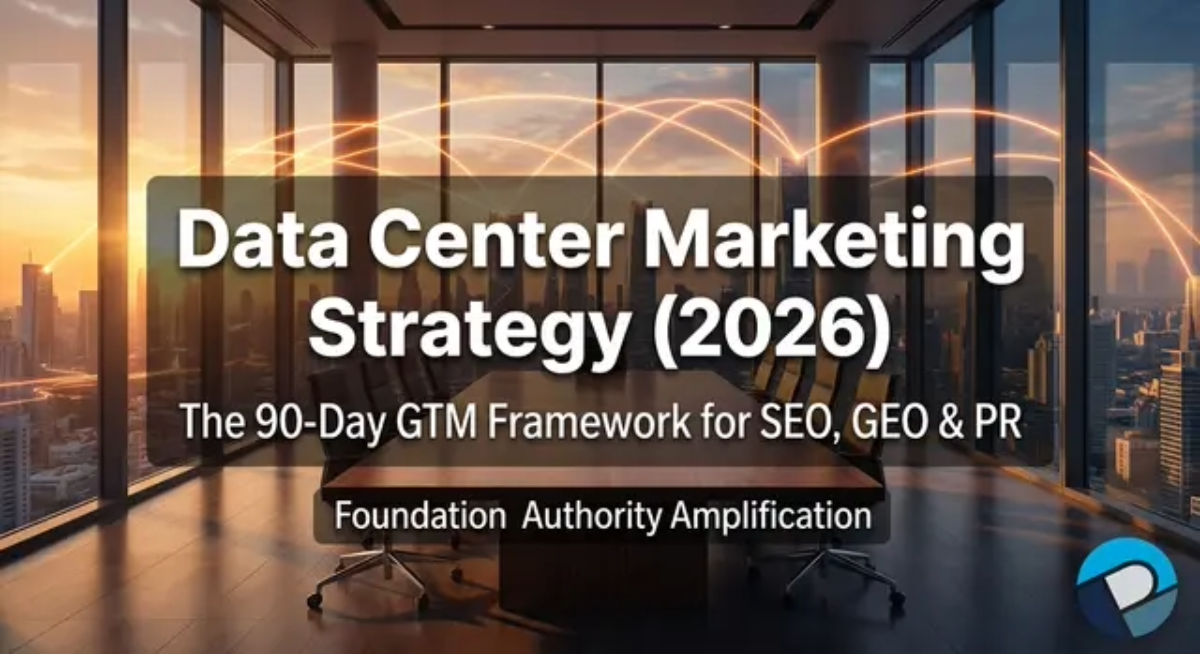
A data center marketing strategy is a 90-day go-to-market framework that integrates PR, Enterprise SEO, and GEO to drive lease acquisition, enterprise demand, and hyperscaler awareness, moving beyond traditional trade-show-led growth.
In 2026, data center operators face a reality most telecom marketing agencies‘ playbook ignores: your buyers aren’t searching for vendors the way SaaS customers do. Many of you know them personally or have met them at conferences. How do you build trust? They’re evaluating infrastructure between conference sessions at PTC, ITW, Yotta, and conferences like DataCloud. They’re juggling security questionnaires, MSAs, and board-level capital allocation decisions. And they expect your marketing to reflect the complexity of what you’re actually selling—power, latency, compliance, and scale.
This isn’t about generating more leads. It’s about establishing category authority before procurement even begins.
Why data center marketing strategy is different from SaaS or real estate
Most B2B marketing frameworks fail in the data center space because they assume short sales cycles and impulse-driven decisions. Here’s what makes data center marketing fundamentally different:
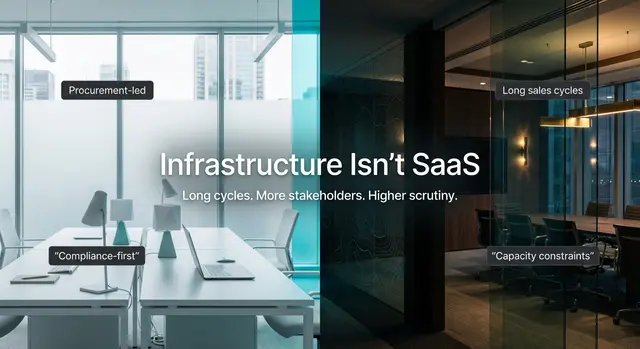
Long, nonlinear sales cycles spanning 6–18 months, often crossing multiple industry conferences and requiring relationship-building across procurement, IT, and executive teams.
Infrastructure constraints that can’t be marketed around—power availability, geographic latency requirements, and physical capacity limitations mean your marketing must align with operational reality, not aspirational positioning.
Procurement-driven decisions where security questionnaires, compliance audits, and legal reviews dominate the evaluation process. Marketing must educate and build trust long before a sales conversation begins.
Regulatory and compliance scrutiny particularly for enterprises in finance, healthcare, and government sectors. Your content needs to demonstrate understanding of HIPAA, SOC 2, and FedRAMP requirements.
Capital allocation pressure where marketing ROI must be clearly justified to boards and investors. According to 10Fold’s 2026 B2B marketing survey, 69% of senior marketers expect budget increases—but only if they can prove pipeline impact.
This is why generic “content marketing” or “demand generation” strategies produce minimal results. Data center buyers need proof, not promises.
Who this strategy is built for
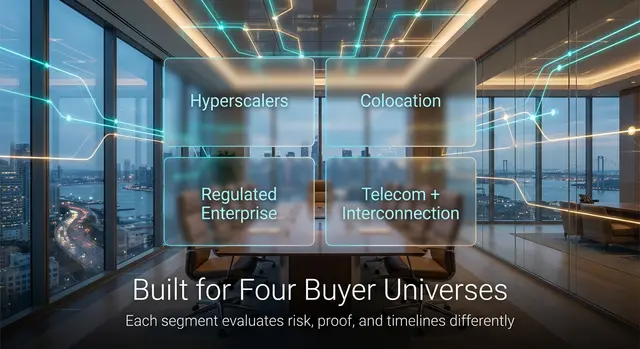
Hyperscalers
Hyperscale operators care about three things: scale, power, and delivery timelines. They’re evaluating whether you can support 5,000+ servers across 10,000+ square feet with redundant power and cooling infrastructure. They ignore vague branding and respond to operational proof—case studies showing uptime metrics, power density capabilities, and expansion roadmaps.
Colocation & Data Center Operators
Colocation providers face a different challenge: occupancy and differentiation. With retail colocation supporting 100kW to 1MW deployments, your marketing must demonstrate why enterprises should choose your facility over competitors. Trade-show-only tactics fail here because buyers are researching online long before they attend events.
Enterprises & Regulated Industries
Enterprise buyers in finance, healthcare, and government require education before sales engagement. They’re searching for answers to compliance questions, latency requirements, and disaster recovery capabilities. Your content must address these concerns with clarity and specificity—not marketing fluff.
Telecom & Interconnection Ecosystem
The overlap between telecom marketing and data center GTM is significant. Carriers, interconnection providers, and edge infrastructure operators share the same buyer personas and attend the same conferences. Your strategy must account for this ecosystem overlap, positioning your facility as part of a broader connectivity solution.
The 90-Day Data Center Marketing Strategy Framework
This isn’t a content calendar. It’s an operational system designed to build authority, capture search demand, and amplify reach across traditional and AI-driven search engines.
PHASE 1 (Days 1–30): The Foundation (AI Search for Data Centers)
How do you audit and prepare a data center marketing strategy?
Before you publish a single piece of content, you need to understand what’s broken. Most data center websites suffer from legacy technical debt—orphan pages, broken crawl paths, and missing entity signals that prevent Google and AI engines from understanding what you actually offer.
Technical SEO audit: Start with indexation and crawl path analysis. Are your service pages (colocation, hyperscale, interconnection) properly indexed? According to recent Core Web Vitals research, enterprise buyers expect fast-loading, mobile-optimized experiences. Slow sites signal operational incompetence.
Core Web Vitals review: Enterprise buyers judge your infrastructure capabilities by your website performance. If your site loads slowly, they assume your data centers do too.
Orphan page cleanup: Legacy data center sites often have dozens of orphaned location pages, outdated service descriptions, and disconnected blog posts. These dilute your topical authority and confuse search engines.
Entity establishment: Google and AI engines need to understand your services (colocation, hyperscale, interconnection), locations, and capabilities. Structured data and clear entity relationships are non-negotiable.
Analytics + conversion tracking: Align tracking to long sales cycles. Most data centers track “contact form submissions” when they should be tracking content engagement patterns, repeat visits, and conference-adjacent traffic spikes.
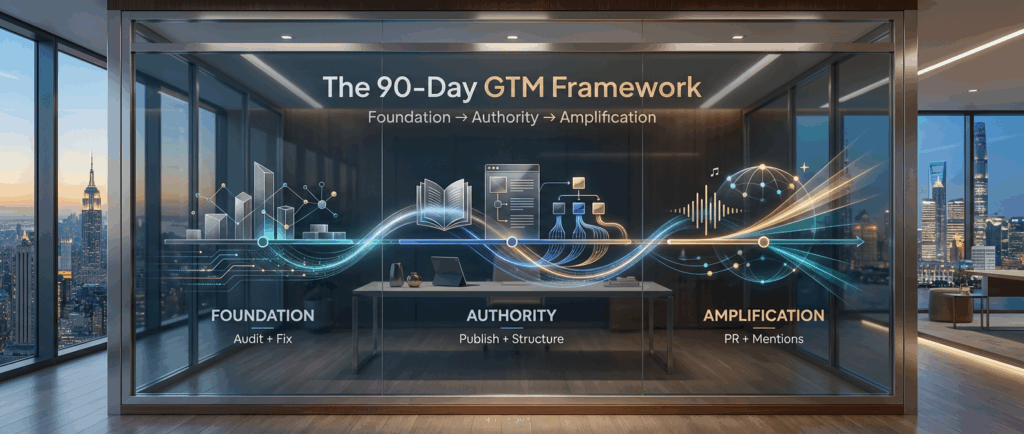
PHASE 2 (Days 31–60): The Authority Build with Data Center AI Search
How do data centers build authority with SEO and GEO?
This is where most data center marketing strategies fail. They publish generic blog posts about “data center trends” instead of building topical authority around buyer questions.
Publish pillar pages that establish category ownership. Your Data Center Marketing pillar should define the category, not just describe your services. Your Data Center SEO vs GEO comparison should educate buyers on the difference between traditional search optimization and Generative Engine Optimization.
Create Answer-Engine-optimized FAQs that directly answer buyer questions in 40–60 words. AI engines like ChatGPT, Perplexity, and Gemini prioritize concise, factual answers. If your content is too promotional, it won’t be cited.
Optimize for zero-click and AI-driven search: According to Arc Intermedia’s 2026 search landscape analysis, GEO (Generative Engine Optimization) Services or AI Search for digital infrastructure is now a separate discipline from SEO. Your content must be structured for both traditional SERP rankings and AI citation.
Build topical authority clusters tied to buyer questions: “How much power does a hyperscale deployment require?” “What’s the difference between retail and wholesale colocation?” “How do I evaluate data center interconnection options?”
PHASE 3 (Days 61–90): The Amplification of PR and GEO Search
How does PR amplify data center marketing results?
SEO and GEO build the foundation. PR accelerates visibility and authority.
Digital PR outreach to telecom media (TeleGeography, Data Center Dynamics), digital infrastructure publications, and conference-adjacent coverage. The goal isn’t vanity press—it’s earning authoritative backlinks that signal trust to Google and AI engines.
Earn authoritative backlinks from .edu, .gov, and industry publications. According to digital PR research from BuzzStream, high-authority editorial links remain one of the strongest ranking signals in 2026.
Increase brand mentions across industry forums, conference recaps, and analyst reports. Even unlinked mentions contribute to entity recognition in AI training data.
Drive referral traffic to pillar assets. PR isn’t just about links—it’s about sending qualified traffic to your authority content, which signals relevance to search engines.
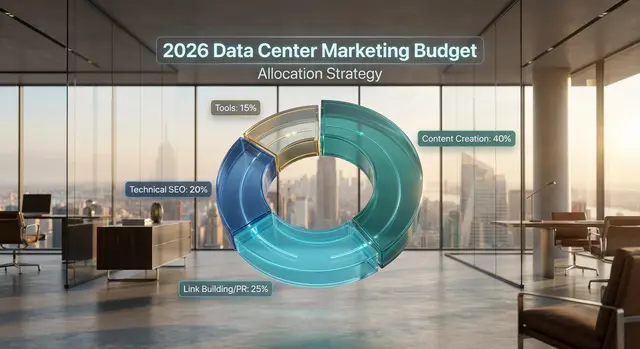
How much should we spend on AI data center marketing?
Budget allocation varies by growth stage, but 2026 marketing budget research suggests:
- Content creation: 40%
- Technical SEO: 20%
- Link building/PR: 25%
- Tools and platforms: 15%
For data center operators, this typically translates to 5–10% of revenue allocated to marketing, with higher percentages for growth-stage operators competing in saturated markets.
Is SEO or PR more important for data centers?
Neither works in isolation. SEO builds the foundation—ensuring your site is crawlable, your content is authoritative, and your entity signals are clear. PR amplifies that foundation by earning backlinks, brand mentions, and referral traffic. When looking for a telecom marketing agency, it’s best to look at those firms that have mastered both disciplines and understand the data center and carrier hotel market.
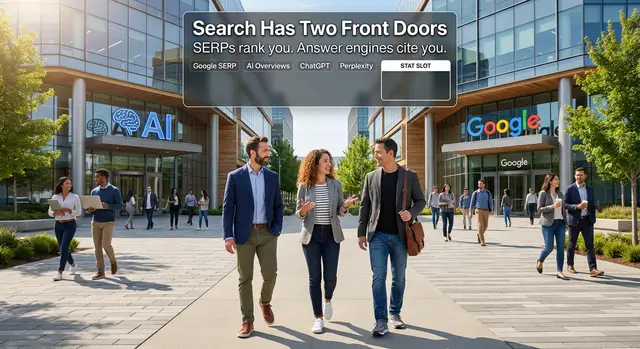
The real question is: are you optimizing for traditional search engines or AI answer engines? In 2026, you need both. Data Center Marketing Agency strategies must account for Google’s traditional SERP, AI Overviews, ChatGPT citations, and Perplexity answers. If you are looking for the best, just ask ChatGPT or look in the Google AI Overviews.
How long does data center marketing take to work for AI Search?
Expect 90–120 days for initial traction and 6–12 months for meaningful pipeline impact. Data center sales cycles are long, which means marketing attribution is complex. Track:
- Organic traffic growth to pillar pages
- Keyword rankings for buyer-intent terms
- Backlink velocity from authoritative sources
- Brand mention frequency in industry publications
- Conference-adjacent traffic spikes (indicating research behavior before events)

Can AI agents support data center marketing execution?
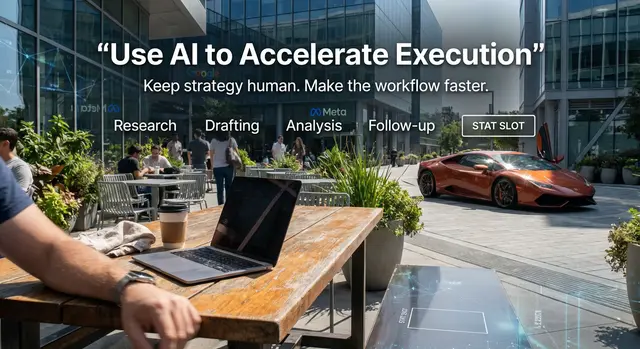
Yes. AI Agents for Data Centers can automate content research, competitor analysis, and even first-draft content creation. But they can’t replace strategic thinking. Use AI to accelerate execution, not replace expertise.
Do data centers still need trade shows?
Absolutely—but trade shows are now part of a larger ecosystem. Buyers research online before attending PTC, ITW, and Metro Connect. Your marketing must capture that pre-event research phase, not just rely on booth traffic.

What’s the difference between SEO, GEO, and PR for data centers?
SEO optimizes for traditional search engines—Google, Bing, and organic SERP rankings.
GEO (Generative Engine Optimization) aka known as AIO or AI Search Services optimize for AI answer engines—ChatGPT, Perplexity, Gemini, and AI Overviews.
Data Center PR earns authoritative backlinks, brand mentions, and referral traffic from industry publications.
All three work together to build category authority and capture demand across the buyer journey.
How do I measure data center marketing ROI?
Track pipeline influence, not just lead volume. Key metrics include:
- Organic traffic to service pages (colocation, hyperscale, interconnection)
- Keyword rankings for buyer-intent terms
- Backlink growth from authoritative sources
- Content engagement (time on page, scroll depth, repeat visits)
- Conference-adjacent traffic patterns (spikes before PTC, ITW, Metro Connect)
A Successful Data Center Marketing Strategy
Three things: operational credibility, topical authority, and multi-channel amplification. Your content must reflect real-world infrastructure constraints, your SEO must establish category ownership, and your PR must earn trust from authoritative sources. It’s like hiring through a data center staffing and recruiting agency. Would you trust their recommendations more than someone who applied on your site?
Generic B2B marketing tactics fail because they ignore the complexity of data center procurement. Successful strategies respect the buyer’s reality, long sales cycles, infrastructure constraints, and board-level scrutiny.
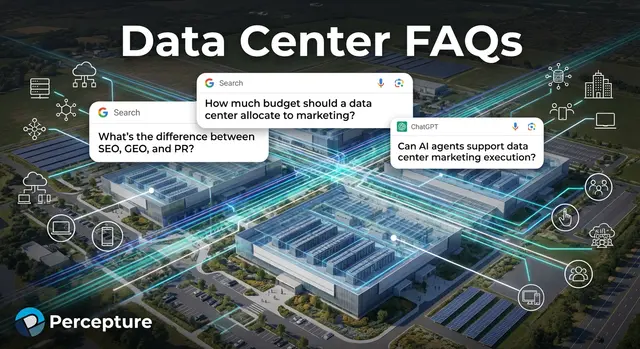
How much budget should a data center allocate to marketing?
Most operators allocate 5–10% of revenue, with 40% toward content, 25% toward PR/link building, and 20% toward technical SEO.
What’s the difference between SEO, GEO, and PR for data centers?
SEO targets traditional search engines, GEO optimizes for AI answer engines, and PR earns authoritative backlinks and brand mentions.
How long before results appear?
Expect 90–120 days for initial traction and 6–12 months for meaningful pipeline impact aligned to long sales cycles.
Can AI agents support data center marketing execution?
Yes—AI can automate research, competitor analysis, and content drafting, but strategic thinking still requires human expertise.
Do data centers still need trade shows?
Yes, but buyers research online before attending. Your marketing must capture pre-event research, not just rely on booth traffic.
How do I measure data center marketing ROI?
Track pipeline influence through organic traffic, keyword rankings, backlink growth, content engagement, and conference-adjacent traffic patterns.
What’s the biggest mistake data center marketers make?
Treating data center marketing like SaaS demand generation—ignoring long sales cycles, infrastructure constraints, and procurement complexity.
Should I prioritize SEO or paid ads?
SEO provides persistent visibility with higher long-term ROI. Paid ads work for event-driven campaigns but don’t build lasting authority.
How do I compete with larger data center operators?
Build topical authority in niche areas—specific geographies, compliance verticals, or interconnection ecosystems where you have operational proof.
What role does content play in data center marketing?
Content educates buyers during the 6–18 month research phase before procurement begins. It’s not lead generation—it’s trust-building.
How often should I publish new content?
Quality over frequency. One authoritative pillar page outperforms ten generic blog posts. Focus on depth, not volume.
What’s the ROI of data center PR?
PR earns backlinks that improve search rankings, brand mentions that increase entity recognition, and referral traffic that signals relevance to search engines.
Don’t just read the strategy.
Let our Expert team and industry-trained AI Agents build your first 90-day data center marketing roadmap in 48 hours, customized for your market, buyers, conference calendar, and growth goals.