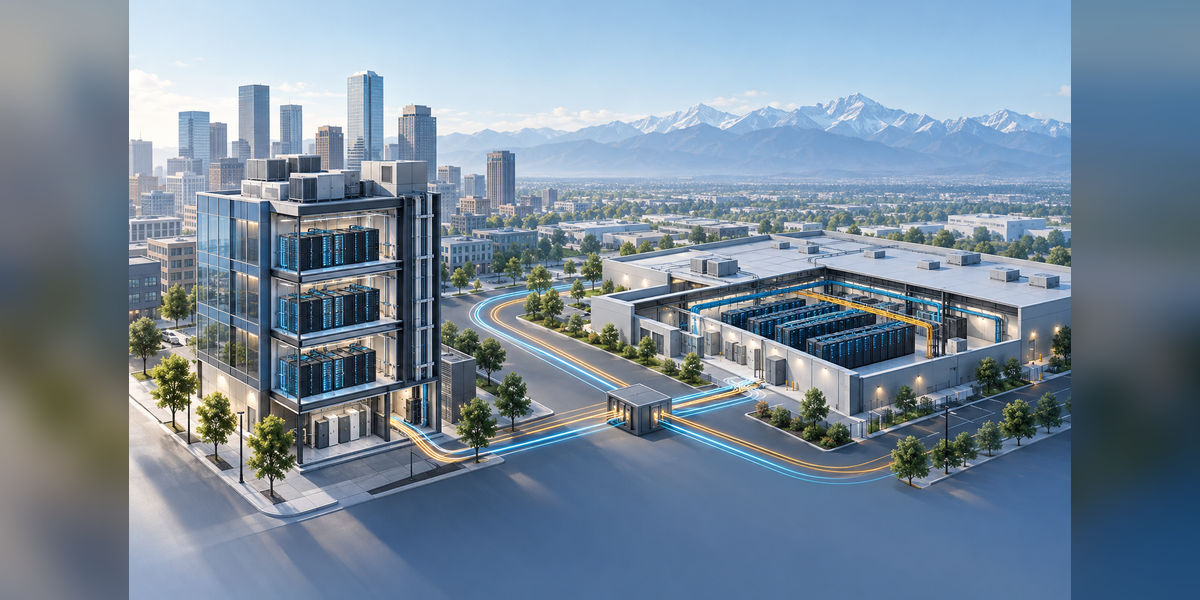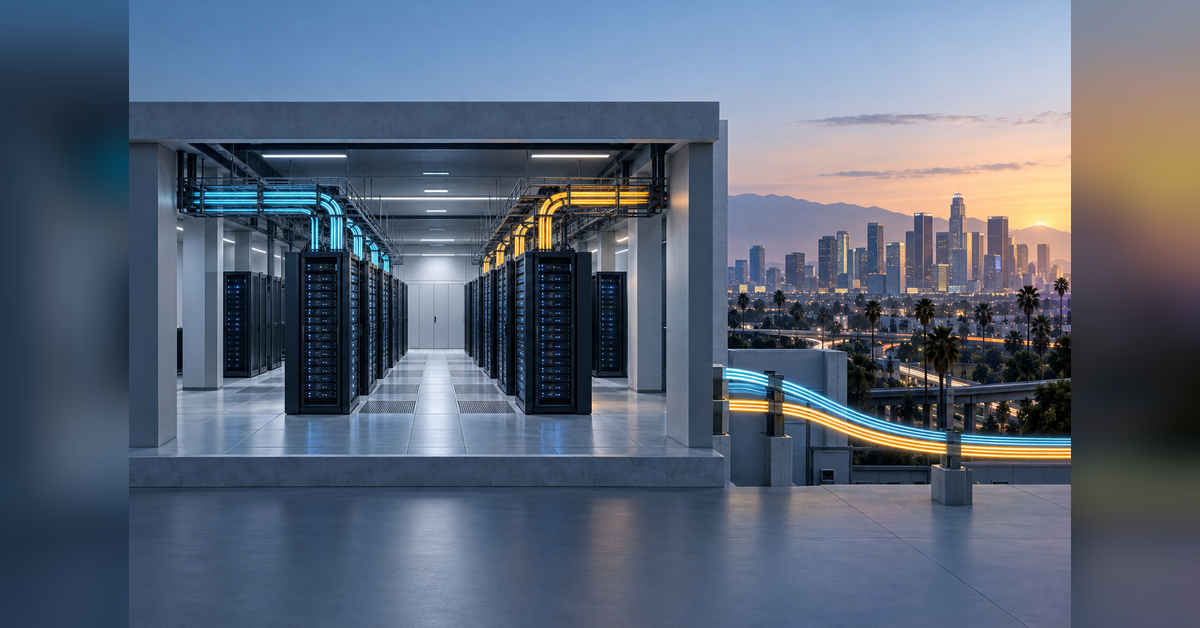

The best Los Angeles data centers are the facilities that can deliver your required network paths, usable power, cooling and contract terms—not simply the most recognizable names. Start with CoreSite, Digital Realty and Equinix, then compare individual sites rather than treating an operator’s entire Los Angeles footprint as one interchangeable product.
Before requesting a proposal or tour, write down the workload, required connections and move-in deadline. Use the data center site selection checklist to organize those requirements, then apply the facility-fit questions below to each candidate.
What is Los Angeles colocation?
Los Angeles colocation means placing your equipment in a third-party data center serving the city or wider metropolitan area. The buying decision concerns a specific facility and service: rack or suite space, power, cooling, physical access and network connections. A market name alone does not establish the location or capabilities of the space offered.
Which best Los Angeles data centers fit your workload?
Start with the constraint that would disqualify a facility. For a network-heavy deployment, that may be access to particular carriers or cloud connections. For a compute-heavy deployment, it may be supported rack density, cooling design or the date usable power can be delivered. Rank candidates only after they clear those requirements.
Write a short workload brief that covers:
- The equipment being installed, including rack dimensions, weight and expected IT load.
- The networks, cloud services and other facilities it must reach.
- The required installation date and acceptable migration window.
- The first expansion step, not just the opening deployment.
- Who will operate the equipment and provide on-site assistance.
Separate the space purchase from the connection design. Our guide to data center interconnect options addresses that second decision; a facility shortlist should reflect both.
Do not average away a failed requirement. A favorable rack quote cannot compensate for an unavailable connection that the application requires.
Los Angeles city versus the wider metro
Ask for the street address and municipality before comparing proposals. Los Angeles city facilities and separate metro locations in El Segundo or Torrance should remain distinct rows in your shortlist. That distinction keeps access planning, network routing and operational assumptions attached to the place where the equipment would actually sit.
For each location, check the practical operating route: where shipments arrive, how technicians gain access, who can escort contractors and how emergency visits are handled. Evaluate the actual building rather than assuming that a recognizable market label answers those questions.
Keep geographic separation and network diversity separate as well. Two addresses do not, by themselves, document independent fiber routes. Request the relevant route and entrance information for each proposed service, including any common segment outside the buildings.
Compare CoreSite, Digital Realty and Equinix at the facility level
Use these operators as discovery starting points, then request an address-specific offer. The comparison below organizes procurement questions rather than assigning performance scores. Its scope is the November 3, 2026 buyer guide; it does not represent live inventory, quoted pricing or a capacity reservation.
Start with the operator’s own material: the CoreSite Los Angeles facilities overview and Digital Realty Los Angeles market page. Carry the selected facility identifier into every subsequent document.
Operator shortlist: what the written offer must establish
| Operator starting point | City / metro scope | Retail / wholesale / private / planned | Network evidence to request | Density, power and tour question |
|---|---|---|---|---|
| CoreSite Los Angeles campus | Compare LA1, LA2 and LA3 as separate Los Angeles facility candidates. | Identify whether the offer is for racks, a cage or a larger dedicated deployment; separate deliverable space from future expansion. | List the required carriers, cloud connection handoffs and any interbuilding service used. | What capacity is committed to this exact deployment, and where will its power and cooling be delivered? |
| Digital Realty Los Angeles market | Record the municipality and address of the specific market option proposed. | Request the exact retail or wholesale service being offered; do not substitute a market announcement for an offer. | Document the service path from the proposed space to each required network destination. | Which capacity is ready for the requested installation date, and which milestones remain before handover? |
| Equinix Los Angeles options | Distinguish Los Angeles city sites from separate El Segundo and Torrance locations. | Name the proposed facility and orderable deployment format; keep private or planned capacity outside an immediate colocation shortlist. | Specify whether each required connection is local to the building or delivered through another location. | What rack configuration is supported in the offered space, and what changes require engineering review? |
A useful shortlist is a set of complete facility records, not three operator logos. Each record should contain an address, a service description, a network design, a capacity commitment and a commercial offer.
Interconnection hubs and high-density compute solve different problems
A building with power and a building with the right connections solve different problems. Interconnection concerns how the deployment reaches networks, clouds and other infrastructure. Compute placement also requires a workable physical design. Evaluate both, but do not use evidence about one as proof of the other.
A carrier hotel brings the connection question into focus: which networks can you reach, through what handoff and under whose service agreement? For a downtown candidate associated with One Wilshire, ask the same address-specific questions you would ask elsewhere. Proximity is not a substitute for a documented service path.
Request a connection schedule covering:
- The carrier or cloud service and the exact handoff location.
- Whether the connection is on-site, interbuilding or carried across a metro service.
- Cross-connect installation, recurring charges and responsibility for troubleshooting.
- The physical routes used by primary and backup services.
Use the data center fiber connectivity guide to structure route questions. When comparing transport proposals, distinguish dark fiber vs wavelength vs ethernet rather than treating them as equivalent purchases.
After defining the paths, compare the best data center interconnect solutions against that design—not against a generic feature list.
For AI workloads, separate communication within the compute cluster from traffic crossing the WAN. The AI training vs inference data centers comparison helps frame that workload distinction. Neither a carrier list nor an AI-ready label replaces the proposed equipment and cooling design.
Power, cooling and physical delivery: ask for the usable configuration
Request the power and cooling configuration for your equipment, in your proposed space, on your required date. Keep utility supply, facility capacity and the critical IT load committed to your deployment as separate fields. Likewise, distinguish capacity available at handover from capacity dependent on later construction or equipment delivery.
For power, ask the operator to identify circuit capacity, voltage, usable loading limits, A/B feed arrangements and the contractual power commitment. Have your engineering team reconcile those details with the equipment schedule. Do not assume that two feeds mean twice the usable workload capacity.
For cooling, submit the actual rack layout and equipment specifications. Request the supported heat-removal approach, operating conditions and any prerequisites for liquid-cooled equipment. Ask which party supplies, operates and maintains each part of the proposed cooling arrangement.
Our data center power availability guide provides a related planning lens. In the proposal itself, require dates and responsibilities rather than relying on a campus-level capacity statement.
Physical delivery deserves its own check. Walk the receiving area, freight route and installation path. Confirm cabinet clearances, floor-loading review, staging arrangements and restrictions on installation work. The offer should explain what happens if a dependency misses the agreed date.
Percepture’s LA Interconnection Fit checklist
Use this five-step editorial checklist to turn a market shortlist into comparable facility offers. Complete each step for the proposed site and service; do not carry an answer from another building into the record.
Locate the actual facility
Record the operator, facility identifier, street address and municipality. Add receiving access, technician access and the equipment installation route. Keep city and metro options separate.
Identify the buyable service
Specify racks, cage space or a dedicated suite, plus the power commitment and service term. Separate an orderable deployment from private infrastructure, announced projects and possible future phases.
Verify the network paths
Map required destinations to actual handoffs. Document cross-connects, interbuilding links, carrier responsibilities and route diversity. Ask who owns fault isolation when multiple suppliers are involved.
Validate physical capacity
Reconcile the equipment schedule with rack density, usable power, cooling, weight and installation constraints. Record the ready date and any engineering or construction dependencies.
Compare commitments and expansion
Align the SLA, billing terms, remote hands, renewal provisions and next deployment phase. Distinguish a contractual expansion right from an informal expectation of future space.
Worked example: four racks with network and growth requirements
This is an illustrative procurement scenario, not a description of a provider or client result. Assume a business needs four racks at an 8 kW IT load per rack, two independent WAN paths, private cloud connectivity and another equipment phase within a year. Its initial equipment demand is 32 kW of IT load.
Suppose a downtown candidate documents the required connections but has not committed to the proposed rack configuration. A metro candidate commits to that configuration, while its cloud connection requires a separate transport service.
Neither offer is complete enough to win. Ask the downtown candidate for the engineered rack and cooling commitment. Ask the metro candidate for the end-to-end transport design, costs and responsibilities. Then compare completed offers, including the next deployment phase.
The next step is a technical clarification, not a brand vote. If neither candidate meets the deadline with a complete design, widen the shortlist rather than lowering an essential requirement.
What a colocation proposal must specify
A comparable proposal names the facility, deployment, delivery date and complete commercial scope. Send every candidate the same requirements document. Ask each to return the same response schedule so that omissions remain visible instead of disappearing inside differently formatted sales presentations.
Include these fields in the response:
- Space and power: rack or suite allocation, committed load, circuit details and billing basis.
- Connections: installation and recurring charges, demarcation points and third-party dependencies.
- Operations: remote-hands scope, dispatch process, access rules and escalation contacts.
- Delivery: handover conditions, customer obligations and consequences of missed milestones.
- Contract: term, renewal, increases, termination provisions and expansion commitments.
- SLA: covered services, measurement method, exclusions, notification duties and credit process.
Compare recurring and one-time charges separately. Request a list of charges outside the base quote, including the services your operating plan would actually use. Apply the same deployment assumptions and contract period to every commercial comparison.
An SLA is a contractual document, not a substitute for evidence about a facility’s design or a separate certification. Review the actual scope of each document rather than treating the labels as interchangeable.
Keep AI discovery separate from facility validation
Use AI answers to discover names and questions, then return to operator documentation and written offers. A provider mention is different from a source citation; neither establishes available capacity, traffic to a website or a commercial outcome.
For marketing teams following those public answers, Prime AI Visibility is a Percepture product. The overview of how Prime AI Visibility works belongs to that visibility task, not facility validation. Keep a baseline, record content changes and recheck the same questions before drawing conclusions about changes in answers.
When should you compare Los Angeles with other markets?
Compare another market when Los Angeles is not a fixed requirement or when no candidate meets the physical, network and delivery constraints. Use the same workload brief in each market. Otherwise, a cheaper-looking quote may simply describe a different service, power commitment or connection design.
For a broader in-state search, use the best California data centers guide to expand the geographic shortlist. Keep the Los Angeles requirements intact while comparing alternatives.
If the business is choosing between regional deployments, the best New York City data centers guide provides another location-specific starting point. Compare measured application requirements and operational needs rather than assuming the two regions are interchangeable.
Bring the offers back into one data center market comparison: equivalent workload, equivalent service scope, documented connection paths and explicit delivery commitments. Geography should be a decision variable, not a shortcut around the engineering requirements.
Questions to resolve before a site tour
Does this facility sit in Los Angeles or the metro?
Use the street address and municipality, not the market label. Keep Los Angeles city, El Segundo and Torrance as distinct locations in the shortlist, and attach access and network-route questions to the proposed building.
Can I buy racks or only wholesale capacity?
Request the deployment format explicitly: individual racks, a cage or a dedicated suite. Ask the operator to identify the purchasable service and minimum commitment for the specific facility rather than extrapolating from its wider portfolio.
Which networks and cloud on-ramps are actually on-site?
Request the handoff location and service path for every required connection. Distinguish a connection delivered inside the building from one reached through another facility or a metro transport service, and document the responsible suppliers.
Is power available now or only planned?
Ask for the usable power committed to your deployment and its handover date. Put later phases, construction dependencies and planned capacity in separate fields; do not count them toward an immediate installation requirement.
How is rack density supported?
Submit the equipment schedule and rack layout for engineering review. Request the supported electrical and cooling configuration for those racks, including operating limits, required modifications and responsibility for any liquid-cooling equipment.
Does a carrier hotel suit AI training?
Evaluate the proposed training system rather than the building label. Check rack power, cooling, space and the cluster’s internal networking requirements separately from WAN connectivity. Strong interconnection evidence alone does not answer the compute-design questions.
What belongs in the SLA?
Specify the covered service, measurement method, exclusions, maintenance treatment, incident notification, escalation and credit process. Review the actual contractual language alongside the deployment design; an SLA does not independently certify the facility.
Which costs sit outside the rack price?
Request an itemized schedule for power, cross-connects, transport, installation, remote hands, access-related services and contractual increases. Compare only charges relevant to the same deployment scope, and separate one-time fees from recurring charges.
Before booking the tour, send each operator the same completed workload brief and request an address-specific response. Use the visit to resolve the remaining technical and operational questions. Make the final selection from documented commitments—not from the order in which providers appear in a search result.

About Bob Generale
Bob Generale is President of Percepture, a global digital marketing, public relations and AI systems agency established in 2004. His work connects search strategy, digital PR, useful content and conversion planning around the questions buyers need answered. Bob’s approach starts with understanding the audience, learning how the business actually works and turning that expertise into clear explanations people can use. He advocates practical frameworks, coordinated execution and measurement that separates visibility from qualified opportunities and revenue. Prime AI Visibility is a Percepture product, reflecting his interest in making AI search insights actionable for marketing teams. In this article, he brings that operator perspective to evaluating options, clarifying tradeoffs and helping readers decide what to do next.