
AI inference in Edmonton is a deployment option for teams serving industrial facilities, field operations and enterprise users across Alberta. The placement decision comes down to how images, documents and other inputs reach the model from the actual site, and what the application can do when that connection degrades.
Start with two Alberta workload profiles
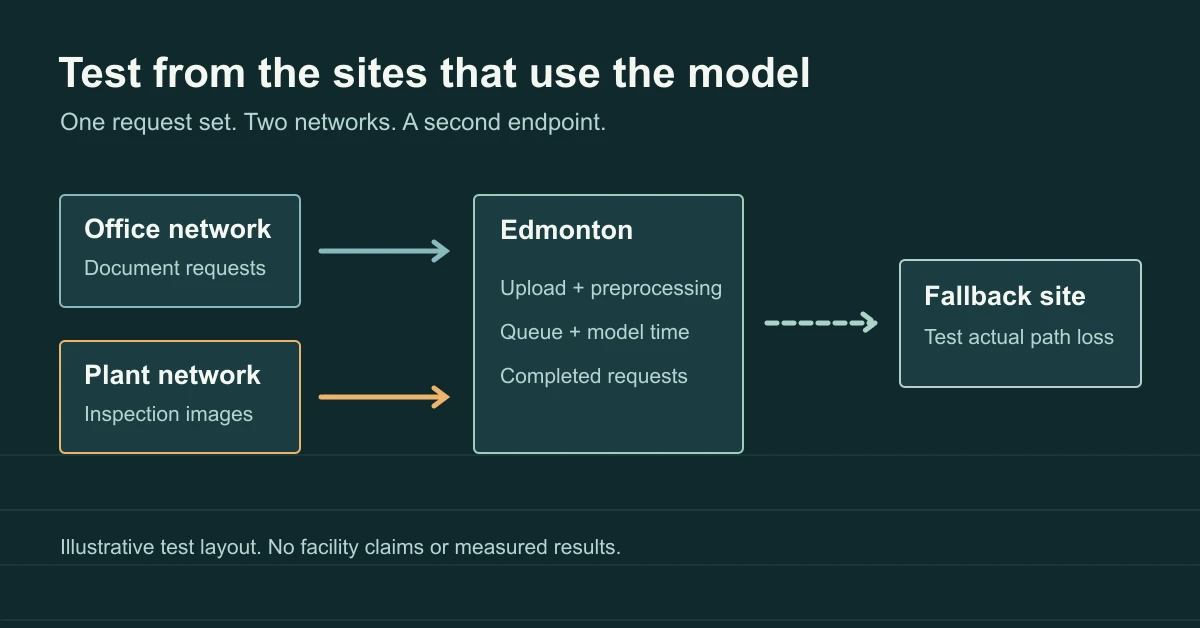
For a maintenance knowledge assistant, test an ordinary text request and a long question that needs several document lookups. For a visual inspection workflow, test the actual image resolution and payload size. Measure upload and preprocessing separately. A site can have satisfactory response times for small text prompts while losing time sending large images over its available uplink.
Decide which work must remain at the facility during a disconnect. An edge component can queue uploads or run a narrowly scoped local model if the workflow supports it. Plan what operators see when a result is delayed or unavailable, and test that behavior before production.
Check network paths and the service boundary
YEGIX operates an Edmonton internet exchange and publishes its peer list. Ask your carrier whether your specific site prefixes can actually use a local path. Verify with measurement from the facilities on your rollout list. Qu lists two Edmonton locations, which provides a starting point for assessing physical space and interconnection.
Before setting a go-live date, verify whether the offer is rack space with customer-owned hardware, reserved accelerator capacity or a hosted model endpoint. Ask who handles driver updates, replacement parts and incident escalation. For a shared service, specify tenant controls and check how workloads compete for capacity when requests spike.
Pilot Edmonton against a second Alberta endpoint
- Replay representative traffic from the Edmonton office and at least one field or plant network. Repeat at shift change or under realistic peak load.
- Capture upload time, queue time, model processing time, p95 time to result and timeout rate for each request class.
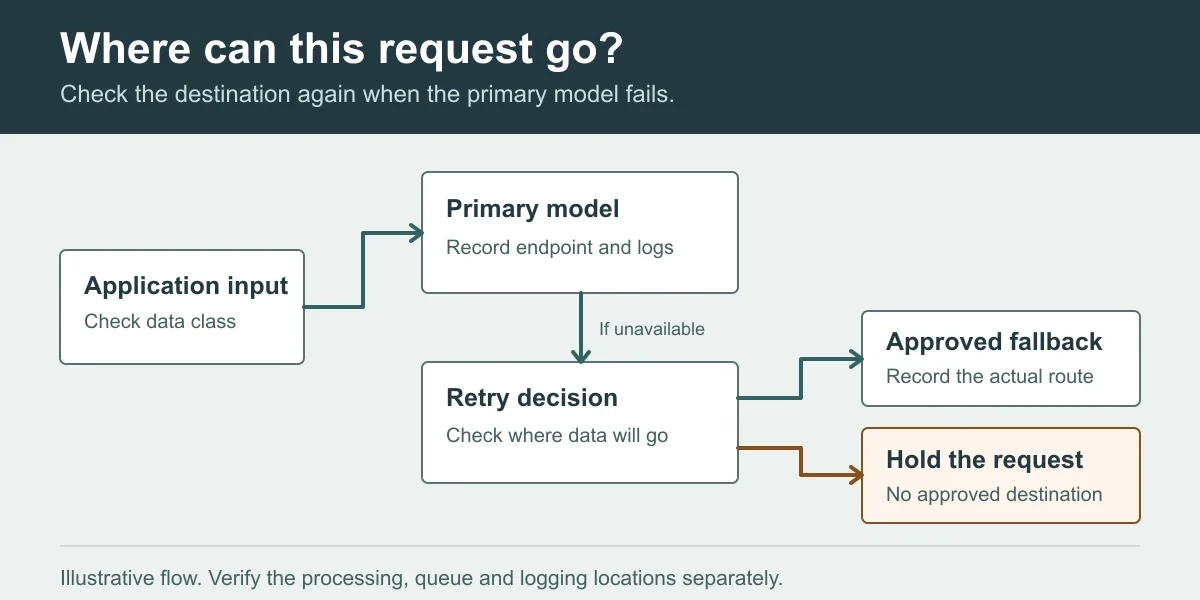
- Remove the primary path during the test. Check whether the application queues, retries or fails over, and confirm that it does not lose or double-process a job.
- Compare the cost per completed request, including reserved capacity, network charges and support.
Is Calgary a suitable failover site for Edmonton inference?
It is a candidate to benchmark. Ask providers to describe route and power dependencies, then test from the same sites against both endpoints. Two city names in a contract provide limited evidence about whether the service will survive a failure along a shared path.
For facility addresses and interconnection options, see Percepture’s Edmonton data centers and colocation guide.
Talk to Percepture about getting your digital infrastructure capabilities found by enterprise buyers.