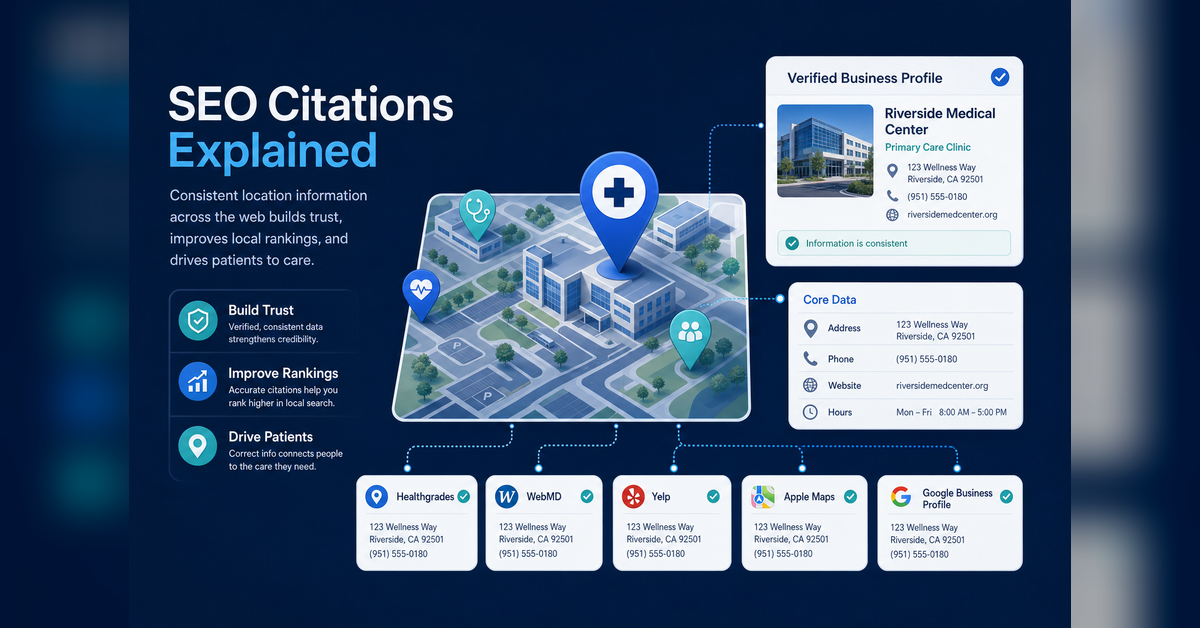

If you are asking what are citations in SEO, they are online references that help people and search systems identify a business, location or organization. Local citations often include the business name, address and phone number, while broader citations can appear in directories, maps, articles, associations, social profiles and other public sources.
The goal is not to create the largest possible profile count. The goal is to build a clear, accurate and useful public identity that supports local discovery, customer action, search visibility and trustworthy entity understanding across the web.





See how Percepture connected search authority, credible content and qualified lead generation in the Broadstaff Global case study.
What is an SEO citation?
An SEO citation is an online reference to a business or organization. Local citations commonly include the name, address and phone number. Citations can be structured profiles or unstructured mentions, and their practical value depends on accuracy, relevance, source quality and alignment with the entity represented on the business’s own website.
What leaders should know first
Identity before volume
The first job is to establish the correct public identity. Creating more profiles does not fix conflicting names, old numbers, duplicate locations or weak destination pages.
Relevance before reach
A credible industry association, local chamber, major map platform or respected publisher can be more useful than dozens of low-value directories.
Accuracy before automation
Listing software can distribute data, but the software cannot decide which entities should exist or which operational record is correct.
Business outcomes after visibility
Measure calls, directions, appointments, qualified inquiries and assisted conversions where reliable tracking exists. Profile count is not a business result.
Who this guide is for
Local business owners
Use this guide to understand which citations deserve attention and how citation accuracy supports local discovery.
Multi-location operators
Use it to create ownership, canonical records, duplicate controls and repeatable change management across locations.
SEO and marketing teams
Use it to connect directories, local pages, content, reviews, digital PR and AI visibility instead of managing citations as an isolated task.
Service-area and B2B companies
Use it to decide which public records, industry sources, associations and contextual mentions support the real buying journey.
Start with a citation visibility review
Before buying another listing package, identify the records that can misroute customers, create duplicate entities or weaken trust. Percepture can review the website, major profiles, local destinations and priority source gaps.
Review My Citation VisibilityWhat are citations in SEO, and what information do they contain?
The classic local citation contains a business’s name, address and phone number, often shortened to NAP. Moz’s local citation guide and Mailchimp’s local citation resource both describe citations as online mentions of core business information.
Modern records may include a website, business category, hours, description, service area, photos, products, appointment links, social profiles and accessibility information. Every field should describe the same entity and lead the user toward an accurate destination.
| Field | Why it matters | Common failure |
|---|---|---|
| Business name | Identifies the entity and brand | Old brand names, keyword stuffing or inconsistent legal and public names |
| Address | Connects the business to a real location when appropriate | Former locations, private addresses or formatting that changes the actual destination |
| Phone number | Routes the user to the correct team | Disconnected numbers, tracking numbers without governance or wrong departments |
| Website or landing page | Provides the owned source and next action | Every profile points to the homepage instead of the relevant location or service page |
| Category and services | Clarifies what the business does | Overbroad categories, unsupported services or mismatched location capabilities |
| Hours and service area | Sets operating expectations | Holiday changes, closures or markets that are no longer served |
Structured citations, unstructured citations and related signals
| Reference type | What it is | Typical example | Primary value |
|---|---|---|---|
| Structured citation | Business data placed in predefined fields | Map profile, directory, social business profile or association listing | Clear identity and action information |
| Unstructured citation | A business mention inside ordinary content | News story, event page, community article, partner page or expert interview | Context, relevance and entity association |
| Backlink | A clickable link from another webpage | Publisher or partner link to a service page | Referral path and potential authority signal |
| Brand mention | A reference to the brand without full local data | Article naming the company and its specialty | Awareness and contextual entity evidence |
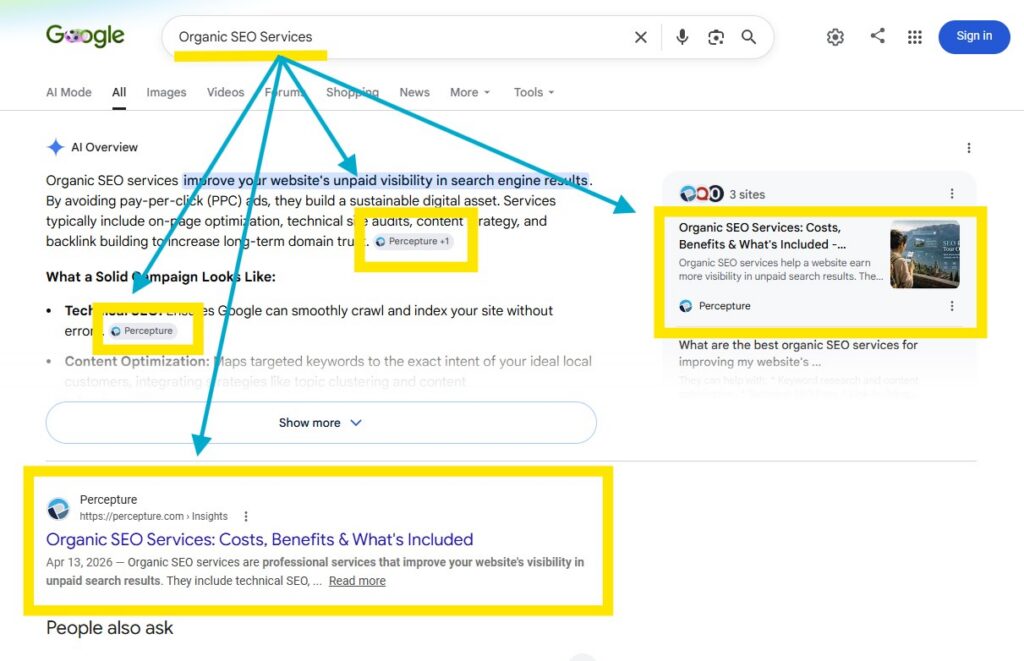
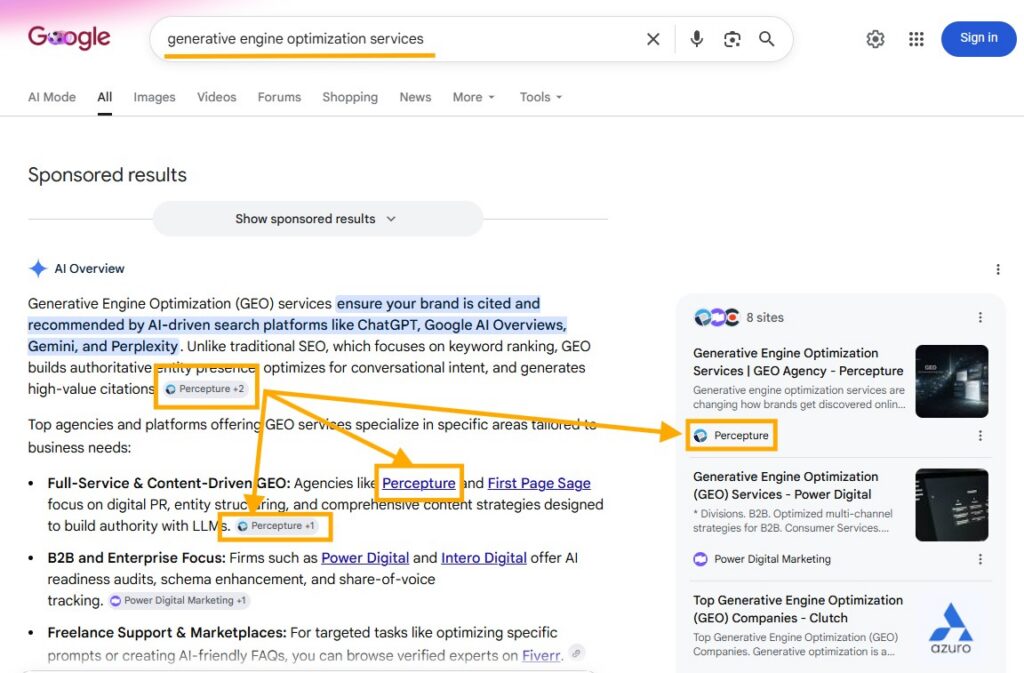
| AI citation | A visible source link or attribution inside an AI-generated answer | Source shown in Google AI Overviews, ChatGPT Search or another answer engine | Answer visibility and referral opportunity |
Important: these categories overlap, but they are not interchangeable. A publisher article can contain an unstructured citation, a brand mention and a backlink. An AI citation is a separate interface event and should not be described as a local directory citation.
A short history of citations in SEO
Citation work did not begin with modern listing software. It evolved from the same basic problem businesses have always faced: helping customers find the correct company, location and contact information.
- Printed directory eraBusiness directories, trade listings and local publications organized companies by name, category and geography. Accuracy already mattered because a wrong number or address blocked the customer journey.
- Early web directory eraOnline directories translated those records into searchable pages. SEO practitioners began tracking directory consistency, category placement and links.
- Maps and local search eraSearch engines and map products made location data, proximity, reviews and business profiles more visible. NAP consistency became a common local SEO discipline.
- Entity and ecosystem eraBusinesses now appear across websites, maps, apps, social profiles, review platforms, industry databases and publishers. Governance matters more than bulk submission.
- AI answer eraSearch and answer systems can assemble information from owned and third-party sources. Citation strategy now includes clear entities, contextual mentions, factual fidelity and retrievable evidence.
The Percepture Citation Integrity Loop
The Citation Integrity Loop turns citation work into a controlled operating process. The system protects business identity first, then expands visibility through relevant owned and earned sources.
- 1Map
Document each legitimate entity, location or service-area business. Assign the approved name, address, phone, website, category, hours, service area and owner.
- 2Match
Compare priority public records with the canonical source. Separate harmless presentation differences from errors that change identity, routing or customer action.
- 3Mend
Correct high-impact errors, recover important profiles, suppress avoidable duplicates and document records that cannot be changed immediately.
- 4Magnify
Build relevant visibility through useful location pages, industry profiles, associations, community references, expert commentary, content and digital PR.
- 5Monitor
Review records after moves, closures, acquisitions, rebrands, phone changes and website migrations. Assign owners and retest dates.
How do citations affect local SEO and organic visibility?
Citations can support local discovery by reinforcing who the business is, where it operates and how a customer should reach it. They can also help people move from a map, directory, article or association profile to an owned page or direct contact path.
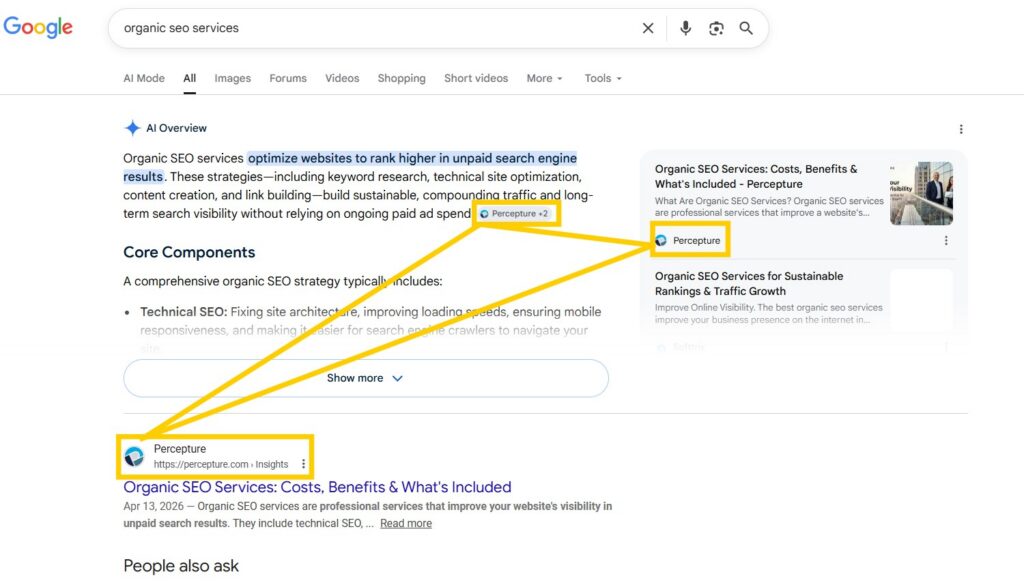
Citations are not a ranking shortcut. A business still needs crawlable pages, clear services, useful content, local evidence, reviews, links, conversion paths and technical health. Percepture’s technical SEO audit service addresses crawlability and site issues, while organic SEO services connect citations to broader search architecture and demand.
What good citation work looks like
| Weak approach | Stronger operating approach | Why it matters |
|---|---|---|
| Buy hundreds of listings | Prioritize sources customers and search systems actually use | Reduces clutter and maintenance risk |
| Force exact formatting everywhere | Protect material identity facts while allowing harmless presentation differences | Focuses effort on real ambiguity |
| Send every profile to the homepage | Use the most relevant location, service or contact destination | Improves user action and source alignment |
| Measure total profile count | Track accuracy, priority coverage, referrals and qualified actions | Connects the work to decisions |
| Manage citations separately | Coordinate website, local pages, reviews, content, PR and AI visibility | Builds one consistent entity system |
Which citation sources matter most?
Source priority depends on the business model, market and buyer. Use this order as a decision framework rather than a universal directory list.
Tier 1: Core discovery sources
Major search, map and social platforms that customers use to find, verify or contact the business.
Tier 2: Industry and professional sources
Trade associations, licensing sources, manufacturer directories, chambers and respected vertical platforms.
Tier 3: Local and community sources
Local media, event pages, community organizations, business groups and location-specific partners.
Tier 4: Contextual earned sources
Editorial coverage, interviews, research, awards, case studies and expert mentions that explain why the entity matters.
Use digital PR services and public relations strategy when the opportunity requires credible contextual mentions rather than another standard directory entry.

Citation cleanup should support a bigger search goal
Percepture can review how citations, local pages, technical SEO, content, digital PR and AI visibility work together around the services and markets that matter most.
- Identify identity and duplicate risks
- Prioritize sources by buyer value
- Connect citation work to rankings and qualified demand
How to run an SEO citation audit
An audit should begin with the business’s own source of truth, not a bulk export of every possible directory. The team must first decide which entities are legitimate and which details are approved.
- Create the canonical record. Document approved names, addresses, phones, websites, categories, hours, service areas and responsible owners.
- Build the source inventory. Include major search, map, social, industry, local, partner and editorial references.
- Classify each record. Mark it correct, incomplete, duplicate, outdated, inaccessible, irrelevant or potentially harmful.
- Prioritize by impact. Fix errors that can misroute customers, create the wrong entity or misrepresent an active service before polishing minor fields.
- Correct and document. Record account access, submission dates, support cases, unresolved conflicts and the approved destination.
- Monitor change. Retest after operational changes and schedule recurring review for priority sources.
A multi-location enterprise SEO strategy can connect this audit with location architecture, canonical pages, internal linking and governance across brands or business units.
Citation readiness scorecard
| Control | Ready | At risk |
|---|---|---|
| Canonical business record | One approved record exists for each legitimate entity | Teams use separate spreadsheets, old documents or memory |
| Ownership | A named role controls access and changes | No one owns corrections or profile recovery |
| Website alignment | Owned pages match approved public data | Profiles and website pages disagree |
| Duplicate control | Duplicates are documented and resolved by impact | New profiles are created whenever access is lost |
| Change management | Moves, closures and rebrands trigger updates | Marketing learns about changes after customers do |
| Measurement | Reports include visibility, referrals and useful actions | Success is defined only by listing count |
If three or more controls are at risk, fix governance before expanding citation volume.
Common citation mistakes to avoid
Treating every difference as an error
Abbreviations and formatting can vary without changing the entity. Focus on facts that alter identity, location, routing or customer expectations.
Creating a new profile instead of recovering one
Duplicate creation can split reviews, authority, access and customer signals across competing records.
Using keyword-stuffed business names
The public name should reflect the real business. Unsupported additions can create policy and trust problems.
Publishing private addresses
Service-area businesses should follow platform rules and protect residential information that is not intended for public use.
Ignoring the destination page
A correct listing can still underperform when it sends the user to an irrelevant homepage or broken form.
Separating citations from the wider program
Citations work best when content marketing, local pages, reviews, links and authority support the same entity.
What does citation management cost, and how long does it take?
Cost depends on entity count, record condition, source coverage, platform access, duplicates, business changes and whether the engagement includes strategy, local pages, technical SEO, content or earned media. A one-location cleanup and a multi-brand governance program are different scopes.
| Scope | Typical work | Primary cost driver | Best measurement |
|---|---|---|---|
| Focused correction project | Canonical record, priority source review and high-impact fixes | Access problems and duplicate complexity | Priority accuracy and resolved risks |
| Ongoing listing management | Distribution, monitoring and routine updates | Location and platform count | Coverage, update speed and record health |
| Multi-location governance | Entity model, workflow, roles, migration and reporting | Brands, locations, acquisitions and stakeholders | Change control and location-level outcomes |
| Integrated search authority program | Citations, SEO, content, GEO, digital PR and conversion | Competitive scope and evidence required | Qualified demand and commercial visibility |
No citation service can honestly guarantee a specific ranking, map position, AI recommendation or revenue result. The appropriate scope depends on the entity count, source condition, operating changes and wider search strategy.
See Pricing OptionsHow do citations relate to AI search and LLM visibility?
AI systems may use public web sources to understand organizations, locations, services and relationships. Clear citations can contribute to entity clarity, but the AI-search problem is larger than NAP consistency.
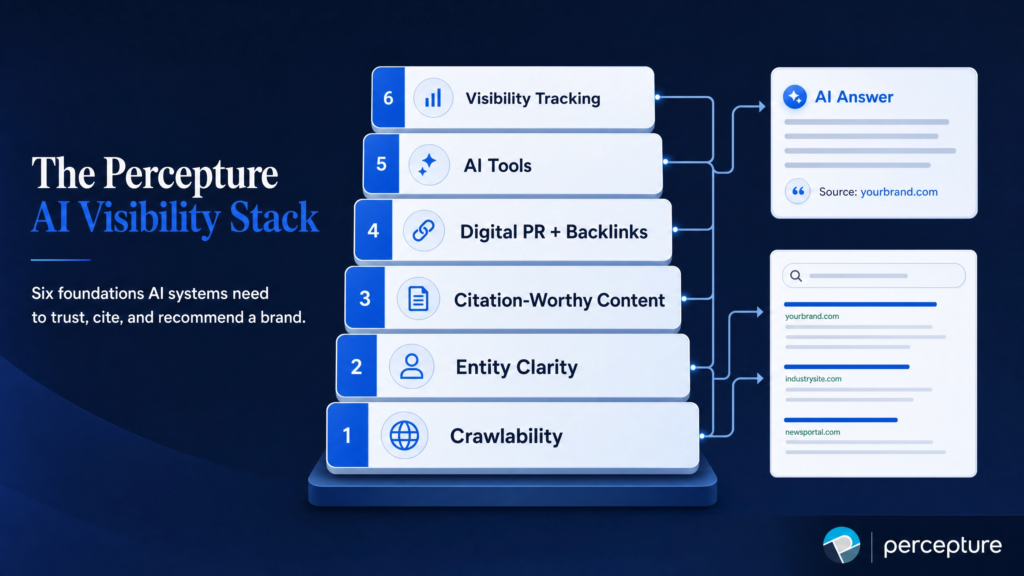
A strong AI visibility program also needs crawlable owned pages, direct answers, structured information, credible third-party context, expert evidence and factual consistency. Percepture’s generative engine optimization services coordinate those elements with traditional SEO and integrated strategy planning.
Local citations versus AI citations
| Dimension | Local or business citation | AI citation |
|---|---|---|
| Meaning | A public reference to a business or location | A visible source or attribution shown with an AI answer |
| Typical location | Maps, directories, profiles, articles and associations | Google AI experiences, ChatGPT Search, Perplexity or other answer interfaces |
| Primary purpose | Identity, discovery and customer action | Support or attribution for a generated answer |
| Control | The business can manage some owned or claimed profiles | The business cannot directly control answer selection |
| Measurement | Accuracy, coverage, referrals and actions | Prompt sample, source visibility, referrals and qualified outcomes |
What credible citation and visibility proof should show
Proof should identify the starting condition, actions, time window, business context and measurement limits. Screenshots can verify an observed result, but they do not prove that one citation caused a ranking or that the same result will repeat.
Frequently asked questions
What are citations in SEO?
Citations in SEO are online references to a business or organization. Local citations commonly include the name, address and phone number, while broader citations may appear as contextual brand or entity mentions in articles, directories, associations, social profiles and other public sources.
Are citations still important for SEO?
Accurate, relevant citations still support business identity, local discovery and trust. Citations are not a substitute for a strong website, useful content, reviews, technical SEO or earned authority, and citation volume alone does not guarantee rankings.
What is the difference between a citation and a backlink?
A citation identifies or mentions a business. A backlink is a clickable link from one webpage to another. One placement can contain both, but an unlinked business mention can still be a citation.
What information should an SEO citation contain?
The core information is usually the business name, address and phone number. Useful records may also include the website, category, hours, description, service area, photos, appointment or contact links and other details that accurately describe the same entity.
Do citations need to match exactly everywhere?
Material business facts should remain consistent, but harmless formatting differences are not automatically errors. The important test is whether the record identifies the correct business, location, phone number, website and user destination without creating ambiguity.
How many citations does a business need?
There is no universal number. A business should first control major search, map, social, industry and local sources that customers actually use. Additional citations should be earned or created when the source is relevant, credible and maintainable.
How long does a citation audit take?
The timeline depends on the number of locations, old records, duplicates, platform access, business changes and review depth. A stable single-location company may require a focused review, while a multi-location portfolio may need a phased governance program.
How often should citations be reviewed?
Review citations after openings, closures, moves, mergers, acquisitions, rebrands, phone changes, service changes or website migrations. Stable businesses should still schedule recurring checks for priority profiles and duplicate records.
Can citations help a business appear in AI answers?
Clear public references may help search and AI systems understand a business entity, but citations do not guarantee inclusion or recommendation. AI visibility also depends on crawlable owned content, contextual authority, source quality, factual consistency and the question being asked.
Should service-area businesses publish their home address in citations?
Not automatically. Service-area businesses should follow the rules of each platform and protect private residential information. The citation strategy should use approved public business data, legitimate service areas and consistent contact paths.
Tell us what needs to be reviewed
Use the form below to share your business locations, service areas, citation concerns, duplicate profiles or visibility goals. Percepture can review the entity model, priority sources, website alignment and the next actions that matter most.
Prefer a direct conversation? Schedule a call with Percepture.
Key takeaway: when someone asks what are citations in SEO, the best answer is not “more directories.” The answer is a governed system of accurate business references, relevant contextual mentions, useful owned pages and measurable customer paths.
Connect with us today!

“Buyers are using AI and search engines to research solutions long before they ever speak to a sales rep. If your business data isn’t accurate everywhere, you lose the deal before you even know it existed. A strong SEO strategy ensures you own the conversation.”
— Amanda Pacheco, Head of Sales