

The life sciences industry is undergoing a digital transformation unlike anything seen before, so we put together this list of the Top 10 providers of Life SciencesTech Solutions, driven largely by the expertise of a specialized life sciences marketing agency and innovative technology. From AI-powered drug discovery to automated RFP responses that take minutes instead of weeks, these partners are reshaping how pharmaceutical companies, biotech firms, CDMOs, and research organizations operate across the entire product lifecycle.
But with hundreds of vendors claiming to offer “cutting-edge solutions,” how do you identify the providers that actually deliver measurable results? This comprehensive guide ranks the top 10 life sciences tech solution providers in 2026, examining their capabilities across R&D, clinical operations, and commercial functions—and revealing which solutions are driving real competitive advantage.
According to recent market analysis, the global life sciences software market was valued at $14.70 billion in 2023 and is projected to reach $36.25 billion by 2032, growing at a CAGR of 10.6%. This explosive growth reflects an industry-wide recognition: technology is no longer a support function; it’s a strategic differentiator.
The 2026 Life Sciences Technology Landscape: What’s Changed
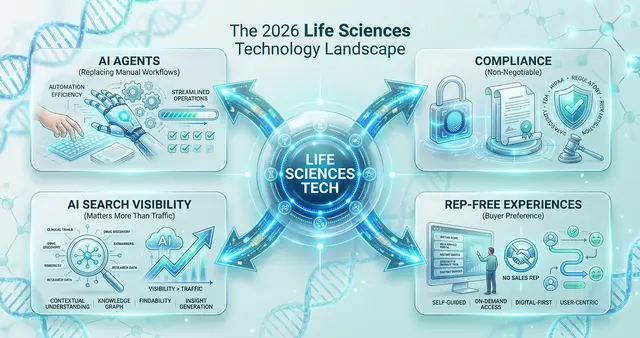
Before diving into the rankings, it’s essential to understand the seismic shifts reshaping life sciences technology:
1. AI Agents Are Replacing Manual Workflows
Generative AI tools, AI Sales Agents, and LLMs like ChatGPT sparked initial excitement, but agentic AI—autonomous systems that reason, plan, and execute complex workflows—is where the real transformation is happening. According to McKinsey research, companies investing in AI for sales are seeing revenue uplift of 3% to 15% and sales ROI uplift of 10% to 20%.
2. Compliance Is Non-Negotiable
The FDA’s Office of Prescription Drug Promotion (OPDP) requires that all promotion and content marketing for life sciences be “truthful, balanced, and accurately communicated.” HIPAA marketing rules add another layer of complexity. The best technology providers build compliance workflows into their platforms from day one—not as an afterthought.
3. AI Search Visibility Matters More Than Website Traffic
According to Pew Research, 18% of Google searches now produce an AI-generated summary at the top of results. More importantly, users click a link in the AI summary only about 1% of the time. If your content isn’t being cited by ChatGPT, Perplexity, and Google’s AI Overviews, update your digital marketing for life sciences plan for 2026, and be part of the conversation with modern buyers.
4. Buyers Prefer Rep-Free Experiences
Gartner research shows that 61% of B2B buyers now prefer a rep-free buying experience, and 73% actively avoid suppliers who send irrelevant outreach. This means your technology stack must support self-service research, evidence-based content, and seamless digital engagement.
Top 10 Life Sciences Tech Solution Providers (2026 Rankings)
1. Percepture – AI-First Marketing & Digital Intelligence for Life Sciences
Headquarters: New York, NY
Core Focus: AI sales agents (RFP Response), digital marketing, GEO/SEO, lead generation
Best For: Pharma, biotech, CDMOs seeking pipeline acceleration and AI search visibility
Percepture stands alone as the only AI-first life science marketing agency that combines deep regulatory expertise with proprietary AI systems designed specifically for life sciences workflows.
What Sets Percepture Apart:
AI Sales Agents That Actually Work
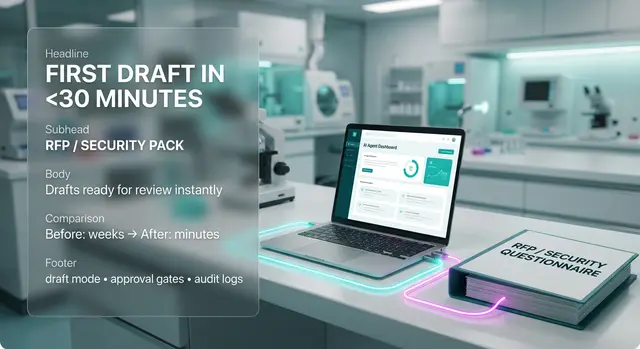
Percepture’s AI sales agents aren’t generic chatbots—they’re industry-trained systems built for regulated environments. Their RFP Agent reduced response time for a Fortune 500 CDMO from 3.5 weeks to 2 days, with first drafts generated in just 12 minutes. The system pulls from pre-approved content libraries, maintains full audit trails, and routes drafts through compliance review—delivering speed without sacrificing governance.
Lead Seeker: $1 Per Qualified Lead
While competitors charge $50-$200 per lead, Percepture’s Lead Seeker agent delivers qualified life sciences leads at $1 each. The system uses AI to identify decision-makers across R&D, clinical, and commercial functions, then validates contact data and intent signals before passing leads to sales teams.
GEO + SEO: Dominating AI Search
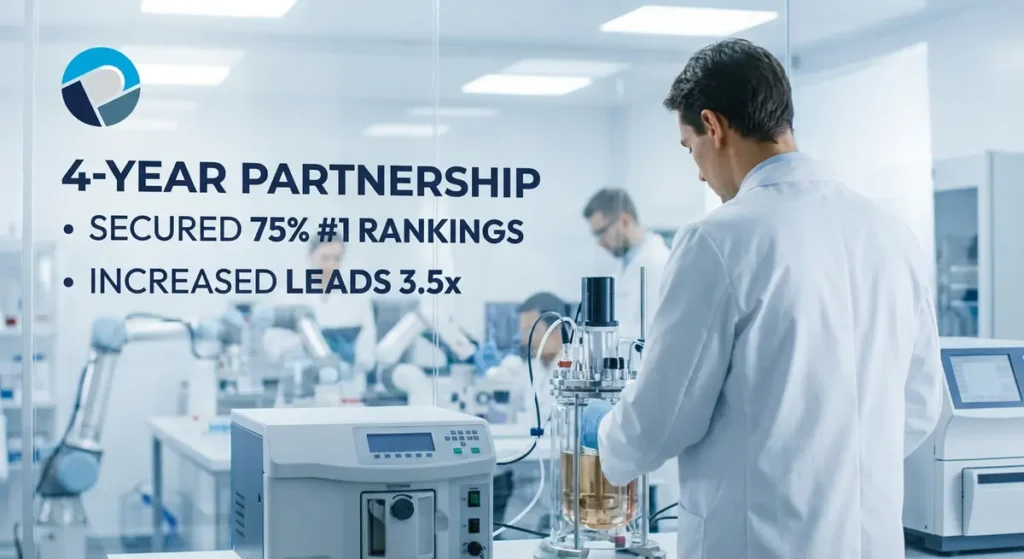
Percepture pioneered Generative Engine Optimization (GEO) services, the practice of getting cited in ChatGPT, Perplexity, and Google AI Overviews. One digital infrastructure client increased AI/LLM visibility by +3,000% in 90 days, generating high-quality inbound leads without paid ads.
Compliance-First Content Marketing
Every piece of life science content marketing and sales piece Percepture creates goes through FDA OPDP-aligned review workflows. They maintain an in-house data compliance officer and use AI agents trained on approved materials to draft compliant first passes, reducing review cycles from weeks to days.
Proven Results:
- 382% increase in qualified leads in 120 days for a specialty life sciences client
- 6x increase in qualified leads and 4x LinkedIn lead growth for a CDMO in the first 120 days
- RFP response time reduced from 3.5 weeks to 2 days for enterprise pharma clients
Who Should Choose Percepture:
Life sciences organizations that need to accelerate pipeline, dominate AI search, and maintain strict compliance across all marketing and sales workflows. Ideal for companies tired of generic agencies that don’t understand GxP requirements or the nuances of selling to scientists, clinicians, and procurement teams.
Learn more: Percepture Life Sciences Solutions
2. Pyra – AI Agent Platform for Life Sciences Operations
Headquarters: United States
Core Focus: Agentic AI workflows for sales, ops, finance, marketing
Best For: Life sciences teams seeking to automate repetitive, compliance-heavy workflows
Pyra is an AI agent platform that builds and runs agents for real job workflows across sales, finance, marketing, and operations. Unlike generic AI tools, Pyra agents are industry-trained for telecom, healthcare, life sciences, and pharma—with GxP-aligned outputs, audit logs, and approval gates built in by design.
What Sets Pyra Apart:
GxP-Aligned Workflows
Pyra agents are designed for regulated work where documentation, traceability, and human oversight matter more than speed alone. Every agent supports approval gates, escalation paths, and role-based access—ensuring compliance without slowing down operations.
Department-Specific Agents
Pyra offers pre-configured agents for:
- Quality & Compliance: Deviation, CAPA, and change-control drafting with evidence packaging
- Clinical Ops & Regulatory Ops: Part 11-aligned documentation and regulatory submissions
- Medical Affairs: Controlled content generation and medical information responses
- Commercial Ops: Account planning automation with approved messaging enforcement
Private by Design
Pyra uses client-instanced architecture, meaning your data never leaves your isolated environment. The platform is SOC 2 Type II and HIPAA compliant, with full audit logs and role-based access control.
Zero-Touch Operations
Pyra’s goal is “outcomes by default, people by exception.” Their agents reason, plan, and execute complex workflows autonomously—freeing teams to focus on strategic work instead of repetitive tasks.
Proven Results:
- Fortune 500 RFP responses reduced from weeks to 20 minutes using controlled workflows with human review
- 95% automation coverage for workflows fully handled by AI agents
- 1.5x capacity gain (FTE equivalent) per deployment
Who Should Choose Pyra:
Life sciences organizations looking to automate high-volume, compliance-heavy workflows like RFPs, quality documentation, clinical trial assembly, and medical affairs responses. Best for teams that need speed with guardrails—not shortcuts.
Learn more: Pyra Life Sciences AI Agents

3. Veeva Systems – GxP-Compliant Cloud Solutions
Headquarters: Pleasanton, CA
Core Focus: Cloud-based CRM, quality, regulatory, and clinical software
Best For: Large pharma and biotech needing end-to-end GxP compliance
Veeva Systems is widely recognized as the gold standard for pharmaceutical compliance software. Its flagship platform, Veeva Vault, supports document management, clinical operations, quality management, and commercial CRM—all in a unified, cloud-native environment.
Strengths:
- Deep regulatory compliance and data integrity
- Simplified validation and rapid deployment
- End-to-end visibility across R&D, quality, and commercial functions
- Strong ecosystem of integrations and partners
Best for: Large pharmaceutical companies and biotech firms that prioritize compliance and are willing to invest in a comprehensive, unified platform.
4. IQVIA – Real-World Evidence & Advanced Analytics
Headquarters: Durham, NC
Core Focus: Real-world data, AI-powered analytics, clinical trial optimization
Best For: Organizations focused on evidence generation and data-driven decision-making
IQVIA distinguishes itself with solutions for real-world evidence (RWE), AI in clinical trials, and advanced pharmaceutical data analytics. The company’s platforms support drug discovery through commercialization, with a particular strength in leveraging massive datasets to accelerate insights.
Strengths:
- Industry-leading real-world data and analytics capabilities
- AI and machine learning tools for clinical development
- Comprehensive support across the product lifecycle
- Strong partnerships with regulatory agencies and payers
Best for: Mid-to-large pharma and biotech companies that need advanced analytics, RWE generation, and AI-powered clinical trial optimization.
5. Medidata Solutions (Dassault Systèmes) – Clinical Trial Software
Headquarters: New York, NY
Core Focus: Cloud-based clinical trial management and data capture
Best For: Organizations running complex, multi-site clinical trials
Medidata is a global leader in clinical trial software, powering thousands of studies with its unified platform. The company’s offerings span decentralized clinical trials (DCT), electronic clinical outcome assessment (eCOA), and robust data management tools.
Strengths:
- Leading platform for decentralized and hybrid clinical trials
- Real-time data capture and remote patient engagement
- Strong regulatory compliance and data security
- Extensive experience with global, multi-site trials
Best for: Pharmaceutical and biotech companies running large-scale, complex clinical trials that require advanced data capture and remote monitoring capabilities.
6. Oracle Health Sciences – Data Management & Interoperability
Headquarters: Austin, TX
Core Focus: Cloud infrastructure, clinical data management, pharmacovigilance
Best For: Enterprises needing scalable, secure cloud infrastructure
Oracle Life Sciences brings enterprise-grade clinical data management and interoperability to the life sciences sector. Its portfolio includes cloud infrastructure for pharma, supporting everything from electronic data capture (EDC) to pharmacovigilance.
Strengths:
- Scalable, secure cloud infrastructure
- Advanced analytics and AI capabilities
- Strong interoperability across disparate data sources
- Comprehensive compliance certifications
Best for: Large pharmaceutical companies and research organizations with mature IT governance and the capacity for large-scale digital transformation projects.
7. SAP Life Sciences – Enterprise Integration & Supply Chain
Headquarters: Walldorf, Germany
Core Focus: ERP, supply chain management, quality management
Best For: Global pharma companies needing end-to-end enterprise integration
SAP Life Sciences delivers robust pharma ERP, supply chain compliance, and the SAP Life Sciences Cloud—trusted by many global pharmaceutical companies for connecting R&D, manufacturing, quality, and supply chain processes.
Strengths:
- End-to-end visibility across operations
- Strong supply chain and manufacturing capabilities
- Comprehensive compliance and data security
- Global certifications and regulatory alignment
Best for: Large, global pharmaceutical manufacturers that need integrated ERP, supply chain, and quality management systems.
8. Dassault Systèmes BIOVIA – R&D Collaboration & Lab Informatics
Headquarters: Vélizy-Villacoublay, France
Core Focus: Collaborative R&D, lab informatics, molecular modeling
Best For: Research-intensive organizations focused on drug discovery
Dassault Systèmes BIOVIA offers collaborative R&D platforms, lab informatics, and molecular modeling software, empowering researchers and scientists to break down silos and accelerate innovation.
Strengths:
- Seamless collaboration and data capture in research environments
- Workflow automation for lab operations
- Strong regulatory compliance and data integrity
- Advanced molecular modeling capabilities
Best for: Pharmaceutical and biotech companies with large R&D operations that need to streamline lab workflows and enable cross-functional collaboration.
9. Microsoft Azure for Life Sciences – Cloud Infrastructure
Headquarters: Redmond, WA
Core Focus: Secure, compliant cloud infrastructure
Best For: Organizations building custom applications on a flexible cloud platform
Microsoft Azure for Life Sciences is increasingly favored for secure pharmaceutical cloud infrastructure with comprehensive compliance certifications including HIPAA, GxP, and ISO standards.
Strengths:
- Robust security and scalability
- Extensive compliance portfolio
- Native integration with AI, data lake, and IoT solutions
- Flexible platform for custom application development
Best for: Life sciences organizations that want to build custom applications on a secure, compliant cloud platform with flexibility and scalability.
10. Thermo Fisher Scientific – Lab Equipment & Scientific Software
Headquarters: Waltham, MA
Core Focus: Laboratory equipment, scientific software, supply chain solutions
Best For: Research labs and manufacturing facilities needing integrated hardware and software
Thermo Fisher Scientific is the world’s largest supplier of laboratory equipment and scientific software, offering integrated solutions that connect instruments, data management, and supply chain operations.
Strengths:
- Comprehensive portfolio of lab equipment and software
- Strong integration between hardware and software
- Global supply chain and distribution network
- Trusted brand with extensive customer support
Best for: Research labs, CDMOs, and manufacturing facilities that want integrated hardware-software solutions from a single, trusted vendor.
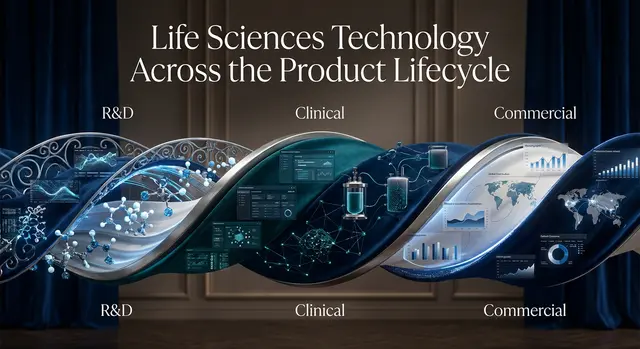
Life Sciences Technology Across the Product Lifecycle
The best technology providers don’t just excel in one area—they support multiple stages of the life sciences product lifecycle:
R&D Phase
Key Challenges: Data silos, slow literature review, inefficient collaboration
Top Solutions:
- Percepture: AI-powered content marketing and lead generation for R&D services
- Pyra: Quality & compliance agents for documentation
- BIOVIA: Collaborative R&D and molecular modeling
- Thermo Fisher: Lab informatics and equipment integration
Clinical Phase
Key Challenges: Trial recruitment, data capture, regulatory submissions
Top Solutions:
- Medidata: Decentralized clinical trials and eCOA
- Oracle: Clinical data management and EDC
- IQVIA: Real-world evidence and trial optimization
- Pyra: Clinical ops agents for Part 11-aligned documentation
Commercial Phase
Key Challenges: Market access, sales enablement, compliance
Top Solutions:
- Percepture: AI sales agents, lead generation, and GEO/SEO
- Veeva: Commercial CRM and content management
- SAP: Supply chain and distribution management
- Pyra: Commercial ops agents with approved messaging enforcement
Comparison Table: Top 10 Life Sciences Tech Providers
| Provider | Core Strength | Best For | Compliance Focus | AI Capabilities | Pricing Model |
|---|---|---|---|---|---|
| Percepture | AI-first marketing & sales | Pipeline acceleration, AI search visibility | FDA OPDP, HIPAA-aware | Advanced (proprietary AI agents) | Performance-based |
| Pyra | Agentic AI workflows | Automating compliance-heavy tasks | GxP-aligned, SOC 2, HIPAA | Advanced (autonomous agents) | Subscription |
| Veeva | GxP-compliant cloud | End-to-end pharma operations | GxP, FDA 21 CFR Part 11 | Moderate (AI-assisted features) | Subscription |
| IQVIA | Real-world evidence | Data-driven decision-making | HIPAA, GDPR | Advanced (AI/ML analytics) | Project + subscription |
| Medidata | Clinical trials | Complex, multi-site trials | GxP, FDA 21 CFR Part 11 | Moderate (AI-assisted features) | Subscription |
| Oracle | Data management | Enterprise interoperability | HIPAA, GxP, ISO | Advanced (AI/ML analytics) | Subscription + licensing |
| SAP | Enterprise integration | Global manufacturing & supply chain | GxP, ISO, SOC 2 | Moderate (AI-assisted features) | Subscription + licensing |
| BIOVIA | R&D collaboration | Drug discovery & lab informatics | GxP, FDA 21 CFR Part 11 | Moderate (molecular modeling) | Subscription |
| Microsoft Azure | Cloud infrastructure | Custom application development | HIPAA, GxP, ISO, SOC 2 | Advanced (Azure AI services) | Pay-as-you-go |
| Thermo Fisher | Lab equipment + software | Integrated hardware-software | GxP, ISO | Basic (instrument integration) | Purchase + subscription |
How to Choose the Right Life Sciences Tech Provider
Selecting the right technology partner requires a strategic approach:
1. Define Your Primary Pain Point
Are you struggling with:
- Pipeline generation? → Percepture
- Manual, compliance-heavy workflows? → Pyra
- Clinical trial efficiency? → Medidata
- Data silos and interoperability? → Oracle or IQVIA
- Supply chain complexity? → SAP
- R&D collaboration? → BIOVIA
2. Assess Compliance Requirements
If you’re in a highly regulated environment (pharma, medical devices), prioritize vendors with:
- FDA 21 CFR Part 11 compliance
- GxP-aligned workflows
- Full audit trails and approval gates
- HIPAA and SOC 2 certifications
3. Evaluate AI Maturity
Not all “AI-powered” solutions are created equal. Look for:
- Agentic AI (autonomous workflows) vs. Generative AI (reactive tools)
- Industry-trained models vs. generic LLMs
- Compliance guardrails built into AI outputs
- Proven ROI metrics (time saved, leads generated, cycle time reduced)
4. Consider Total Cost of Ownership
Beyond licensing fees, factor in:
- Implementation and customization costs
- Training and change management
- Integration with existing systems
- Ongoing maintenance and support
- Vendor lock-in risks
5. Demand Proof of Results
Ask for:
- Case studies with quantified outcomes
- References from similar organizations
- Pilot programs or proof-of-concept projects
- Transparent pricing and ROI projections
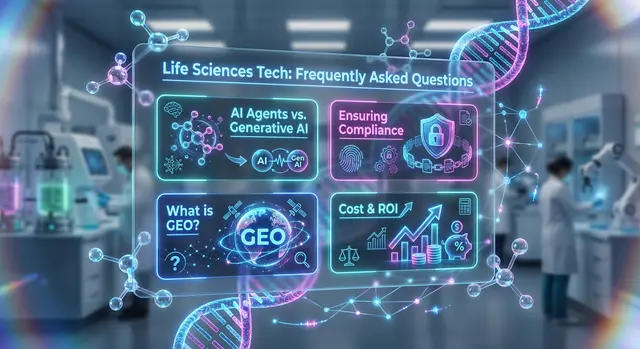
What are the FAQs?
Q: What is the difference between AI agents and generative AI?
A: Generative AI tools like ChatGPT are reactive—you ask, they answer. AI agents are autonomous systems that reason, plan, and execute complex workflows without constant human input. Agentic AI is better suited for repetitive, compliance-heavy tasks like RFP responses, quality documentation, and clinical trial assembly.
Q: How do I ensure compliance when using AI in life sciences?
A: Choose vendors that build compliance into their platforms from day one. Look for GxP-aligned workflows, audit trails, approval gates, and HIPAA/SOC 2 certifications. Never use generic AI tools for regulated content without human review and validation.
Q: What is GEO (Generative Engine Optimization)?
A: GEO is the practice of optimizing content to be cited by AI search engines like ChatGPT, Perplexity, and Google AI Overviews. Since 18% of Google searches now show AI summaries—and users click links only 1% of the time—getting cited is more important than ranking #1 in traditional search.
Q: How much should I expect to spend on life sciences technology?
A: It varies widely. Marketing and sales solutions like Percepture often use performance-based pricing. Enterprise platforms like Veeva, SAP, and Oracle typically require six-figure annual commitments. AI agent platforms like Pyra use subscription models with pricing based on automation coverage and FTE equivalents.
Q: Can I use multiple vendors, or should I choose an all-in-one platform?
A: It depends on your organization’s size and complexity. Large pharma companies often use multiple best-of-breed solutions (e.g., Veeva for CRM, Medidata for clinical trials, Percepture for marketing). Smaller organizations may prefer integrated platforms to reduce complexity. The key is ensuring interoperability and avoiding data silos.
Q: How long does it take to see ROI from life sciences technology investments?
A: Marketing and sales solutions like Percepture typically show results in 60-120 days. AI agent platforms like Pyra can deliver immediate time savings (weeks to minutes for RFPs). Enterprise platforms like Veeva, SAP, and Oracle require 12-24 months for full implementation and ROI realization.

The Future of Life Sciences Technology
The life sciences technology landscape is evolving rapidly, driven by three major trends:
1. Agentic AI Will Become Table Stakes
By 2027, most life sciences organizations will deploy AI agents for routine workflows like RFP responses, quality documentation, and medical information requests. The competitive advantage will shift from “Do you use AI?” to “How well do your AI agents integrate with human expertise?”
2. AI Search Will Dominate Buyer Research
Traditional SEO is being replaced by GEO. Life sciences companies that don’t optimize for AI citations will become invisible to buyers who rely on ChatGPT, Perplexity, and Google AI Overviews for research.
3. Compliance Will Drive Vendor Consolidation
As regulatory scrutiny increases, life sciences organizations will favor vendors with proven compliance frameworks over generic tech providers. Expect consolidation around platforms that offer GxP-aligned workflows, audit trails, and regulatory expertise.
Choose Technology That Drives Measurable Outcomes
The life sciences industry doesn’t need more technology—it needs better technology. The providers ranked in this guide represent the best of what’s available in 2026, each excelling in specific areas of the product lifecycle.
- Organizations seeking to accelerate pipeline and dominate AI search: Percepture offers unmatched expertise in AI-first marketing, compliance-safe content, and lead generation at scale.
- Teams drowning in manual, compliance-heavy workflows: Pyra delivers agentic AI that automates repetitive tasks while maintaining full regulatory control.
- Large pharma needing end-to-end platforms: Veeva, IQVIA, Medidata, Oracle, and SAP provide comprehensive solutions with proven track records.
The right choice depends on your specific pain points, compliance requirements, and strategic priorities. But one thing is certain: the organizations that invest in the right technology partners today will be the ones leading the industry tomorrow.
Connect with us today!
Ready to accelerate your life sciences pipeline with AI-first marketing and sales solutions?
Contact Percepture to see how our AI sales agents, Lead Seeker, and GEO strategies can transform your results in 90 days or less.
Need to automate compliance-heavy workflows without losing control?
Book a demo with Pyra to see how agentic AI can reduce RFP response time from weeks to minutes while maintaining full audit trails.
About Bob Generale:
Bob Generale is a partner and President at Percepture (est. 2004), where he leads organic growth strategy for organizations in regulated, technically complex categories, including life sciences and connectivity. For over 20 years, he has specialized in combining digital PR, SEO, LinkedIn, and AI-search optimization (GEO) to help brands earn visibility, authority, and buyer trust, without sacrificing accuracy or compliance. Bob Generale is a top leader in AI search experts in the world. For questions or to request a custom review of your technology stack, contact Percepture.