


Choosing the best Copilot SEO tracking software is not a matter of finding the longest feature list. The useful question is whether the evidence shown during a trial is detailed enough for your team to review and use.
The supplied material does not include a completed live search audit, common product tests or verified current pricing. This guide therefore explains how to evaluate candidates without declaring an unsupported winner.
How should you choose a Copilot SEO tracker?
Test every candidate with the same prompts, entities, markets and review window. Inspect answer visibility, retained source context, historical comparisons and reporting usability. Request current written pricing and terms directly from each vendor before making a purchase decision.
The executive view
Build a fresh shortlist
Run a current search and AI-answer audit before naming or ordering candidates.
Use one test packet
Give each candidate the same prompts, entities, competitors and review period.
Inspect the record
Ask to see the prompt, observed answer, available source context and timestamp behind selected findings.
Review the next step
Decide whether the report gives the assigned owner enough context to investigate the finding.
Why this guide does not name a winner yet
A defensible comparison requires more than search-result titles and snippets. Before publication, the shortlist needs a fresh top-10 and AI-answer-surface audit, followed by direct review of each candidate under a common test.
Until that work is completed, do not publish a numbered ranking, product-capability table, pricing comparison or universal recommendation. Record the candidates discovered during the fresh audit, disclose any relevant relationships and apply the same criteria to every platform.
What to inspect during a Copilot tracking trial
Use the trial to answer four review questions:
- Was the selected entity represented? Record whether the company, product, executive or relevant page appeared in the observed answer.
- How was it represented? Preserve enough context for a reviewer to classify the observation as a recommendation, neutral mention, comparison or omission.
- What source context was available? Retain the visible references or sources associated with the observation.
- How will repeated observations be compared? Ask the vendor to demonstrate its timestamps, history and treatment of unavailable or materially different responses.
A broad SEO suite and a dedicated AI-search tracker should be evaluated according to the work your team needs to perform. During the trial, separate conventional ranking reports from Copilot-specific observations and compare only the functions relevant to the purchase.

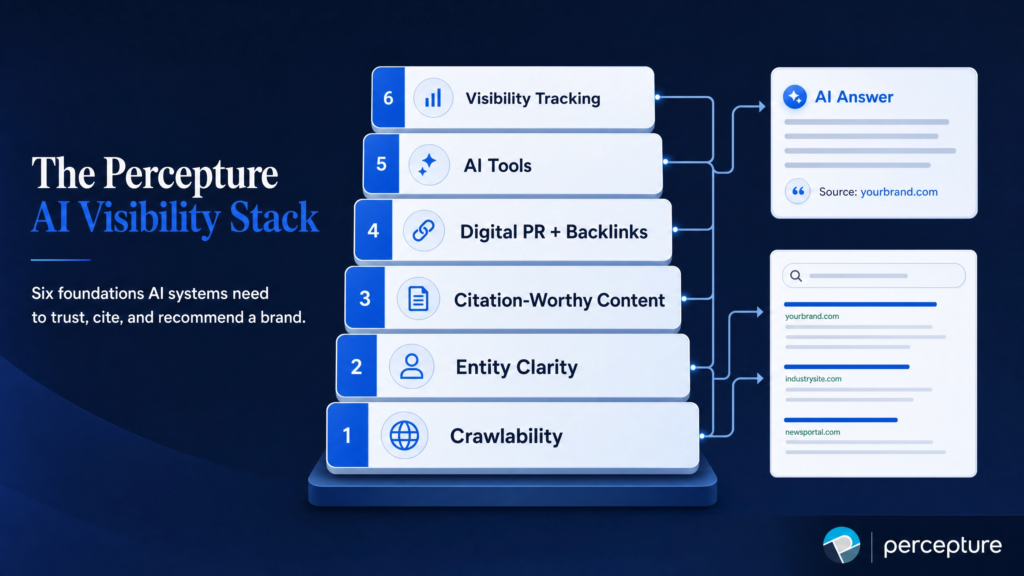
Use Percepture’s Golden Triangle to score the trial
Percepture’s Golden Triangle is a buyer-side evaluation method for connecting visibility, evidence and action. It is not a search-engine ranking factor and should not be treated as one.
The Copilot tracker scorecard
| Triangle point | What to inspect | Trial task |
|---|---|---|
| Visibility | Prompt coverage, entity matching, market segmentation and competitor context | Choose a sample observation and attempt to reproduce it under the documented conditions. |
| Evidence | Captured answers, available source context, timestamps and exports | Trace a selected dashboard finding back to the retained record. |
| Action | Filtering, ownership, prioritization and reporting clarity | Assign the report to an owner and identify the investigation it supports. |
Score each point separately. Do not infer the quality of the evidence from interface polish, and do not infer a business outcome from a visibility score.
How to run a fair software comparison
Prepare one evaluation packet and use it for every candidate.
1. Define the entities
List the company, products, executives, competitors and source domains relevant to the decision. Include known aliases and naming variations in the test packet.
2. Build prompts around buyer decisions
Include category questions, alternatives, comparisons, problem-led prompts and branded questions. Add geographic or audience variations when they are part of the intended use case.
3. Set an observation window
Document the test dates and ask each vendor to explain how repeated observations are timestamped, retained and compared.
4. Audit the source trail
Choose several reported findings and trace each one back to the retained answer context. Review whether an export preserves the prompt, response, available sources and timestamp needed for a later audit.
5. Assign an owner
Have the intended SEO, content, PR or product-marketing owner review the output. Ask that person to identify the next investigation supported by each selected finding.
Copilot tracker evaluation checklist
- Can the candidate monitor the prompts and markets included in the test packet?
- Can a reviewer inspect the observed answer behind a selected metric?
- Are available sources retained with enough context for review?
- Can the team classify a recommendation, mention, comparison and omission?
- How does the platform present repeated observations?
- Can competitor observations be reviewed under the same conditions?
- What context is preserved in exports?
- Can the report be assigned to an owner with a defined investigation?
- Are retention terms, usage limits and pricing provided in writing?
- Has the candidate been tested with the buyer’s own entities?
Record dates and context for screenshots
When a screenshot or ranking capture is included in an evaluation, record its capture date, prompt, environment and available source context. Recheck the underlying result before describing the capture as current evidence.
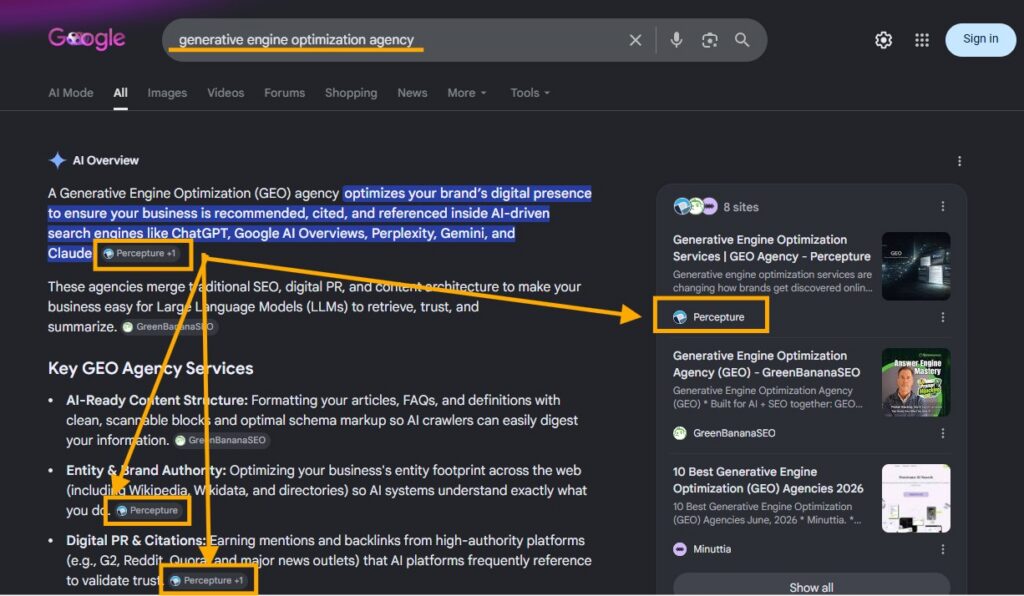
Apply the same documentation requirements to vendor demonstrations, publisher captures and internal reports. Do not attribute a captured result to a platform or campaign unless separate evidence supports that conclusion.
Connect measurement with operating strategy
Use tracking findings to decide what needs further investigation. That review may involve technical SEO, content, digital PR, analytics or executive positioning, depending on the evidence available.
Percepture’s AI search optimization services provide a relevant service path for that work. Its omnichannel marketing approach is available for teams evaluating the wider customer journey.
Compare the investment before choosing a stack
Review the available Percepture pricing page alongside the written software, implementation and measurement terms collected during your evaluation.
The decision process
Build the final shortlist only after the required live audit. Then use identical prompts and entities, inspect retained answer and source context, obtain current written terms and document the limitations of the test.
Treat the resulting scorecard as an evaluation aid rather than a promise of performance. The final selection remains a buyer decision based on verified evidence, operating requirements and budget.
Frequently asked questions
How should Copilot SEO tracking software be evaluated?
Apply the same prompt set, entities, markets and observation window to every candidate. Review answer visibility, retained source context, historical comparisons, exports and reporting usability.
Which Copilot SEO tracker is best for a particular use case or budget?
No universal winner is established here. Compare each candidate against the intended workflow, then obtain current written pricing, usage limits, retention terms and implementation requirements.
What proof should a buyer request?
Request the observed answer, prompt context, timestamp, available source record, historical comparison and export associated with selected dashboard findings.
How current are the pricing, capabilities and rankings in this guide?
This guide does not publish unverified product capabilities, pricing or rankings. Complete a fresh search audit, review current product documentation and run a common trial before publication or purchase.

About Bob Generale
Connect with Bob Generale on LinkedIn.