
If a system flags 90 new issues an hour and your team can review 120, you're not clearing an old backlog at 120 an hour. Only 30 reviews an hour are available for that work. Buyers evaluating AI inference in Cleveland can use the city's 311 vehicle to ask a practical question: when machines collect evidence faster than people can act, who decides what gets a review first?
The City of Cleveland's description of its 311 support vehicle says vehicle images travel over a cellular connection to cloud software and staff review potential property issues in a portal. The city says an inspector follows up in person before a violation notice is issued. The software flag and the decision are different jobs. The city does not publish its review staffing or queue settings on that page; the capacity example below is hypothetical.
Count decisions, not clicks
Have the review lead define what closes an item. Opening an image isn't enough. Depending on the workflow, a reviewer might dismiss an unsupported flag, ask for a fresh observation, or send a well-documented concern to the staff who handle it. Count a request for more evidence separately from a completed decision. Otherwise a portal can look busy while cases cycle through the same people.
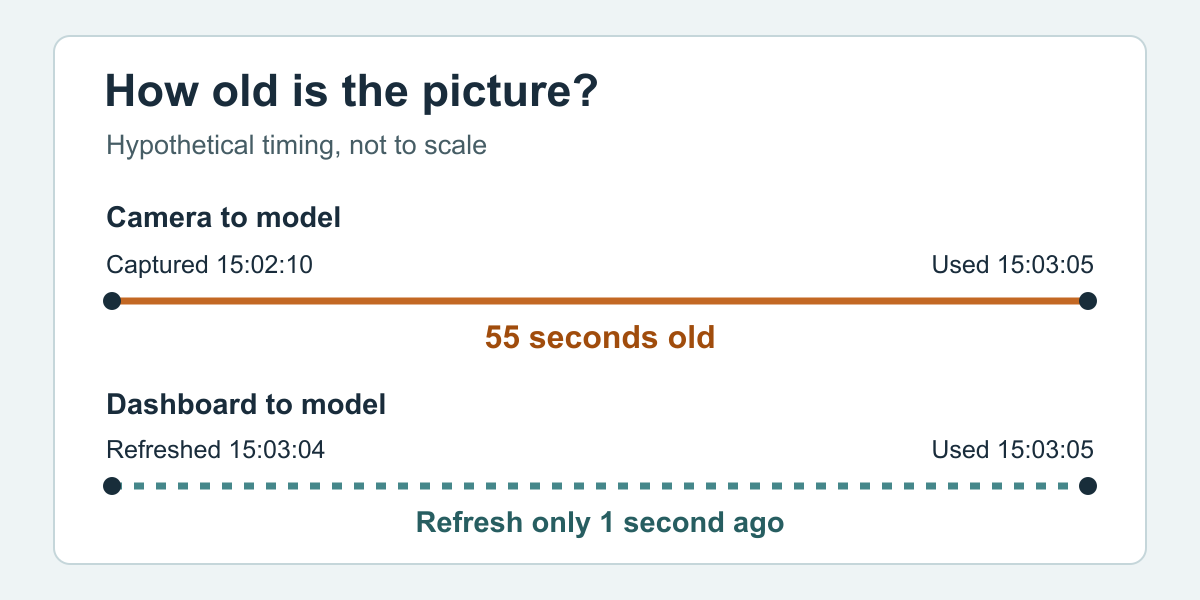
Measure the time from capture to a usable decision, not just the time the inference service took. The reviewer also needs to see the capture time; a photo that arrived this morning may show conditions from yesterday. Keep a count of waiting items, the age of the oldest one in each priority tier, and the share returned for another observation. You can improve a team average by clearing easy cases and still miss the hard ones that actually matter.
Calculate how fast the team can recover
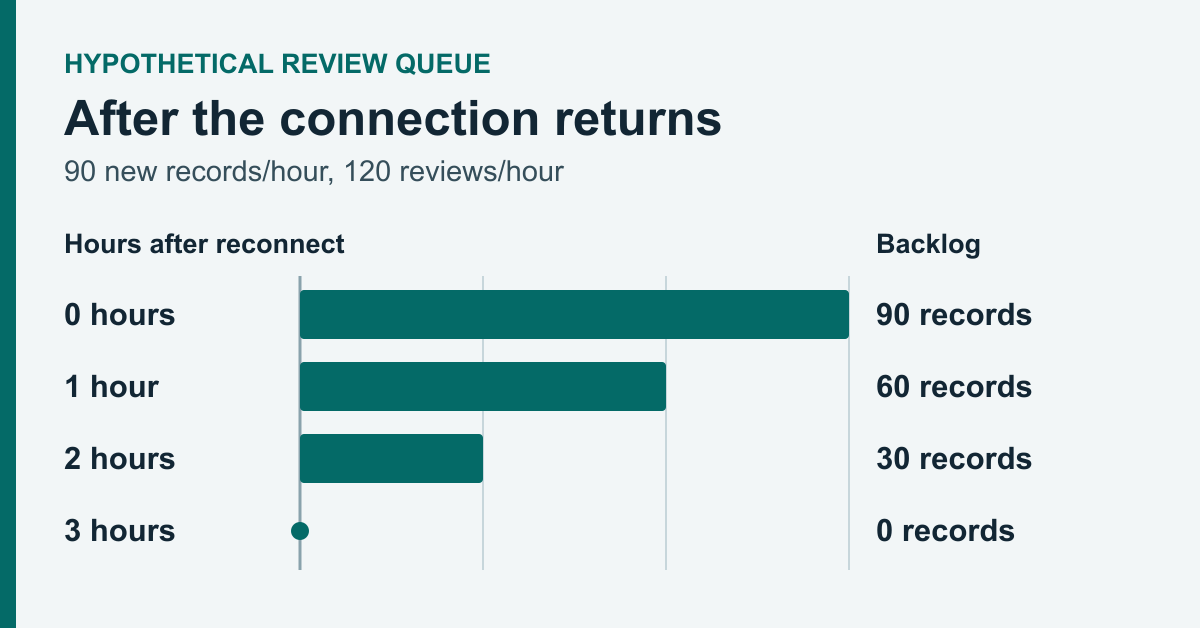
Suppose a connection interruption leaves 90 eligible records ready for review when service returns. Another 90 per hour arrive, while staff make 120 decisions per hour. The queue falls by 30 per hour, so the backlog clears in three hours after reconnecting. Dividing by 120 and estimating 45 minutes would ignore the work still arriving.
Now let a shift change reduce the review rate to 105 per hour. With the same inflow and no other change, spare capacity falls to 15 and recovery takes six hours. These are steady-rate illustrations, not Cleveland measurements or staffing recommendations. Real arrivals vary, and cases requiring a second opinion can take longer. In an acceptance test, measure the earliest urgent decision and the oldest unresolved normal item, as well as the total time to catch up.
Decide who can act before the queue grows
Use a short drill built from non-sensitive example records. Give reviewers an ordinary mix, one surge and a short-staffed handover. Have the shift lead show what would happen rather than explaining what the dashboard is supposed to do.
Recovery tests for an image review queue
| Review situation | Decision to assign | Evidence of a workable process |
|---|---|---|
| Oldest eligible item approaches its deadline | The shift lead reallocates reviews or routes suitable work to the backup team. | The lead can see the affected tier and the next owner accepts it. |
| An urgent report arrives during catch-up | The duty reviewer handles the urgent report on its own clock. | The urgent deadline is visible, and the normal backlog is still accounted for. |
| The image is too old to support action | The reviewer requests a fresh observation rather than resolving the case from stale evidence. | The item shows why action was deferred and who owns the follow-up. |
| Several images appear to show the same issue | A reviewer links the observations to one investigation while retaining relevant evidence. | The system reports one investigation and preserves the observation times for comparison. |
| The shift ends with open cases | The outgoing lead hands over unresolved decisions and exceptions to a named receiver. | The next team can identify the oldest open item and the next action immediately. |
The NIST AI Risk Management Framework calls for defining and assessing human oversight. For a buyer, that can be as concrete as naming the person allowed to dismiss a weak flag and the person who can request a new observation. Ask for those roles, evidence access and escalation steps in the proposal. They are part of what the team has to operate, not a footnote to model accuracy.
Decide whether more compute actually helps
When flags are waiting for people, buying a faster model may create an even larger queue. Compare the alternatives against the same decision deadline: schedule coverage during peak arrivals, change the evidence bundle so reviewers spend less time hunting for context, or separate genuinely urgent work from follow-up. If the team can't make the high-impact decisions within the agreed time, keep the existing manual route for those cases while you address the limit.
Use Percepture's Ohio inference guide for the separate questions of service location and delivered capacity. If buyers keep asking how your infrastructure fits an operating team's workload, Percepture's content team can help turn the actual workflow and acceptance results into a clear buyer guide.

About Bob Generale
Bob Generale is President of Percepture, a digital marketing and public relations agency.