


A prospect can ask Gemini for a shortlist without ever visiting a traditional results page. That makes gemini brand mentions a practical visibility concern for leaders who want their companies represented accurately when buyers research categories, vendors, products, and problems.
The goal is not to chase one favorable answer. It is to make the brand easier to understand, retrieve, compare, and support across the wider set of questions that surround a buying decision.
What does it mean when a brand appears in Gemini?
Gemini brand mentions are references to a company, product, or service inside a Gemini response. The reference may appear as a recommendation, example, comparison, citation, or simple description. Visibility should be judged across a planned group of prompts, not from one isolated answer.
What leaders should know first
- Visibility starts with clarity: A brand must be consistently associated with the problems, categories, locations, and audiences it serves.
- One prompt is not a market: Measure gemini brand mentions across a repeatable prompt set that reflects the buyer journey.
- Mentions and citations are different: A brand can be named without a linked source, while a citation can support an answer without naming the brand prominently.
- Improvement is cross-functional: Website content, digital PR, technical access, third-party coverage, and measurement should support the same positioning.
Why do brand mentions in Gemini matter?
Gemini brand mentions matter because AI-generated answers can shape the options a buyer considers before that buyer reaches a company website. If the brand is absent, described poorly, or placed in the wrong category, the company may be excluded from the next step of the evaluation.
The business issue is broader than referral traffic. Marketing leaders also need to know whether the brand is associated with the right expertise, compared with the right alternatives, and represented with current language. That makes AI visibility a positioning and reputation question as well as a search question.
Visibility can also expose gaps in the company’s public information. A vague service page, conflicting company descriptions, thin executive profiles, or missing evidence can make it harder for any research system—or a human buyer—to understand what the company does. The same cleanup that supports AI discovery can therefore improve the wider buyer journey.
A useful review separates Gemini brand mentions from three related outcomes:
- A mention names the brand in an answer.
- A citation links or refers to a source associated with the answer.
- A favorable position places the brand in a relevant shortlist, comparison, or recommendation.
These outcomes should not be blended into one score. A high mention count can hide poor relevance, weak positioning, or unfavorable context.
What shapes visibility in practice?
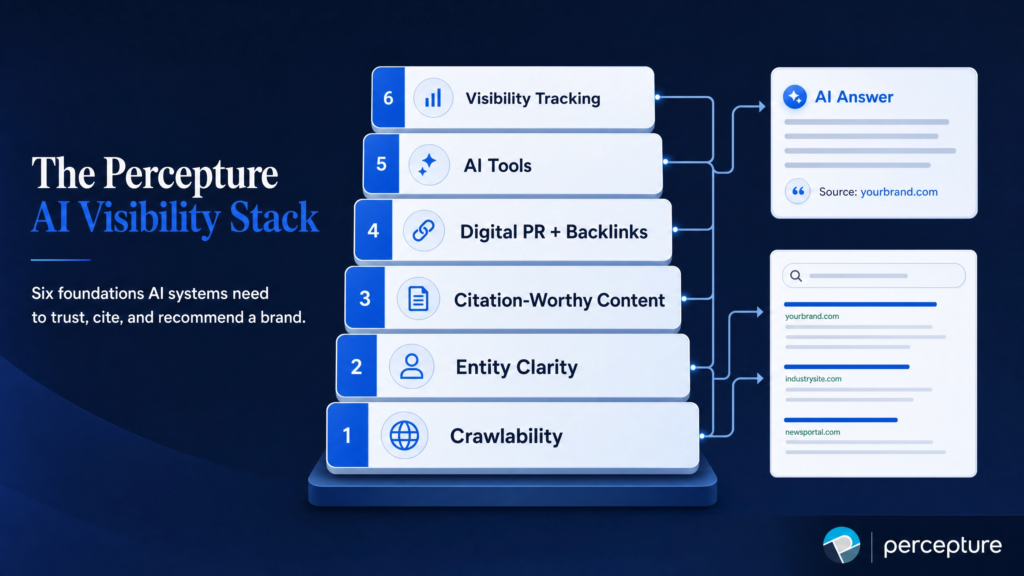
No public checklist can guarantee inclusion in a generated answer. The practical task is to improve the information environment around the brand and then observe how answers change. Gemini brand mentions should be treated as outputs influenced by several connected workstreams rather than as a switch that a marketer can turn on.
Clear brand and category signals
A company should describe itself in stable, specific language. Its main pages should make the company name, services, customers, industries, locations, and areas of expertise easy to identify. Conflicting descriptions make the brand harder to place.
Gemini brand mentions are easier to evaluate when the underlying entity is clear. Review the company’s homepage, service pages, about page, leadership profiles, public listings, and major third-party profiles for material differences in names, categories, and descriptions.
This does not mean repeating one slogan everywhere. It means maintaining agreement on basic identity while adapting the explanation to each audience.
Content that answers the full buying question
A service page rarely answers every question that appears during evaluation. Buyers also ask how an approach works, when it fits, what alternatives exist, what risks to consider, and how success should be judged.
Build content around those connected decisions rather than publishing disconnected keyword pages. A useful cluster may include definitions, implementation guides, comparisons, evaluation criteria, measurement advice, and evidence that supports important claims.
Percepture’s guide to an AI content citation strategy explains how source-ready content fits into that work. Citation-focused content should still help the reader even when no AI system references it.
Independent corroboration
A company website is the primary source for its own services and positioning, but buyers often look for independent context. Relevant trade coverage, association pages, expert contributions, interviews, directories, reviews, and partner pages can help people verify that the organization exists in a broader market.
The objective is not to collect mentions from any available site. Prioritize sources that the intended buyer would reasonably use. A narrow trade publication may be more useful than a large but unrelated platform.
Accessible, well-maintained pages
Important information should be available in pages that visitors can load, understand, and navigate. Keep core explanations in visible copy, use descriptive headings, connect related pages, and remove outdated contradictions. Technical work cannot create authority by itself, but inaccessible or disorganized pages can waste otherwise useful content.
Teams that need a broader technical and editorial program can compare Percepture’s generative engine optimization services with their current search workflow.
How should a company improve its visibility?
A reliable program begins with a baseline and moves through focused improvements. Gemini brand mentions should be monitored through the same prompt set before and after meaningful changes, while allowing room for normal answer variation.
1. Build a buyer-led prompt map
Start with questions real buyers may ask at different stages. Include problem discovery, category education, vendor discovery, comparisons, objections, implementation, and measurement. Add industry, location, company-size, and use-case modifiers only when they reflect a real market segment.
Group prompts by intent instead of treating each wording variation as a separate strategy. A prompt family for vendor discovery may include requests for examples, shortlists, alternatives, or companies with a particular capability.
Record the prompt, date, market, account state, and answer surface used during each review. Consistent test conditions make later comparisons more useful.
2. Diagnose why the brand may be absent or misclassified
Review the results alongside the company’s public footprint. For each prompt family, ask whether the website clearly addresses the question, whether the brand is connected to the requested category, and whether important statements have credible support.
Do not assume every missing Gemini brand mention is a content problem. The prompt may be poorly matched to the company, the brand may lack a relevant offering, or the available public information may not support inclusion. The correct response may be to refine the target rather than produce another article.
3. Improve the strongest information gaps first
Fix identity and positioning conflicts before expanding the content library. Then improve pages that sit closest to buyer decisions. Add direct explanations, useful comparisons, implementation details, authorship, and support for consequential claims where evidence is available.
Next, look beyond the company website. Digital PR, expert commentary, partnerships, and accurate market profiles can help create a clearer public record. Gemini brand mentions should grow from useful, consistent information—not from mass-produced pages or indiscriminate link placement.
4. Recheck the prompt set and record answer quality
Run the same prompt families on a planned schedule. Save enough context to distinguish a meaningful pattern from a one-time answer. Note whether the brand appears, how it is described, which competitors appear, what sources are referenced, and whether the answer matches the intended buyer segment.
Use the findings to select the next improvement. If the brand appears but is described under the wrong category, positioning work may matter more than additional reach. If accurate mentions occur without citations, stronger source pages may be the better next step.
How should success be measured?
Measurement should connect visibility with relevance. Counting gemini brand mentions alone can reward appearances that do not help the business. A practical scorecard combines presence, context, source inclusion, competitive position, and downstream behavior.
| Measure | What to record | Why it helps |
|---|---|---|
| Gemini brand mentions rate | Prompt families in which the brand appears | Shows visibility across the monitored set |
| Relevant mention rate | Mentions that match the intended service, market, and audience | Separates useful visibility from noise |
| Citation presence | Answers that reference a company-controlled or independent source | Shows which sources are entering the observed answer set |
| Message accuracy | Correct, incomplete, outdated, or misleading descriptions | Identifies reputation and content gaps |
| Competitive inclusion | Other brands appearing for the same prompt families | Provides market context |
| Qualified actions | Relevant visits, inquiries, assisted conversions, or sales feedback that can be observed | Connects visibility work to business evaluation |
Gemini brand mentions should be reported by prompt family, not only as one blended percentage. A company may be visible for educational questions but absent from vendor-selection prompts. That difference points to a specific content or positioning gap.
Avoid claiming that one change caused an answer shift unless the test supports that conclusion. Multiple sources, answer variation, market activity, and ongoing website changes can overlap. Use monitoring to guide decisions rather than to manufacture certainty.
Teams comparing platforms can use this guide to AI search visibility tools as an evaluation companion. Tool selection should follow the prompt map and reporting plan, not define them.
What mistakes should companies avoid?
Most weak programs fail by chasing isolated outputs. Sustainable Gemini brand mentions require a repeatable operating process, clear targeting, and editorial judgment.
- Testing one broad prompt: One answer cannot represent category-wide visibility.
- Treating all Gemini brand mentions as wins: An irrelevant, outdated, or negative mention may require correction rather than celebration.
- Publishing pages for every prompt variation: This creates overlap and thin content without resolving the buyer’s underlying question.
- Copying competitor claims: Competitor coverage can reveal topics, but it does not prove a claim about your company.
- Using unsupported statistics: A precise number without accessible evidence can weaken trust.
- Ignoring third-party descriptions: Conflicting profiles and outdated listings can undermine otherwise clear website positioning.
- Measuring only traffic: Some visibility effects appear during research and may not produce a direct referral.
- Changing the test every month: An unstable prompt set makes trend reporting difficult to interpret.
Is this work a fit for your company?
Use this program when the buying journey includes research
- Good fit: Buyers compare vendors, ask detailed category questions, or rely on several sources before contacting sales.
- Good fit: The company has clear expertise but inconsistent visibility across search and AI answers.
- Fix foundations first: The offering, audience, positioning, or supporting evidence is still unsettled.
- Reduce scope: The team cannot maintain a stable prompt set or act on the findings.
A useful Gemini brand mentions program gives leaders a clearer view of how the market may encounter the company. It should produce prioritized decisions, not a dashboard full of disconnected screenshots.
Evaluate the wider evidence
Review Percepture’s published work before deciding whether outside support fits your visibility program.
Turn monitoring into a focused operating plan
The strongest next step is a documented baseline: a defined audience, a grouped prompt set, a record of current answers, and an honest review of the company’s public information. That baseline shows whether the priority is entity clarity, buyer-focused content, technical cleanup, independent corroboration, or better measurement.
Gemini brand mentions are most useful when they reveal what to improve next. Treat them as one signal within a broader AI search visibility program, keep claims tied to available evidence, and review progress across meaningful buyer questions rather than one flattering response.
Build an AI visibility plan around your buyers
Percepture can help map the prompt landscape, diagnose visibility gaps, and organize the work into an actionable program.

About Bob Generale
Bob Generale is President of Percepture. He works with business and marketing leaders on search strategy, digital visibility, and integrated marketing programs.