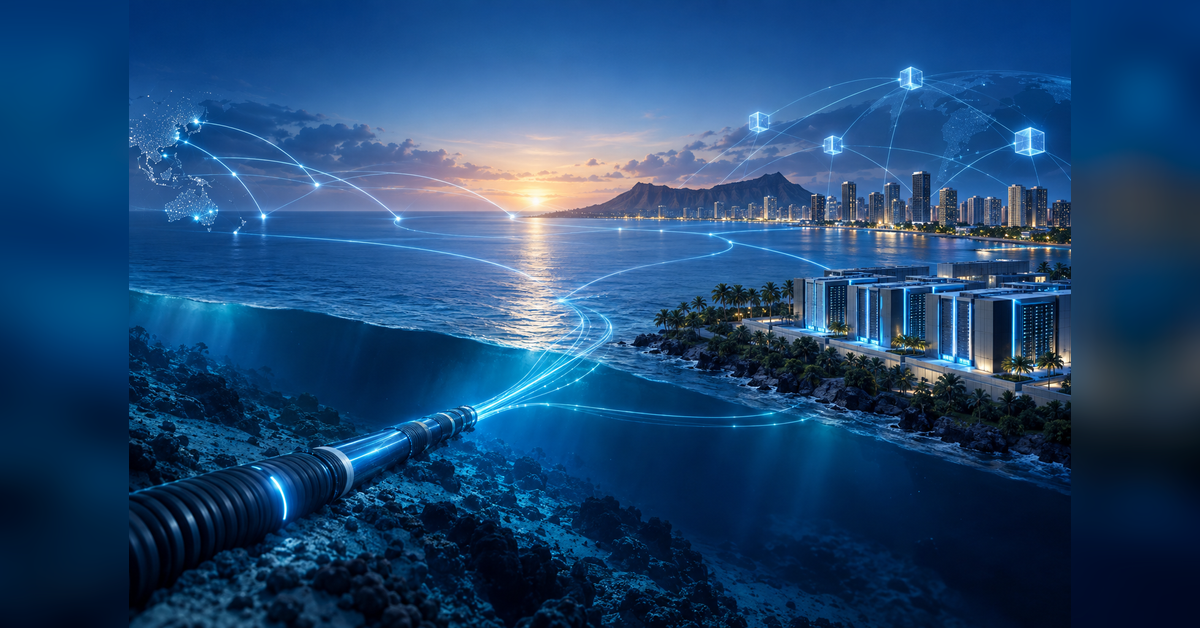

PTC 2026 was the Pacific Telecommunications Council's annual conference in Honolulu, Hawaii, held January 18–21, 2026. The completed event brought digital infrastructure, telecommunications and ICT participants together for four days of presentations, structured discussions and business meetings focused heavily on AI-driven connectivity and the infrastructure supporting it.
This PTC 2026 recap separates the confirmed event record from interpretation, points readers to official recordings and explains how the conference conversation connected AI demand with data centers, edge systems, subsea networks and investment. Last updated: June 22, 2026.
When and where did PTC’26 take place?
PTC 2026 took place January 18–21, 2026, in Honolulu, Hawaii. Organized by the Pacific Telecommunications Council, PTC 2026 was a completed annual conference centered on digital infrastructure, telecommunications and ICT. The official PTC’26 Rewind is the primary destination for the conference record and available content.
PTC’26 quick facts
The essential PTC 2026 facts can be reduced to the following event record.
- Organizer: Pacific Telecommunications Council
- Dates: January 18–21, 2026
- Location: Honolulu, Hawaii
- Status: Completed
- Named formats: Center Stage, Alaka’i, Topical Sessions and Lightning Talks
- Primary subject area: Digital infrastructure, telecommunications and ICT
- Official archive: PTC’26 Rewind
PTC’26 in numbers
The most durable numbers are the dates and four-day span. PTC’s official post-conference coverage describes the gathering as a record year. Readers seeking the latest published count should use PTC’s official post-conference report.
| Measure | Confirmed event record | Why it matters |
|---|---|---|
| Conference dates | January 18–21, 2026 | Establishes that the event is historical, not upcoming |
| Calendar span | Four days | Shows why the program supported several presentation and discussion formats |
| Named program formats | Four | Distinguishes main-stage programming from focused and short-form sessions |
| Host city | Honolulu, Hawaii | Resolves location and navigational searches for the conference |
For readers comparing the event with the broader calendar, Percepture’s guide to data center conferences provides a wider industry view. The dedicated PTC conference overview explains the annual conference separately from this historical recap.
Why PTC’26 was described as a record year
Official post-conference coverage supplies the record-year framing for PTC 2026. Without a retained attendance table or comparable year-by-year series, the useful conclusion is not an invented growth percentage. Here, the editorial takeaway is that PTC’s framing centered the conference discussion on AI-driven connectivity.
That distinction matters. Conference size is only one signal. A record-year description can also reflect participation across the infrastructure value chain, demand for sessions, the volume of meetings and the range of issues discussed. Those dimensions should not be converted into numerical claims unless PTC publishes the supporting figures.
Brian Moon summarized the moment in a public post-conference statement: “PTC’26 reflected a turning point for our industry.” The line is most useful as leadership context, not as proof of a particular commercial outcome.
Center Stage, Alaka’i, Topical Sessions and Lightning Talks
PTC 2026 used several formats rather than asking one stage to serve every kind of conversation. The structure supported broad visibility, focused discussion and shorter contributions within the same conference.
| Format | Editorial role in the program | Best way to review it |
|---|---|---|
| Center Stage | Main conference programming for subjects with broad relevance | Start with the official rewind and available featured recordings |
| Alaka’i | A distinct named program format within the conference | Use official program descriptions for its session record |
| Topical Sessions | Focused treatment of defined industry subjects | Review by topic rather than relying on a general highlight reel |
| Lightning Talks | Short-form presentations designed for concise ideas | Look for the individual contribution or grouped recording |
This format mix also explains why a single recap cannot substitute for the proceedings. A main-stage summary can show the conference’s direction, while focused sessions preserve the operational detail that infrastructure executives, investors and technical teams may need.
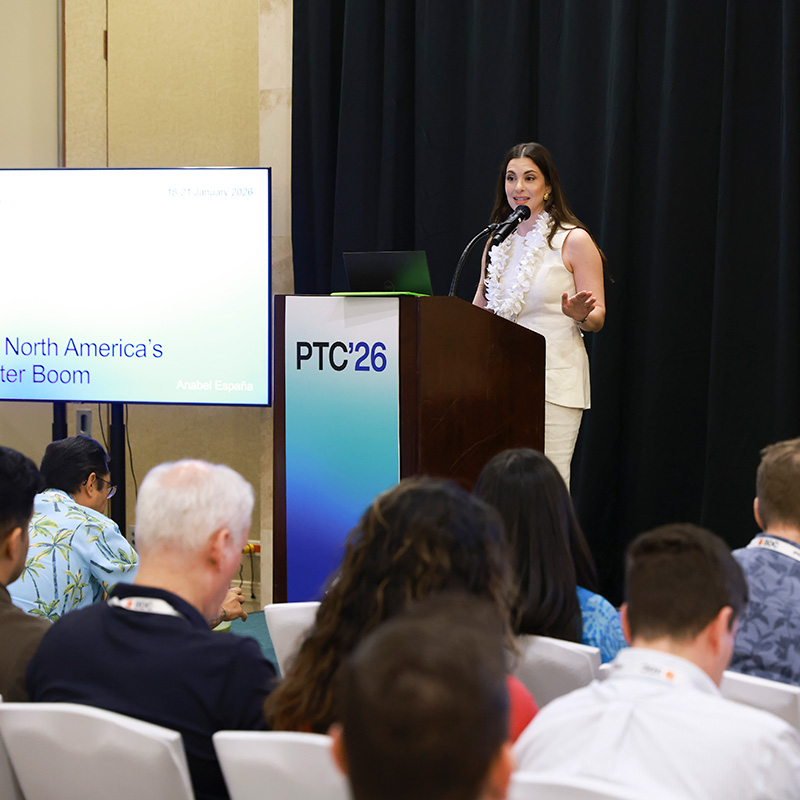
AI, inference and digital infrastructure themes
AI was not an isolated software topic at PTC 2026. The conference framing connected AI-driven demand to connectivity and the physical systems required to move, process and exchange data. That is the practical meaning of discussing AI alongside inference and digital infrastructure.
For business leaders, the important shift is from asking whether AI matters to asking where workloads run, how traffic moves and which infrastructure constraints shape deployment. Inference places attention on the delivery side of AI: applications must respond where users, devices and operational systems need them. That makes network reach, interconnection and infrastructure placement part of the AI conversation.
The official record should remain the source for individual speaker positions. The independent takeaway is narrower: AI demand cannot be evaluated separately from compute capacity, network paths and investment decisions. A conference that brings those stakeholders into one program can expose dependencies that are easy to miss in a software-only discussion.
Data centers, edge, subsea and investment
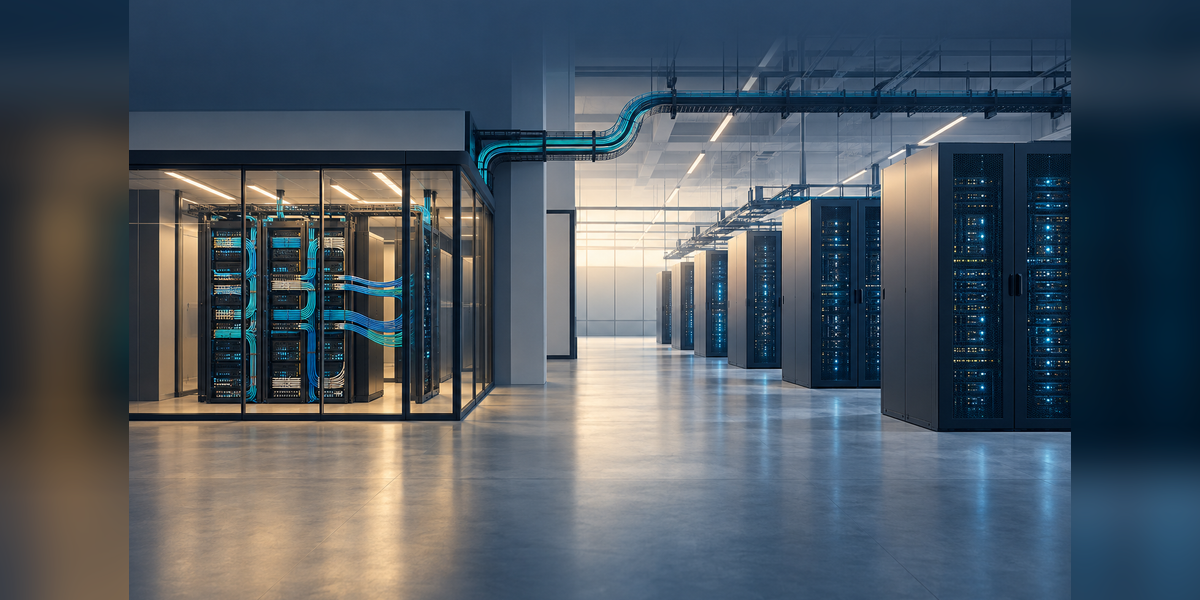
The infrastructure conversation at PTC 2026 crossed four connected layers: facilities, distributed computing, transport and capital. Data centers provide compute environments; edge architecture changes where some processing occurs; subsea systems carry international traffic; and investment determines which projects can move from plans to operating assets.
These subjects are related, but they are not interchangeable. A new facility does not solve every network constraint. An edge deployment still depends on reliable upstream systems. Subsea capacity needs landing, terrestrial and interconnection paths. Capital plans must account for commercial demand, development timing and operational risk.
An operator’s map of the conference conversation
This synthesis organizes the conference themes by the decision each layer forces. It is an editorial framework, not an official PTC scorecard.
| Layer | Operating question | Common dependency |
|---|---|---|
| AI demand | What workloads and user experiences must the infrastructure support? | Reliable compute and connectivity |
| Compute location | Which processing belongs in core facilities, regional sites or edge environments? | Latency, capacity and operating requirements |
| Network transport | How will traffic move between markets, facilities and users? | Terrestrial, subsea and interconnection paths |
| Capital | Which assets can be financed and delivered on an achievable schedule? | Demand, risk and execution discipline |
Readers who want a deeper event-specific view can continue to Percepture’s PTC data center conference guide. The separate guide keeps infrastructure-event intent from overtaking this page’s historical role.
Awards and leadership programs
Awards and leadership or talent programs were part of the broader PTC 2026 story. They matter because an industry conference is not only a sequence of technical sessions. It also creates a place to recognize contributions and develop the people who will lead future infrastructure work.
This recap does not reconstruct recipient lists, program rosters or selection criteria without the corresponding official records. The official conference rewind is the appropriate source for names and archived program details. This recap therefore leaves those details to PTC’s official conference rewind.
For prospective participants trying to understand who the event serves, Percepture’s guide to the PTC audience addresses attendee fit as a distinct question.
Brian Moon’s post-conference reflections
Brian Moon’s public reflections positioned PTC 2026 as an industry turning point. His comment aligns with the event’s emphasis on AI-driven connectivity: the discussion was not limited to forecasting AI adoption, but extended to the networks and facilities expected to support it.
Readers can review the public post-conference interview with Brian Moon and PTC’s longer Digging Into the Future feature. Those sources preserve his views in context and should take priority over a secondhand paraphrase of every point.
Watch PTC’26 content
The best way to move beyond a PTC 2026 summary is to use the official archive. Begin with PTC’26 Rewind, which serves as the conference’s retrospective content destination.
- Watch the 2026 post-conference interview with Brian Moon.
- Watch Digging Into the Future with Brian Moon.
- Read PTC’s official post-conference report.
Recordings are especially valuable when a summary mentions a theme but not a speaker’s complete reasoning. Use the recap to choose a subject, then use the original video or official article for the full context.
What the recap means for infrastructure leaders
- AI demand is an infrastructure question. Workload growth has consequences for compute placement, network design and capital planning.
- Conference formats signal different levels of detail. Main-stage programming establishes direction; topical and short-form sessions can reveal narrower operating issues.
- The system matters more than one asset class. Facilities, edge environments, interconnection, subsea transport and investment decisions affect one another.
- Historical and upcoming intent should remain separate. Finish the PTC’26 record before moving to planning information for PTC’27.
Looking for the next PTC conference?
PTC 2026 is complete. Readers researching the next annual conference should use Percepture’s complete PTC’27 conference guide and PTC’s official PTC’27 page. Check PTC’s official PTC’27 page directly for current dates, registration status, deadlines, fees and program changes.

PTC’26 frequently asked questions
When and where was PTC’26?
PTC’26 took place January 18–21, 2026, in Honolulu, Hawaii. It was the Pacific Telecommunications Council’s completed annual conference.
What happened at PTC’26?
PTC 2026 brought the digital infrastructure, telecommunications and ICT community together for presentations, focused sessions and business discussions. AI-driven connectivity and its supporting infrastructure were prominent themes.
How large was PTC’26?
PTC described PTC 2026 as a record year in its post-conference coverage. This recap does not state an unsupported attendance total; the official report is the source for published event figures.
What were the biggest PTC’26 themes?
The biggest documented themes included AI, inference, digital infrastructure, data centers, edge systems, subsea connectivity and investment. Together, they framed AI as a physical infrastructure and network issue as well as a software issue.
What did PTC’26 say about AI and infrastructure?
PTC’26 connected AI-driven demand with the networks and facilities required to support data movement and processing. The official recordings provide the full positions of individual speakers.
What were the PTC’26 event formats?
The named formats were Center Stage, Alaka’i, Topical Sessions and Lightning Talks. They supported a mix of broad programming, focused discussion and concise presentations.
Where can I watch PTC’26 sessions?
The official PTC’26 Rewind is the primary archive for available conference content. Public Brian Moon videos also provide post-conference and forward-looking context.
What comes after PTC’26?
PTC’27 comes after PTC’26 in the annual conference cycle. Historical questions belong on this recap, while planning questions should move to the dedicated PTC’27 guide.
When is PTC’27?
The current PTC’27 dates should be checked on PTC’s official event page because conference details can change. Percepture’s PTC’27 guide provides a separate planning-oriented overview.

About Bob Generale
Bob Generale is President of Percepture and writes about digital strategy, search visibility, AI systems and the business implications of technology and infrastructure markets. Connect with Bob Generale on LinkedIn.