

Infrastructure conferences can consume a large budget before the first meeting begins. Capacity Europe 2026 should therefore be treated as a business-development project, not a collection of panels, receptions, and unplanned introductions.
This guide helps leaders decide whether Capacity Europe 2026 fits their goals, research the people and companies that matter, plan stronger meetings, and build follow-up before the event. Official dates, venue details, agenda items, speakers, and exhibitors should come from current organizer materials.
How should a business prepare for the event?
Prepare for Capacity Europe 2026 by setting one commercial goal, identifying priority accounts, researching likely participants, and scheduling focused meetings. Use the official organizer page and registration materials for current event facts. Build the follow-up system before traveling so every useful conversation has a clear owner and next action.
The planning brief for leaders
The value of Capacity Europe 2026 depends less on the number of contacts collected than on the quality of the conversations created.
Start with a business outcome
Choose a primary outcome such as buyer discovery, partner development, investor conversations, market research, or stronger visibility in a defined infrastructure category.
Research before outreach
Separate priority accounts from interesting names. Give the team a short reason for pursuing each meeting and a question that can reveal genuine fit.
Design the handoff
Assign ownership, capture useful context, and decide what happens after a promising meeting. A badge scan or business card is not a follow-up plan.
When and where is the event?
The source package available for this article did not include an official organizer record verifying the date or venue for Capacity Europe 2026. Publishing an unverified schedule would create avoidable travel risk, so this guide does not state one.
Before booking, compare the organizer’s current event page, registration record, and any attendee communication issued for the event. Check the year on every page because search results, copied listings, and older promotional materials can remain visible after event information changes.
Use this short verification sequence:
- Confirm the event year, start date, and end date.
- Confirm the venue name and full address.
- Check whether registration, meetings, and evening functions use different locations.
- Review admission rules and credential requirements.
- Save the organizer’s latest agenda or event application for use during the trip.
A useful internal brief should record the verified facts, their source, and the date checked. That gives everyone planning Capacity Europe 2026 the same operating information without turning an old calendar entry into an accidental source of truth.
Who should consider attending?
Capacity Europe 2026 may fit teams that can connect attendance to a defined commercial, investment, partnership, or market-intelligence goal. The deciding question is not whether the event is prominent. It is whether the right conversations can advance a current business priority.
Buyer-fit guide
| Role | Useful objective | Question to settle before registering |
|---|---|---|
| Buyer or enterprise decision-maker | Compare potential providers, routes, locations, or partnership models | Which active requirement could be discussed without turning the meeting into a generic vendor pitch? |
| Network or infrastructure operator | Develop customer, supplier, interconnection, or expansion conversations | Which markets, facilities, capabilities, or customer problems are priorities this year? |
| Investor or adviser | Test market assumptions and meet operators or management teams | What evidence would change the current investment view? |
| Marketing or communications leader | Support account conversations, executive visibility, and event follow-up | Which audiences and business themes should the company be associated with? |
Attendance is harder to justify when the team has no target accounts, no meeting owner, and no post-event process. In that case, research or selective remote outreach may produce more value than sending a large group to Capacity Europe 2026 without a shared plan.
What themes should attendees watch?
The final themes for Capacity Europe 2026 should be taken from the official agenda when it is available. Until then, teams can organize research around the physical and commercial questions most relevant to their own market rather than predicting session topics.
Start with physical constraints. Ask where power, fiber routes, interconnection options, latency requirements, and network density affect the ability to deliver a service. Do not accept a broad growth story when the operational path remains unclear.
Then examine the commercial signal. A market may sound active while procurement cycles, customer commitments, available capacity, and deployment timing tell a more cautious story. Meetings are more useful when participants ask what is funded, contracted, available, or scheduled instead of relying on general enthusiasm.
Finally, test the customer problem. Buyers may describe the same infrastructure category in very different language depending on whether their concern is resilience, geographic reach, performance, cost, compliance, or speed to deployment. Record the language buyers use; it can improve later sales materials and content planning.

How should meetings be planned?
A strong Capacity Europe 2026 meeting plan begins with account selection. Divide the target list into priority accounts, useful partners, market-intelligence contacts, and opportunistic meetings. This prevents a recognizable company name from automatically outranking a smaller organization with a live need.
Write a one-sentence meeting thesis for each priority account. State why the conversation matters now, what the team can contribute, and what must be learned. A thesis keeps outreach specific and gives the meeting owner a way to prepare without writing a long dossier.
Use a simple meeting record:
- The organization and people involved
- The reason for the meeting
- The most useful opening question
- The business or technical issue discussed
- The next action, owner, and target timing
Avoid packing every open slot. Travel between meeting points, delayed conversations, preparation, and note capture all require time. A smaller schedule with clear objectives is usually easier to execute than a calendar with no room for context or follow-through.
The plan should also protect senior leaders from low-fit meetings. Give the scheduling team a short acceptance rule, such as an active opportunity, a strategic partnership question, a priority account, or a defined market-learning goal. That rule keeps Capacity Europe 2026 outreach focused without closing the door on useful introductions.
How can marketers support the event?
Marketing for Capacity Europe 2026 should support the account plan rather than run beside it. Sales, executives, subject-matter experts, and marketing should agree on priority audiences, the company’s relevant point of view, and the actions that qualify as progress.
Before the event, build a small content and outreach package around the questions target buyers already ask. That may include a clear executive perspective, a practical article, short account-specific messages, and a landing page that explains the company’s relevance without forcing readers through a broad corporate narrative. Percepture’s guide to data center marketing strategy provides a broader planning context.
During the event, capture questions and language rather than publishing a stream of unsupported conclusions. Afterward, group follow-up by intent. A buyer with a defined project should not receive the same message as a research contact, potential partner, or person who attended a panel but never discussed a business issue.
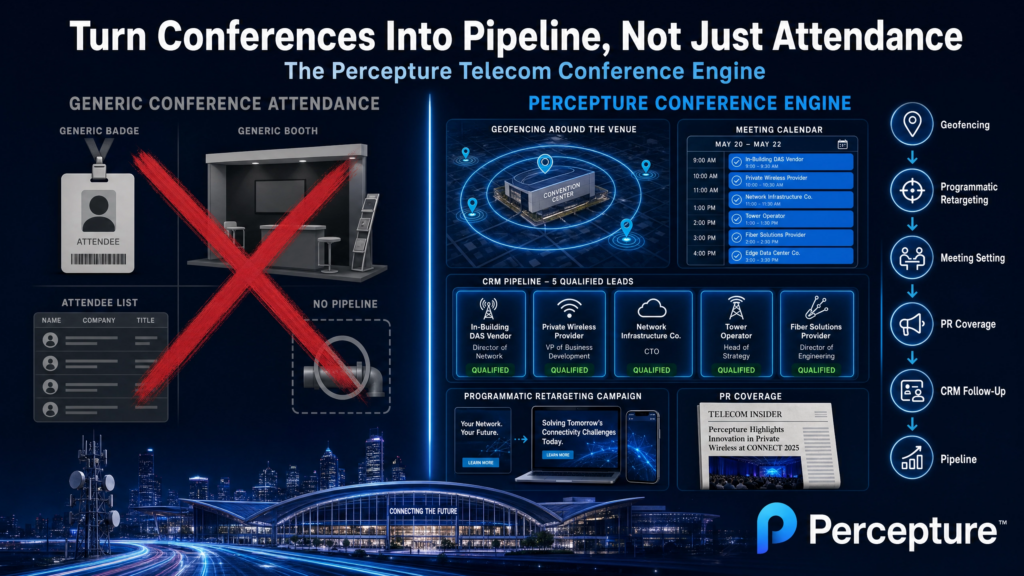
For teams comparing this event with other options, the Percepture overview of data center industry conferences can help frame the wider calendar. Companies selling across connectivity and infrastructure markets can also review Percepture’s approach to telecom marketing strategy.
Is the event worth attending?
Use this scorecard before approving Capacity Europe 2026 travel. Give one point for each statement that is already true.
- We have a written business objective for attending.
- We have named priority accounts or participant types.
- Each planned meeting has an owner and a useful reason.
- Our team can explain its relevance in plain language.
- We have a shared method for capturing context and next actions.
- Follow-up owners have time reserved after the event.
A low score is not automatically a reason to skip the event. It is a signal to improve the operating plan before committing more budget or adding more travelers.
Test the quality of your event pipeline
If your team has many contacts but few clear next steps, use a lead-quality review to separate activity from commercial intent.
Build the operating plan before the trip
The most useful Capacity Europe 2026 plan can fit on a few pages. Record the verified event facts, business objective, target accounts, meeting theses, traveler roles, note-taking process, and follow-up rules. Keep it short enough that the team will use it during the event.
Revisit the plan when official organizer information changes or new participants become relevant. Good preparation does not remove spontaneity; it gives the team enough focus to recognize an unexpected conversation that genuinely deserves attention.

About Bob Generale
Bob Generale is President of Percepture, where he works with business leaders on integrated marketing, search visibility, communications, and growth strategy.