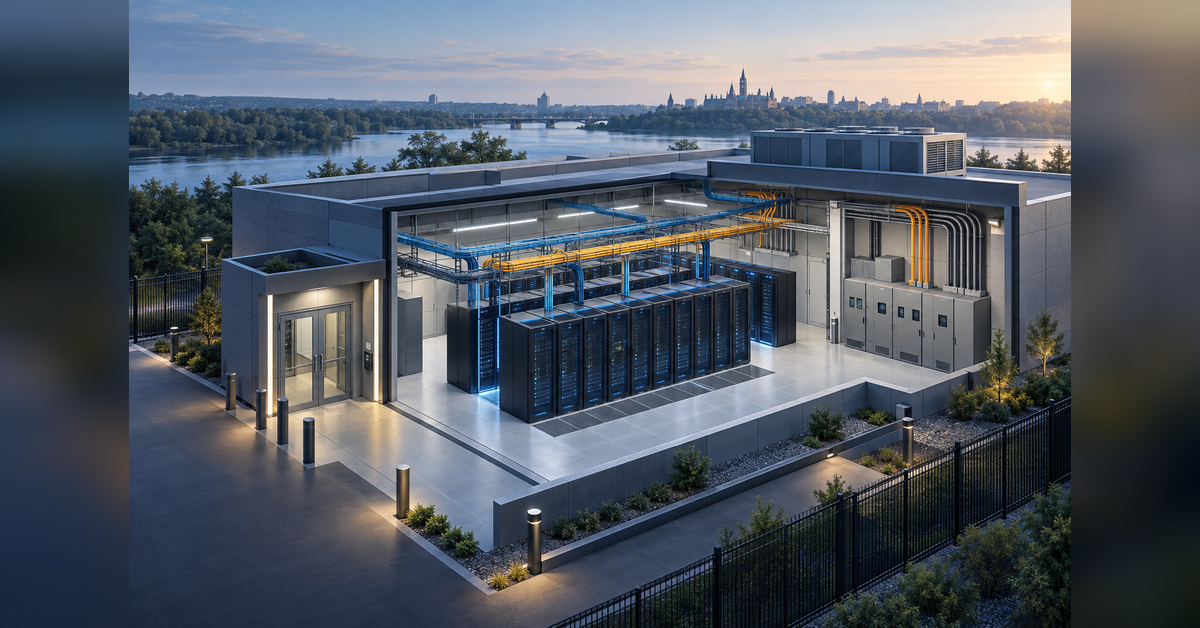

The best Ottawa data centers for your business belong on a shortlist only after you define the workload, the site and the work your team will still own. For an Ottawa colocation decision, a provider name is a starting point, not a substitute for a site-specific proposal.
This guide helps business owners and their IT, finance and procurement leads investigate named Ottawa facilities, compare operational commitments and prepare a requirements packet before scheduling visits or negotiating a contract.
Which Ottawa facilities should you investigate?
Start with Qu’s OTT3 and OTT2 and Equinix’s OT1 as named candidates, then request a proposal tied to the actual site. Favor the option that meets your location, network, power and support requirements in writing. A metro overview is not a capacity commitment.
Define the location boundary before comparing providers
Write down whether the search covers Ottawa only or also Gatineau. Then record the proposed facility address, municipality, contracting entity and locations of any services included in the proposal. Keep those fields separate rather than using “Ottawa–Gatineau” as a complete location specification.
For a residency-sensitive workload, give legal and security reviewers specific questions: Where will production data, backups and management systems sit? Who may administer them, from where, and under which contract terms? Ask them to assess those answers against your obligations instead of treating a local address as a blanket sovereignty assurance.
Operational access deserves its own boundary. Decide who would travel to the building for a failed drive, emergency replacement or equipment delivery. Use your team’s actual starting location and access needs when evaluating a visit, rather than choosing from a regional map alone.
Make sure the proposal is for the service you intend to buy
Ask each seller to identify the commercially available offering, the named facility and the party responsible for delivering it. Specify whether you want cabinet space, a private cage, a managed service or a combination. Require the proposal to explain who owns the equipment and who performs each operational task.
Do not place a construction announcement, a government facility and an available commercial colocation proposal in the same comparison column. For this decision, require an orderable service with a defined delivery scope and an agreed installation process.
A useful first request is narrow: “Quote this equipment and service scope at this facility, with an installation window, responsibility schedule and itemized charges.” That gives procurement something to compare without asking a marketing overview to answer contractual questions.
Named Ottawa sites to investigate
Qu’s Ottawa location overview identifies OTT3 in Kanata and OTT2 in Nepean. Equinix’s Ottawa overview identifies OT1.
These are site-identification starting points, not scored recommendations. Request current commercial availability and site-specific documentation before treating any candidate as a procurement fit. The order below does not indicate preference.
Site names to use in your initial inquiry
| Operator | Site identification | Ask before advancing |
|---|---|---|
| Qu | OTT3, Kanata | Can you quote our equipment and support scope specifically at OTT3? |
| Qu | OTT2, Nepean | Can you quote our equipment and support scope specifically at OTT2? |
| Equinix | OT1, identified in the Ottawa overview | What exact facility address and service scope would our OT1 proposal cover? |
Keep proposals for OTT2 and OTT3 separate, even when the commercial contact is the same. Ask for documents that name the proposed site; do not transfer a specification or assurance from one facility to another without a written basis.
Compare the network path and the access path
Start the connectivity discussion with destinations: your office, users, cloud environments, recovery location and other systems the workload must reach. Ask the provider to identify how each destination would be connected, which party would order the service and which charges belong in the quote.
Request the carrier and cross-connect options for the proposed building, along with ordering responsibilities and delivery dependencies. If route diversity is a requirement, ask for an explanation of the physical paths and shared dependencies. Do not use two carrier names as your only evidence of separate routes.
Where latency matters, define an acceptance test around the application’s actual endpoints. Record the test conditions and the threshold your application owner will accept. A measurement to an unrelated destination should not settle that decision.
Physical access needs similar precision. Ask about visitor authorization, after-hours entry, equipment deliveries, staging, escort requirements and emergency work. For hands-on support, describe the task you would request: inspect a cable, replace an approved component or connect a console. Require the service schedule to distinguish those tasks from operating-system, application and security administration.
Tie power, cooling and resilience to your equipment
Send an equipment schedule, not just a cabinet count. Include dimensions, weight, electrical requirements and expected operating load, along with the growth you want the proposal to accommodate. For GPU equipment or another demanding configuration, ask the provider to assess the specific electrical and cooling requirements before accepting the design.
Have the proposal explain the power allowance, how consumption or committed capacity is billed, the feed arrangement and any restrictions on expansion. If the design calls for separate power feeds, ask your technical reviewer to assess the complete connection plan, including the equipment side.
For resilience, request an explanation of the systems serving your proposed space and the maintenance arrangements that affect it. Read the service-level agreement alongside its exclusions, notification terms and remedies. Ask what happens during planned work and who must take action on your equipment.
Treat certification as a document question. Request the named standard, issuing or auditing body, covered entity, facility address, service scope and applicable dates. Your security reviewer should determine whether that evidence addresses your requirement; a badge alone should not close the review.
Put operational ownership in a decision record
Consider a hypothetical business moving its own servers from an Ottawa office. Its IT team can administer the systems during the day, but the buyer wants a defined way to request authorized physical work after hours. The record below turns that scenario into a procurement question without assigning a capability to any provider.
Illustrative buyer ownership record
| Decision field | Illustrative entry |
|---|---|
| Source and date | Hypothetical buyer brief dated November 12, 2026, used only for this example. |
| Known requirement | The buyer will own and administer its servers and wants a defined after-hours physical-support service. |
| Open question | Which requested hardware tasks would the proposed site perform, under what authorization process and commercial terms? |
| Responsible reviewers | The IT lead defines tasks and authorization; procurement reconciles fees and exclusions; the security lead reviews access controls. |
| Limit | This record defines the buyer’s acceptance requirement. It establishes no provider response time or service capability. |
| Next action | Request a written, site-specific support schedule and attach it to the commercial comparison. |
Apply the same discipline to backups, patching, monitoring, incident escalation and recovery. Assign an owner to each task and identify any handoff between your team and a supplier. If a task has no named owner, resolve it before signing rather than leaving it to the first incident.
Compare the complete bill and the delivery dependencies
Ask finance to compare proposals over the same term, using the same equipment, power assumptions and service scope. Require each seller to state which charges are included, excluded or separately billed.
Keep recurring charges distinct from installation and other one-time charges. Address cabinet or cage space, power, connectivity, cross-connects, physical support, delivery work and any minimum commitments relevant to the proposal. Also request renewal terms, escalation provisions, expansion conditions, termination obligations and equipment-removal arrangements.
Build a delivery sequence alongside the cost comparison. Identify who orders connectivity, approves the installation design, authorizes access, receives equipment and accepts the completed service. Ask each party to state the dependencies behind its proposed dates.
If ownership or development is also on the table, treat data center financing structures as a separate capital decision rather than folding them into the colocation quote comparison.
A lower quoted total should not close the decision while material scope differences remain unresolved. First reconcile what each proposal buys; then decide whether the differences justify the cost.
Send one requirements packet before booking visits
Give every candidate the same workload description, location boundary, equipment schedule, connectivity destinations, support responsibilities and intended installation window. Ask for a response tied to the named site, with the supporting documents attached or clearly identified.
Use the visit to inspect the proposed arrangement and resolve specific questions. Bring the people who own the technical, security and commercial requirements, or give the visitor their written questions in advance.
Judge progress by the decision the shortlist can support: documented fit, unresolved material issues, comparable commercial scope and accountable owners. Search prominence is not an acceptance criterion. Choose the facility whose written commitments your team can evaluate, operate against and enforce through the agreed contract.
Ottawa colocation buying questions
How much does Ottawa colocation cost?
Request quotes for the same equipment, power assumptions, connectivity, support scope and contract term. Compare recurring charges, installation charges and separately billed services before comparing totals. Ask each provider to identify exclusions and the conditions that would change the bill.
Should Gatineau be included in an Ottawa facility search?
Include Gatineau if it falls within your accepted location and access boundary. Evaluate each proposed address separately, and have legal and security reviewers assess the relevant residency, administration and contract requirements. Do not treat a shared metro label as a substitute for that review.
Does a colocation proposal include managed IT?
Require the proposal to state who handles hardware work, monitoring, backups, patching, security administration and recovery. Ask for any managed services to be explicitly included in the service schedule rather than assuming physical support covers system administration.

About Bob Generale
Bob Generale is President of Percepture. His editorial focus is straightforward: clarify the buyer’s question, separate evidence from assumptions and define a useful next step.