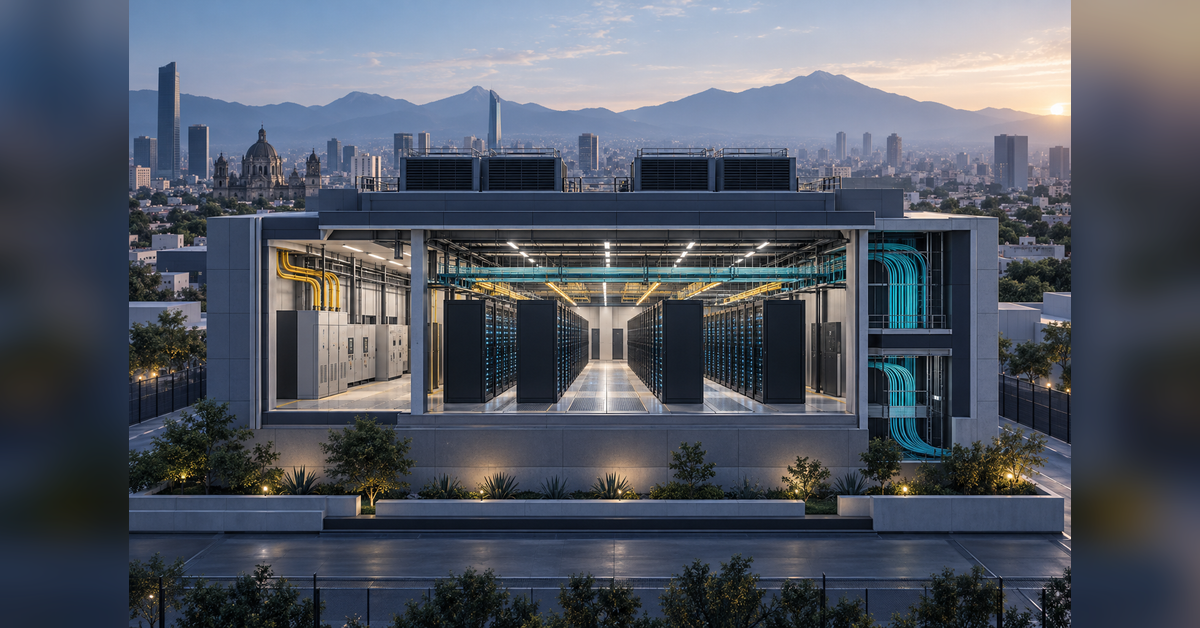

Before comparing Mexico City data centers, put the permitted location and deployment date at the top of the brief. For Mexico City colocation, those two requirements should determine which offers enter the comparison—not the order in which provider names appear in a search result.
Searching for the best Mexico City data centers is a starting point. Use the decision rules below to evaluate facility-specific offers, separate the city from the surrounding metro, and identify the interconnection, power and commercial commitments your business requires.
How should you choose a Mexico City facility?
Choose against a written deployment brief: exact permitted location, eligible colocation offering, required connections, usable power, cooling requirements and delivery date. Request evidence for the specific building and service being quoted. Compare commitments you can contract for, rather than treating a market label, provider name or expansion announcement as the offer.
Draw the boundary before you count facilities
Write down whether your search permits only Mexico City proper or also the surrounding metropolitan area. Record Mexico City (CDMX) separately from locations in the State of Mexico (Estado de México). Keep Querétaro outside this comparison unless you deliberately open a separate location search.
That boundary should be visible in every proposal. Ask for the street address, alcaldía or municipality, state or federal entity, current operator and facility identifier. A market name is not enough to establish where your equipment would sit.
Count physical facilities, not marketing entries. When two proposals use different brands or building names, reconcile their addresses and operator details before treating them as separate choices. Likewise, ask whether a proposed second deployment occupies another building or simply another room within the same facility.
For a primary site and recovery site, define the separation you require before choosing either. Have your technical team evaluate the dependencies relevant to the pair: power supply, fiber routes, access arrangements and the hazards addressed in each site’s engineering documentation.
Mexico City colocation: qualify the offer, then the operator
Separate retail colocation, wholesale space and cloud services at the beginning of the evaluation. For a retail requirement, ask about cabinet or cage availability and the minimum commitment. For wholesale, request the dedicated-space boundary, power commitment, delivery responsibilities and expansion terms.
If your requirement is to install customer-owned equipment, ask explicitly whether the offer permits it. Do not enter a cloud-service offering into the same comparison as a physical colocation lease without identifying that difference.
Ask for an offer tied to the particular facility, deployment size and requested start date. Keep future phases and expansion announcements separate from the capacity proposed for your initial installation.
Use the following record for each candidate. Each cell describes information to obtain; it is not a ranking or a provider specification.
What every facility comparison should contain
| Operating location | Provider/operator | Retail/wholesale/cloud-only eligibility | Carrier-neutrality evidence | Cross-connect/IX access | Power/cooling | Dated source | Unknowns |
|---|---|---|---|---|---|---|---|
| Street address, alcaldía or municipality, and federal entity; identify city proper versus surrounding metro. | Current facility operator, facility identifier and contracting entity. | Offering type, customer-equipment eligibility, minimum commitment and proposed start date. | Written carrier-choice policy, access rules and responsibility for the meet-me room. | Available service endpoints, ordering terms, IX operator and local or remote connection arrangement. | Committed IT load, rack requirements, electrical design and supported cooling configuration. | Facility-specific proposal, technical document or operator source, with its issue date. | Open technical or contractual questions, their owners and required resolution dates. |
An unanswered field is a question for the provider, not permission to infer a favorable answer. Resolve any gap that affects your deployment before making it part of the selection rationale.
Interconnection: separate the switch from the building
Hunter Newby’s published chapter on the IX switch and IXP real estate distinguishes ownership of the switching infrastructure from ownership of the place that houses it. That distinction gives buyers a useful way to examine neutrality: ask who controls the building, the meet-me room and the exchange service separately.
Apply that distinction to the facility being offered. Do not infer that a particular Mexico City building hosts an exchange from a general description of its connectivity.
Request four separate answers:
- Carrier choice: Which providers can serve your proposed installation, and what restrictions apply to bringing in another carrier?
- Cross-connect delivery: Who accepts the order, performs the work and bills the service? Request installation charges, recurring charges, demarcation points and delivery terms.
- IX access: Which exchange service is being offered, who operates it, and where does your connection terminate? Establish whether transport to another location is part of the arrangement.
- Route diversity: Request drawings or a technical explanation showing the relevant entrances, pathways and shared dependencies for the connections you intend to buy.
Newby’s discussion of building neutrality provides further context for questions about access and control. For procurement, carry the answers into the proposal and contract rather than leaving them in a sales presentation.
Put power and cooling in the same deployment commitment
Give each provider the same equipment schedule: expected IT load, rack-level requirements, cooling needs and anticipated growth. Ask the operator to return a proposed configuration against that schedule.
Keep the electrical quantities distinct. Request usable IT power for your installation, the allocation method and the operating limits that apply. Ask how the proposed configuration behaves during maintenance and how the provider documents its backup-power arrangements.
For dual-feed requirements, request an electrical single-line diagram and an explanation of shared components. Do not treat circuit labels as a substitute for the design information your technical team needs.
Cooling belongs in that same response. Ask which configuration supports your equipment, what changes your deployment would require, and who pays for and maintains those changes. For an AI-inference installation, describe the actual hardware and workload requirements rather than accepting an “AI-ready” label as the specification.
Finally, tie the proposed power and cooling configuration to a delivery commitment. If the offer depends on additional work, identify the milestones, acceptance criteria and contractual treatment of delay.
Compare the full commitment, not the headline price
Request pricing against one common scope. Include space, power, circuits, cross-connects, installation, remote hands, access arrangements and any equipment-specific work. Ask providers to separate one-time charges, recurring charges and usage-dependent charges.
Record billing currency, applicable taxes, escalation provisions and the assumptions behind energy charges. Compare the full contract term, including renewal, termination and removal obligations. A short initial commitment and a long commitment should not appear equivalent simply because their monthly figures are presented side by side.
Use mandatory requirements before weighted preferences. An offer outside your permitted geography or without a connection you require should not remain competitive merely because it scores well on less important features.
Consider a hypothetical business that needs one cabinet, an existing carrier connection and occasional on-site assistance. Its evaluation should emphasize the deliverable cabinet configuration, that carrier’s service endpoint and support terms. A business seeking dedicated space with a staged power ramp should instead examine delivery boundaries, expansion commitments and the consequences of missed milestones. Neither buying brief establishes a universal winner.
Before signature, reconcile the selected proposal, technical response and contract. The location, service boundaries and delivery obligations should describe the same deployment across all three.
What a provider should make easy to find
For operators serving this market, the communication task is straightforward: publish enough facility-level detail for a buyer to understand whether a conversation is worthwhile. Keep the address, offering type, interconnection explanation and inquiry path consistent across the website, technical brief and sales response.
Percepture’s data center marketing guide addresses the provider-side communication work. When that information must carry across search, PR, paid media and sales materials, omnichannel marketing is a separate workstream from the buyer’s technical procurement decision.
For provider teams: make the offer easier to evaluate
Can a buyer establish your facility’s location, offering type and interconnection terms before a sales call? Discuss that buyer-facing communication with Percepture.
About Bob Generale

Bob Generale is President of Percepture, a digital marketing and PR agency focused on connecting marketing and sales with pipeline and revenue goals. Since 2004, he has led programs spanning SEO, generative engine optimization, digital PR, paid media and AI agents. His work serves buyers in telecom, data centers, life sciences, healthcare, travel and B2B services. He writes about how companies explain their expertise, earn visibility in search engines and AI systems, and give buyers clearer reasons to act. For infrastructure topics, his editorial focus is practical: separate the market story from the facility-level information a buyer needs to make a decision.