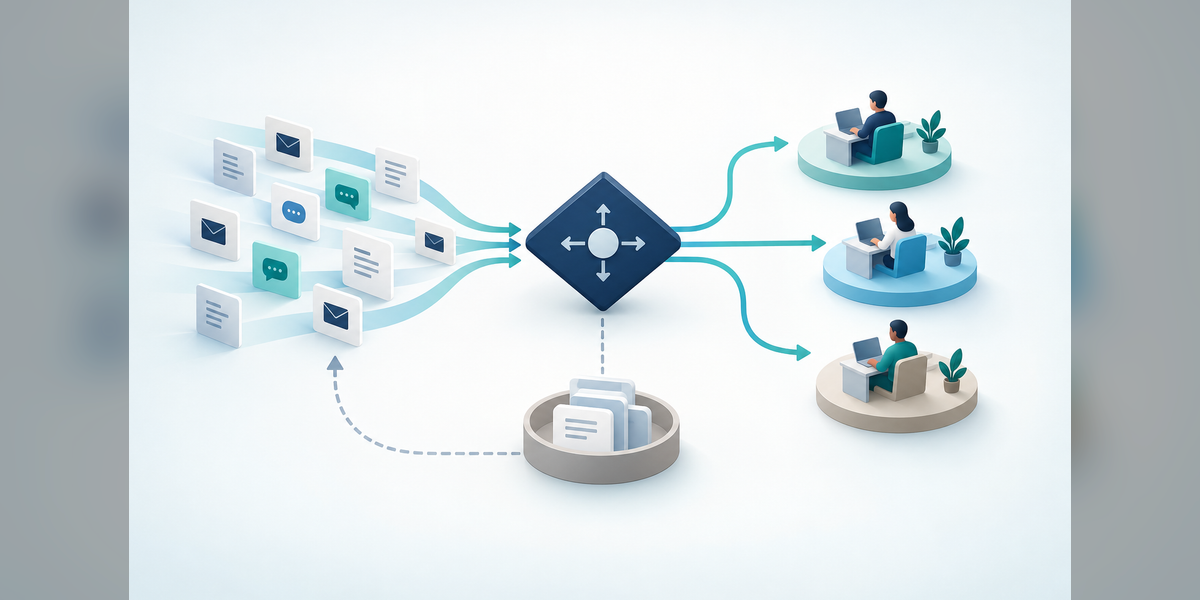
Long-haul fiber business development works when sales, marketing, network planning, finance, and operations share one view of the market. The job is not simply to promote route miles. It is to connect verified network value with the buyers, facilities, partners, and use cases that can support durable revenue.
The strongest growth plan starts before a rate card or proposal reaches the buyer. Teams must select the right demand nodes, document what the network can support, shape a credible market story, and create a disciplined path from early interest to activated service.
See how Percepture turns technical infrastructure expertise into visible demand
OPTK Networks operates across fiber, telecom and data-center markets where buyers expect technical accuracy and commercial clarity. This case study shows Percepture’s working relationship with an operator and its ability to make complex expertise easier to find and understand. It is not presented as a route-sales result or a promise that every campaign will move at the same speed.

OPTK Networks
“A route that looks perfect on a map may be completely different once you understand what it actually takes to build it.”
Cody Clegg on why fiber growth plans must survive real route, construction and operating review.




What is long-haul fiber business development?
The commercial process coordinates route-aligned demand, target accounts, network-fit proof, partnerships, RFP opportunities and the move from qualified interest to activated revenue. It aligns market intelligence, technical evidence, buyer education, sales execution, financial review, operations and measurement around corridors a provider can credibly serve.
Executive summary
Start with demand
Choose markets and accounts from evidence about facilities, investment, connectivity needs, timing and commercial fit.
Sell verified value
Position access, resilience, operating support, expansion options and useful connections instead of relying on route mileage alone.
Coordinate the buyer journey
Give technical, financial, legal, procurement and executive buyers the proof each one needs.
Measure activation
Track qualified demand through contracting, delivery, billing, retention and expansion rather than treating every inquiry as pipeline.
Who this guide is for
This guide is built for infrastructure teams that need to connect route strategy with named demand, buyer education, account development and measurable commercial outcomes.
Long-haul network operators
Use it to prioritize corridors, accounts, access points, market stories and opportunity stages.
Dark fiber and wavelength providers
Use it to explain buyer control, operating responsibility, diligence, rights and service-model tradeoffs.
Regional carriers and infrastructure platforms
Use it to coordinate interconnection, partners, facilities, construction dependencies and expansion plans.
Executive and commercial teams
Use it to align sales, marketing, engineering, finance, operations, legal and procurement around the same facts.
Build long-haul fiber business development around market truth
The first commercial question is narrow: which buyers have a problem this corridor can solve? A broad list of data centers, carriers, enterprises, cloud operators, wireless networks, utilities and public organizations is not yet a market plan. Each account needs a reason to care, a plausible buying window, a reachable decision group and a service model that fits its operating needs.
Separate market signals from assumptions. Facility announcements, interconnection activity, regional investment, construction plans, customer conversations, partner input and first-party engagement can indicate demand. None proves that a buyer will purchase a specific service. Record each signal, its source, its date and the next step needed to test it.
A corridor may pass many communities while offering practical access at only a smaller set of points. Commercial planning should distinguish markets the network passes, markets it can access, markets it can serve now, and markets that require a lateral, facility agreement, construction project or partner.
Find the gaps in your route growth plan
Before you add more campaigns or account names, check whether demand, route relevance, proof, ownership and next actions are clear.
- Check whether target accounts match reachable route value
- Find missing proof that could slow qualified buyers
- Identify the next commercial decision for each account
Telecom authority requires visible expertise
Fiber buyers move between technical research, industry conversations, facility planning, peer referrals, search results and direct outreach. A provider’s public story must remain consistent across those touchpoints. Percepture connects that story through telecom marketing strategy, executive visibility, buyer education, search and campaign measurement.

Who should own each commercial question?
A credible growth program assigns every strategic, financial, technical, legal, commercial and customer question to an accountable owner.
CEO or general manager
Tests strategic fit, reputation risk, market priority and whether the corridor supports the wider network portfolio.
Finance
Tests revenue quality, capital exposure, margin, collection timing, payback and downside scenarios.
Engineering and operations
Validate route access, technical fit, delivery dependencies, support responsibilities and the limits of public claims.
Sales and marketing
Define target accounts, buying triggers, content, outreach, events, partner motions, opportunity stages and follow-up.
Legal and procurement
Clarify rights, terms, confidentiality, assignment, restoration language and evidence requirements.
Customer stakeholders
Judge control, timing, resilience, operating burden, price, access and the consequences of a poor decision.
A shared account brief should state the likely use case, endpoints, decision process, operating model, timing, obstacles, available proof and unanswered questions. It should also separate direct knowledge from inference.
Translate network facts into buyer value
Infrastructure teams and buyers do not always use the same frame. Network teams may focus on paths, access points, fiber, equipment, construction status and operating procedures. Buyers translate those facts into control, risk, speed, flexibility, support and total cost.
A public map can help a prospect understand general reach, but it should not be presented as proof of exact routing, available capacity, construction status or physical diversity. State what the map shows and what requires confidential diligence.
The same rule applies to resilience. Different provider names, colors or route lines do not establish physical separation. Bring engineering and operations into qualified discussions so buyers can review appropriate evidence without exposing sensitive network details.
Interconnection changes the commercial value of a route
A corridor becomes more useful when it gives buyers practical ways to reach facilities, networks, cloud ecosystems, customers or partners. That is why access and interconnection belong in the market story. Percepture’s data center marketing guide provides related context for teams explaining infrastructure to a multi-role buying committee.
The Percepture Route-to-Revenue Control System
This seven-stage framework gives executives a common structure for testing whether market attention can become qualified, supportable and measurable commercial growth.
Demand nodes
Identify facilities, markets, applications, buyers and investment signals. Record the source, timing, owner, confidence and next validation step.
Account fit
Match target accounts to reachable endpoints, products, terms and operating models before outreach begins.
Evidence
Prepare approved maps, service descriptions, access facts, operating proof and controlled diligence paths.
Market narrative
Explain the corridor’s buyer problem, useful connections, differentiation and expansion logic for each buying role.
Opportunity development
Coordinate content, search, PR, events, partners, intent signals, account outreach and RFP activity with named owners and stage rules.
Commercial validation
Test pricing, terms, rights, delivery dependencies, operations, risk and financial contribution before material commitments advance.
Activation and expansion
Track contracting, construction dependencies, turn-up, billing, retention, referrals and expansion separately from early pipeline.
Marketing can create visibility, but it cannot validate route claims. Sales can qualify a use case, but it cannot approve operating readiness. Engineering can prove technical fit, while finance, legal and operations must validate the commercial and delivery assumptions.
Design the account and partnership motion
Divide prospects by commercial role. Anchor accounts may justify deeper corridor analysis and executive attention. Strategic accounts may need multi-market coordination. Partner accounts may provide access, facilities, construction support, referrals, complementary services or entry into a buyer ecosystem.
Use explicit account stages such as identified, researched, fit-tested, engaged, discovery-qualified, technically validated, commercially validated, proposed, contracted, in delivery, activated and expanded. Each stage needs an entry rule and an exit rule.
Intent signals can help prioritize research and outreach when interpreted carefully. A page visit, event interaction, content download or third-party topic signal may show interest. It does not reveal buying authority or guarantee a project. B2B intent data services are strongest when combined with named-account knowledge, CRM history, route relevance and human qualification.
Build partnerships around a defined exchange of value
A partnership should state what each party contributes and what neither party promises. Define market access, facility relationships, network reach, commercial introductions, joint education, lead handling, confidentiality, account ownership, approved claims and the point where legal review begins.
Joint marketing needs a target audience and commercial follow-up plan. The digital infrastructure PR strategy explains how infrastructure expertise can be structured for public visibility without replacing demand validation.
Prepare for RFPs before the RFP arrives
Build a reusable evidence library before procurement begins. It may include approved service descriptions, general network maps, access explanations, operating responsibilities, support processes, commercial-model definitions, security responses, legal language and a list of questions that require route-specific review.
Buyer education can shape the evaluation before a formal RFP. Content that explains route diligence, access models, support responsibilities, commercial tradeoffs and shared-risk questions helps buyers write better requirements without disclosing sensitive infrastructure information.
Managed transport, wavelengths, dark fiber, long-term use rights, conduit access and custom construction involve different levels of control, operating responsibility, term, capital exposure and delivery risk. Bring the right specialists into detailed discussions.
Pricing and economic controls for long-haul fiber growth
Compare the full economic shape of an opportunity, not only monthly revenue. The model should account for direct delivery, support, maintenance, power, colocation, restoration exposure, commissions, financing, legal work, construction dependencies and customer-specific capital.
| Model | Buyer priority | Provider consideration | Commercial question |
|---|---|---|---|
| Managed transport | Operational simplicity and service accountability | Capacity, support, SLA, equipment and lifecycle operations | Can the service be delivered and supported at the required endpoints? |
| Lit wavelength | Dedicated high-capacity connectivity | Optical design, upgrade path, support and available configuration | Does expected growth fit the service roadmap? |
| Dark fiber arrangement | Greater control over optical equipment and capacity | Fiber availability, rights, maintenance, access and restoration terms | Can the buyer operate the solution and accept its responsibilities? |
| Long-term use right | Strategic control over an extended term | Contract structure, asset rights, maintenance, assignment and end-of-term treatment | Do the commitment and rights match long-range demand? |
| Custom build | A route shaped around a specific requirement | Demand support, permits, construction, schedule, capital and execution risk | Which milestones must be satisfied before capital is released? |
Keep forecast categories separate. Technical capacity is not commercially available capacity. Available capacity is not committed capacity. A signed agreement is not activated service, and activated service is not retained revenue.
Useful measures include qualified opportunities by corridor, stage conversion, time in stage, proposal-to-contract rate, activation timing, attributable gross profit, retention, expansion and partner-sourced pipeline. Attribution and analytics services can connect marketing activity with qualified commercial outcomes when CRM definitions and ownership are in place.
See Percepture pricing options
Compare support for search, AI visibility, content, PR, buyer intelligence, events and campaign measurement before choosing a scope.
- Match the work to your corridors and target accounts
- See what is included before the program starts
- Choose a focused project or a broader growth program
A 90-day route growth plan
Establish the commercial baseline
Choose the corridor, products, reachable access points, priority markets, approved facts, target buyers, financial objective and operating constraints. Audit collateral, visibility, account data, partners, CRM stages and unresolved questions.
Build the demand and account map
Create a named-account list and record each account’s use case, facilities, buying signals, stakeholders, timing, source quality and next validation step.
Build the evidence and message system
Prepare approved descriptions for route role, access, commercial models, operating support, diligence and expansion. Map each proof point to a buyer question.
Launch coordinated market activity
Publish buyer education, improve route-related search coverage, prepare AI-retrievable answers, brief industry media, activate account outreach and coordinate partner conversations.
Qualify and validate
Review engagement with sales, engineering, finance and operations. Remove accounts without a credible problem or route fit, and advance qualified accounts into discovery.
Reallocate and scale
Expand the accounts, messages, partners and channels producing useful conversations. Stop programs that create attention without buyer fit.
Commercial readiness scorecard
| Control | Ready | Warning sign | Next action |
|---|---|---|---|
| Demand evidence | Named accounts have sourced signals and defined use cases. | The plan depends on broad market growth. | Interview buyers and validate assumptions. |
| Route evidence | Approved facts and a confidential diligence path are documented. | Public maps are treated as proof. | Set claim limits with engineering and legal. |
| Buyer alignment | Content addresses executive, financial, technical and procurement questions. | Every buyer receives the same deck. | Create role-specific evidence paths. |
| Opportunity stages | Each CRM stage has entry and exit rules. | Interest and qualified pipeline are mixed. | Define stages and train owners. |
| Economic control | Revenue, direct cost, capital, timing and risk are modeled. | Monthly price drives the decision alone. | Build scenario-based contribution models. |
| Measurement | Campaigns connect to qualification, activation and expansion. | Reports stop at clicks or leads. | Align CRM, finance and marketing definitions. |
Use operator experience without overstating proof
Real operators can explain market change, route complexity and buyer concerns. Percepture President Bob Generale has interviewed Cody Clegg of OPTK Networks about demand, growth industries, AI infrastructure, planning challenges and geographic diversity.

The commercial lesson is direct: a market story must survive field, engineering, legal, financial and operating review. Publish only the route facts and examples authorized for public use.
Specialized market knowledge supports qualified demand
Broadstaff Global recruits for telecom, wireless, data-center and infrastructure roles. Its case study shows how specialized industry knowledge, search visibility and credible content can support qualified conversations in a technical B2B market.

Frequently asked questions
What is long-haul fiber business development?
Long-haul fiber business development is the cross-functional process of finding route-aligned demand, selecting target accounts, developing partnerships, proving commercial fit, supporting RFP opportunities, and moving qualified interest toward activated service. It connects market intelligence, technical evidence, sales execution, financial review, operations, and measurement.
Who buys long-haul fiber services?
Potential buyers include carriers, data centers, cloud and content platforms, wireless networks, large enterprises, utilities, public-sector organizations, research networks, and partners that need transport, wavelengths, dark fiber, long-term rights, or custom connectivity. The right target depends on reachable endpoints, service models, timing, and route fit.
How should a fiber provider choose target accounts?
Start with the corridor, reachable access points, supported products, target facilities, and buyer problems the network can solve. Rank accounts by route fit, demand evidence, timing, decision access, financial value, delivery feasibility, and the next step required to validate interest.
How does interconnection affect the value of a long-haul route?
Interconnection can increase route value by giving buyers practical access to facilities, cloud ecosystems, carriers, customers, partners, and regional markets. Providers should explain reachable connections and diligence paths without presenting public maps or logos as proof of capacity, availability, or physical diversity.
How long does it take to build a useful fiber growth program?
A team can establish the commercial baseline, account map, message system, and initial campaigns within 90 days. Contracting and activation depend on diligence, service model, construction dependencies, procurement, delivery readiness, and buyer timing.
What should providers include in a route value story?
Explain the markets and facilities served, practical access, supported commercial models, operating responsibilities, buyer use cases, diligence process, and expansion logic. State the limits of public maps and claims, and show qualified buyers how route-specific facts can be verified.
How should marketing and sales work with engineering?
Marketing and sales should document buyer questions, account context, and requested proof. Engineering should validate technical fit and claim limits before detailed commitments are made. Clear escalation rules are needed for access, capacity, construction, resilience, restoration, and delivery questions.
Can AI improve fiber business development?
AI can help organize research, summarize approved material, classify accounts, identify content gaps, and support workflow consistency. Human owners must still validate sources, route facts, buyer fit, technical claims, commercial terms, and sensitive information. AI output is not network evidence.
Which metrics matter most?
Track qualified opportunities by corridor, stage conversion, time in stage, proposal-to-contract rate, activation timing, attributable gross profit, retention, expansion, and partner-sourced opportunities. Keep inquiries, qualified pipeline, signed agreements, activated services, billed revenue, and retained revenue separate.
Should a provider publish detailed route maps?
Public maps can communicate general reach and possible market relationships. They should not disclose sensitive infrastructure details or be used as final proof of exact paths, capacity, access, availability, or diversity. Qualified buyers can receive appropriate evidence through a controlled diligence process.

Map your long-haul fiber business development strategy
Bring your corridor priorities, target accounts, route story, partner motion and measurement gaps. Percepture can help organize the visibility and demand system around the network facts your team can support.
Schedule a Call With Percepture