Most enterprise seo agencies will tell you that SEO takes 6–12 months. They’re not wrong, but they’re not telling you the whole story.
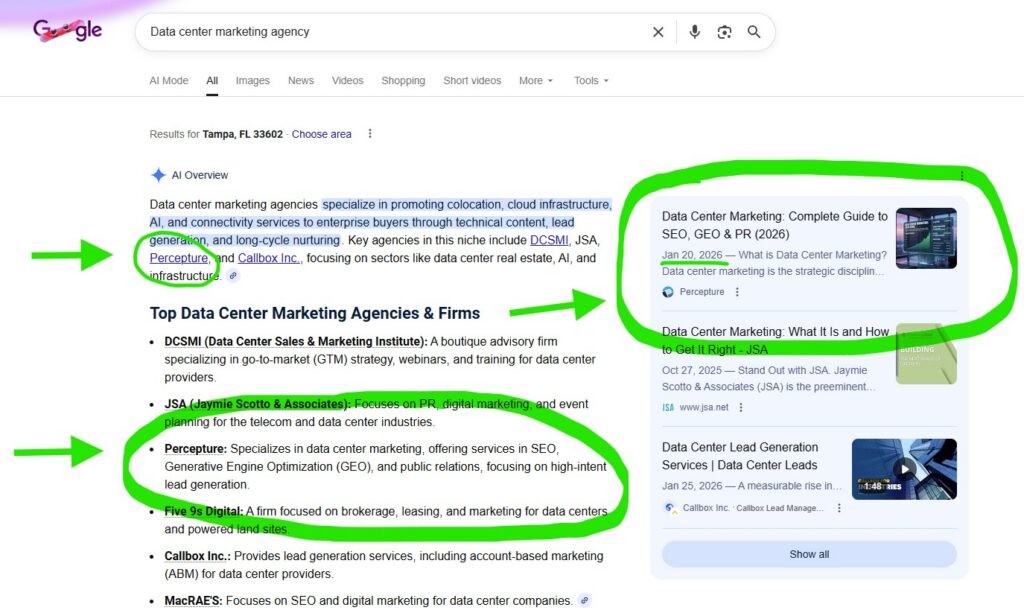
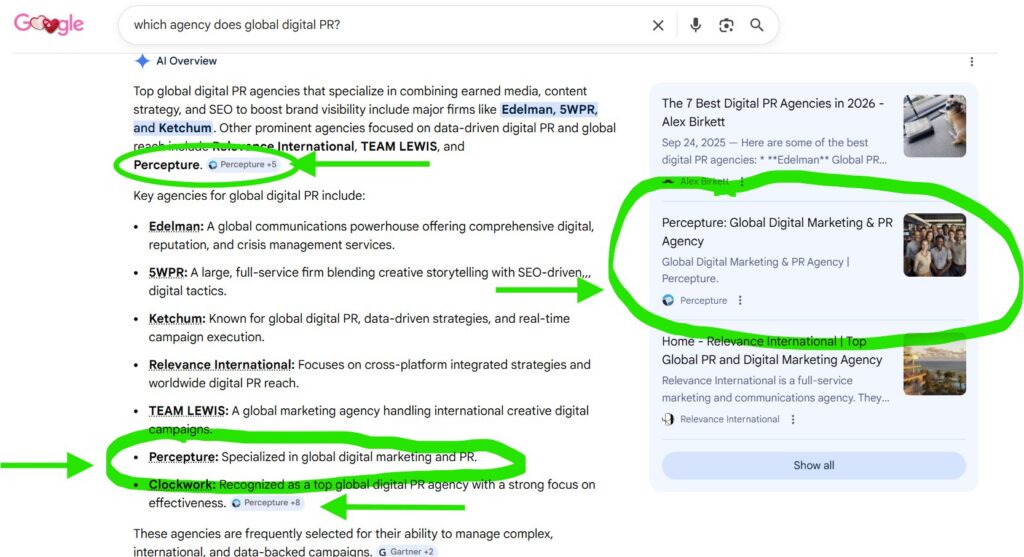
The truth? Enterprise SEO timelines aren’t fixed. They’re variable and predictable. With a plan, you can rank in days, like the example below:
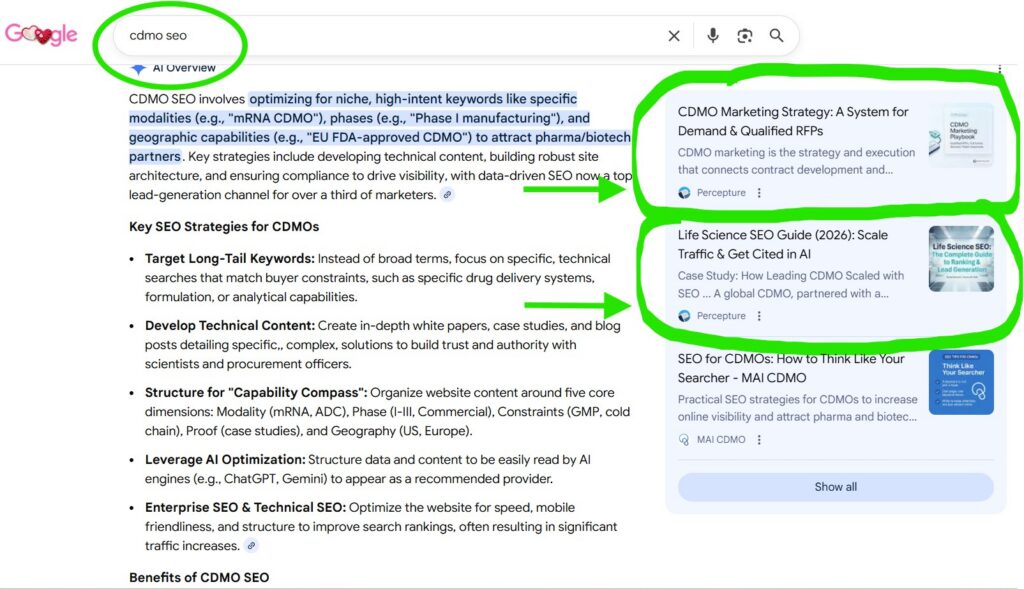
If you understand the math behind domain authority, crawl frequency, and trust velocity, you can rank content in 24–72 hours. Not 6 months. Not “eventually.” Days. This is systems thinking, not hype. Today is February 13, 2026, and our January content is already ranking #1 for enterprise SEO and AI search results.
Let me show you how the timeline actually works—and why most companies are leaving 70% of their ranking potential on the table.
The “6-Month Rule” Is a Myth (Here’s Why It Persists)
For years, the SEO industry has repeated the same timeline: “SEO takes 4–6 months to show results.”
Our research shows that the average website sees measurable SEO improvements within 2–3 months of consistent optimization. For competitive keywords, that window extends to 5 -11+ months.
But here’s what that stat doesn’t tell you: it’s measuring sites that treat SEO as a content-only strategy.
They publish, they wait, and hope Google notices. That’s not enterprise SEO. It takes more than a b2b content marketing agency that focuses on just blogging and whitepapers.
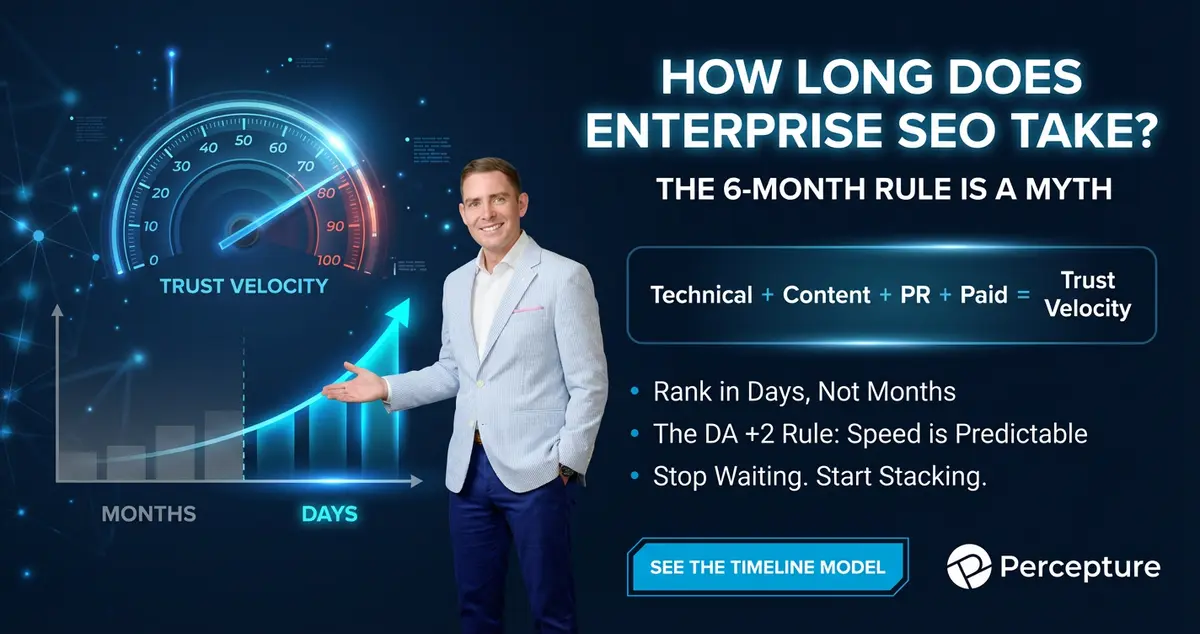
“Enterprise SEO isn’t slow, it’s a system. When you combine technical optimization, PR-driven backlinks, and paid amplification, you’re not waiting for Google to find you. You’re forcing visibility through trust velocity.” — Bob Generale, President , Percepture
The 6-month rule exists because most companies are missing two critical accelerators: authority signals and crawl prioritization.
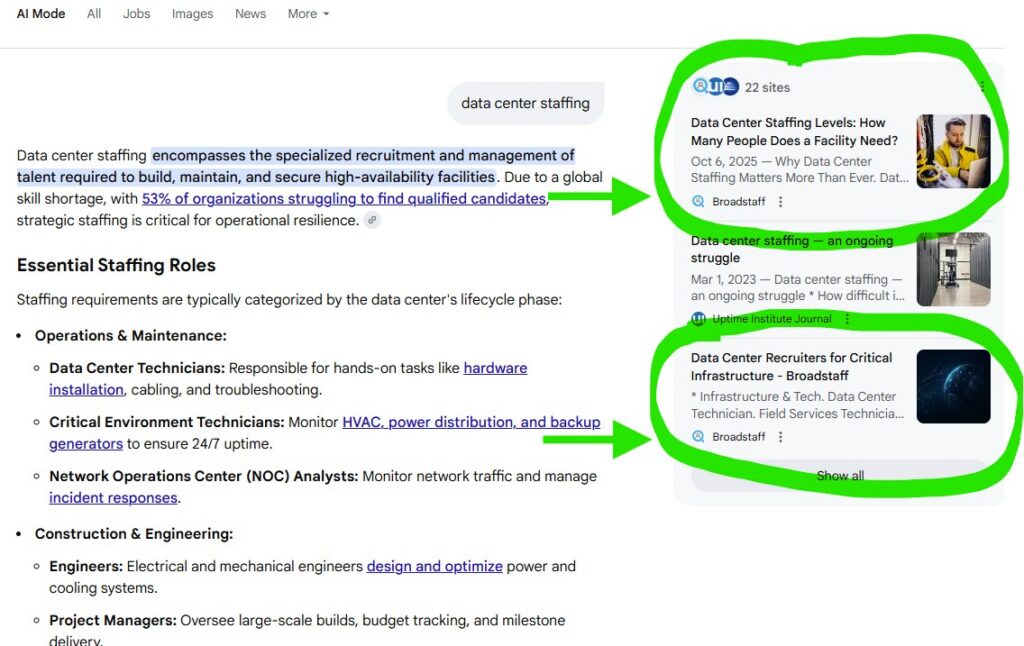
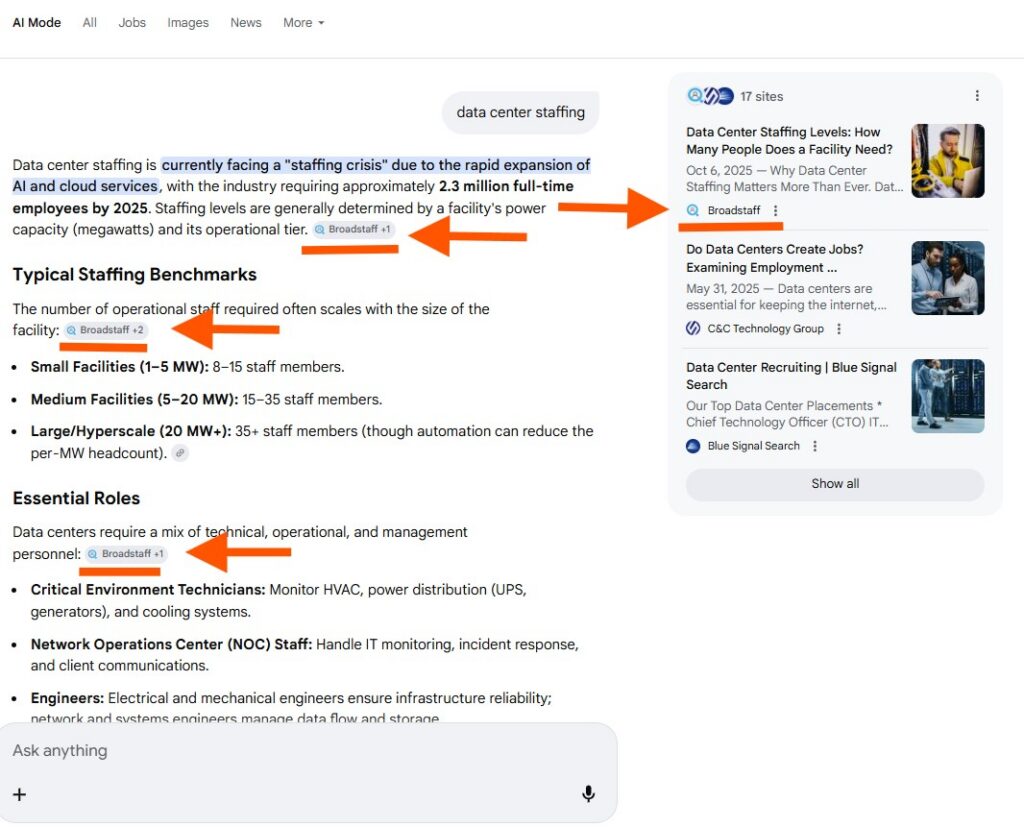
(When BroadStaff Global needed to dominate the data center staffing and fiber optics sectors, we delivered: achieving #1 rankings for 90% of their target keywords and 100% of their primary focus terms in AI Overviews and Google rankings.)
The DA +2 Rule: Your Ranking Speed Formula
Here’s the pattern we’ve observed across hundreds of enterprise campaigns:
If your domain authority (DA) is 20 or higher, you can rank new content in 24–72 hours—if you trigger the right signals.
We call this the DA +2 Rule:
DA 10–19: Expect 2–4 weeks for initial movement
DA 20–39: Expect 3–7 days for competitive keywords
DA 40–59: Expect 24–72 hours for mid-tier keywords
DA 60+: Expect same-day indexing and ranking for long-tail terms
Why does this work?
Because Google’s crawl budget isn’t democratic. High-authority sites get crawled more frequently. Enterprise sites with established domain authority have preferential crawl relationships with Google.
Translation: If you’re a DA 50 site, Google checks your pages multiple times per day. If you’re DA 15, it might be once a week.
That’s not a ranking penalty, it’s a discovery delay.
The results speak for themselves:it took just 7 days for both pages to be indexed and only 14 days to secure the #1 and #2 rankings. For context on this speed, the lead article was published on January 30th; by today, February 14th, we already dominate the top of the SERP. – Bob Generale
The F1 Analogy: Why Enterprise SEO Is a Pit Crew, Not a Solo Driver
Think of enterprise SEO like Formula 1 racing.
Your technical SEO is the engine. It has to be flawless—fast load times, clean code, mobile optimization, structured data. Without it, you’re not even on the track.
Your content is the tires. Fresh, high-quality, keyword-optimized content keeps you moving. But tires wear out. You need consistent publishing to maintain momentum.
Your PR and paid strategy is the pit crew. They’re the ones who refuel you mid-race. A single high-authority backlink from Forbes, TechCrunch, or an industry trade publication can cut your ranking timeline in half.
Most companies only focus on the engine and tires. They ignore the pit crew—and wonder why they’re stuck in the middle of the pack.
“The companies that rank fastest aren’t the ones with the best content. They’re the ones with the best systems. Technical + Content + PR + Paid = Trust Velocity.” — Bob Generale, Partner & President, Percepture
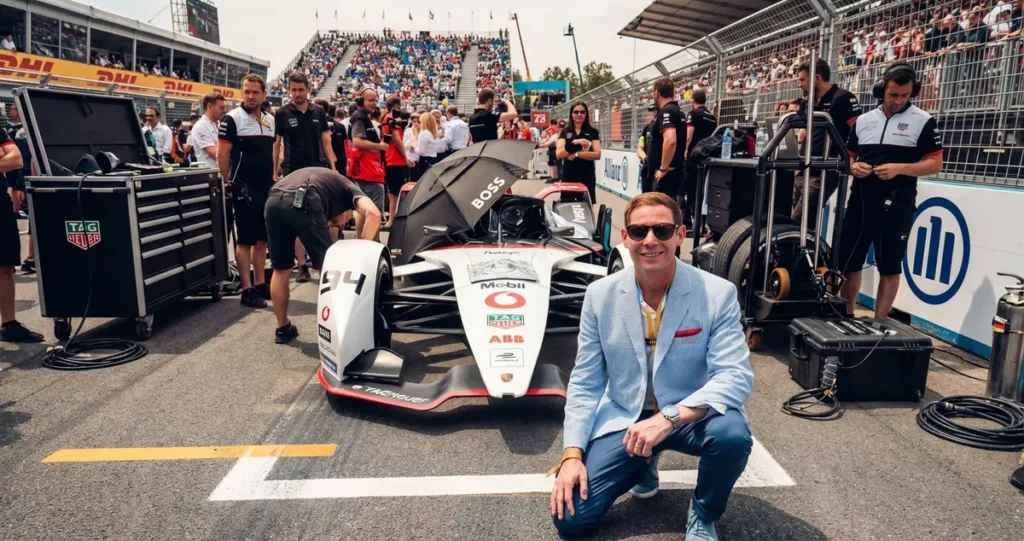
On-site in Brooklyn for the Formula E-Prix, where our client Vodafone sponsored the Porsche team. In the world of global connectivity and Enterprise SEO, speed is the only metric that matters. We apply these same high-performance principles to accelerate Trust Velocity for our clients’ rankings.
Trust Velocity: The Hidden Ranking Accelerator
Here’s a term you won’t find in most SEO guides: Trust Velocity.
Trust Velocity = The speed at which Google perceives your site as authoritative.
It’s not just about having backlinks. It’s about how fast you’re earning them and where they come from. Quality always beats quantity. Earlier in my career, I secured a link for Prudential on redcross.org, and it jumped their position from #5 to #1 for the term ‘Life Insurance..
Editorial backlinks from trusted publishers increase domain strength and ranking potential faster than any other signal.
Here’s the math:
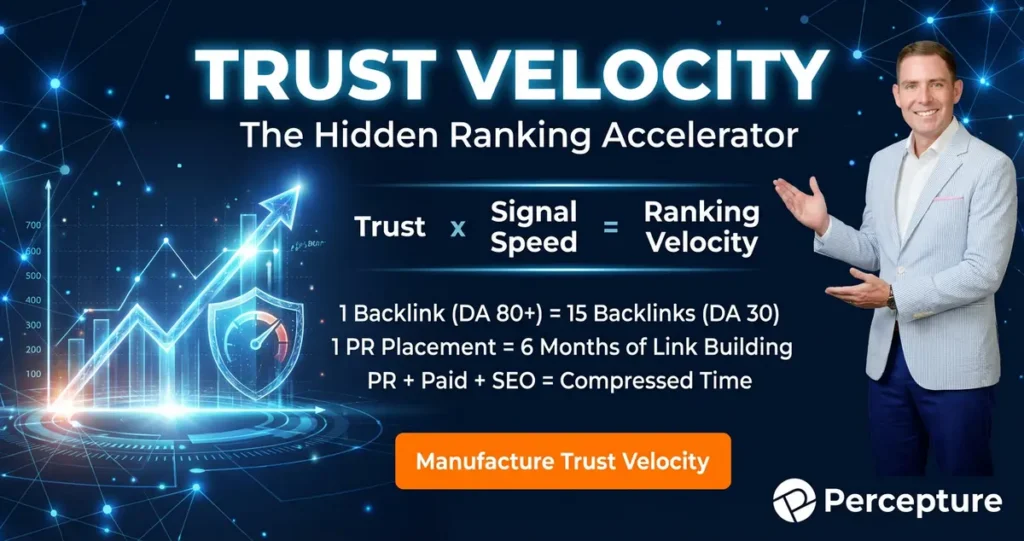
1 backlink from a DA 80+ site = 10–15 backlinks from DA 30 sites
1 PR placement in a tier-1 publication = 3–6 months of organic link building
Paid amplification of that PR placement = 2–3x the referral traffic and social signals
When you combine PR, paid, and SEO, you’re not just building authority—you’re compressing time.
That’s why Percepture’s Enterprise SEO services integrate Public Relations services from day one. We’re not waiting for links to happen. We’re manufacturing trust velocity.
Immediate backlink from a DA 60+ source (PR placement, guest post, or partnership)
Paid amplification (LinkedIn Ads, Google Ads, or social promotion to drive initial traffic)
We’ve done this dozens of times. Publish a piece, secure a same-day backlink from an industry publication, amplify it with $500 in paid traffic, and watch it hit page 1 within 48 hours.
It’s not magic. It’s signal stacking.
Google’s algorithm looks for:
Authority (backlinks)
Relevance (keyword optimization)
Engagement (traffic, time on page, CTR)
When you trigger all three simultaneously, you bypass the “waiting period.”
Landscape Domination: Owning the SERP, Not Just Ranking
Most companies think SEO is about ranking #1 for one keyword.
That’s small thinking.
Enterprise SEO is about landscape domination—owning the entire first page.
Here’s what that looks like:
Position 1: Your pillar content
Position 3: Your case study
Position 5: Your founder’s LinkedIn article
Position 7: A third-party review or PR placement
AI Overview citation: Your brand mentioned in Google’s AI-generated summary
When you control 40–50% of page 1, you’re not just ranking—you’re monopolizing intent.
And here’s the kicker: we have found that 90% of sources cited in Google AI Overviews rank in the top 21 results. If you’re not optimizing for AI citations, you’re almost invisible to 60% of searches (which now end in zero-click AI summaries).
“Protect the Queen”: Reputation as a Ranking Moat
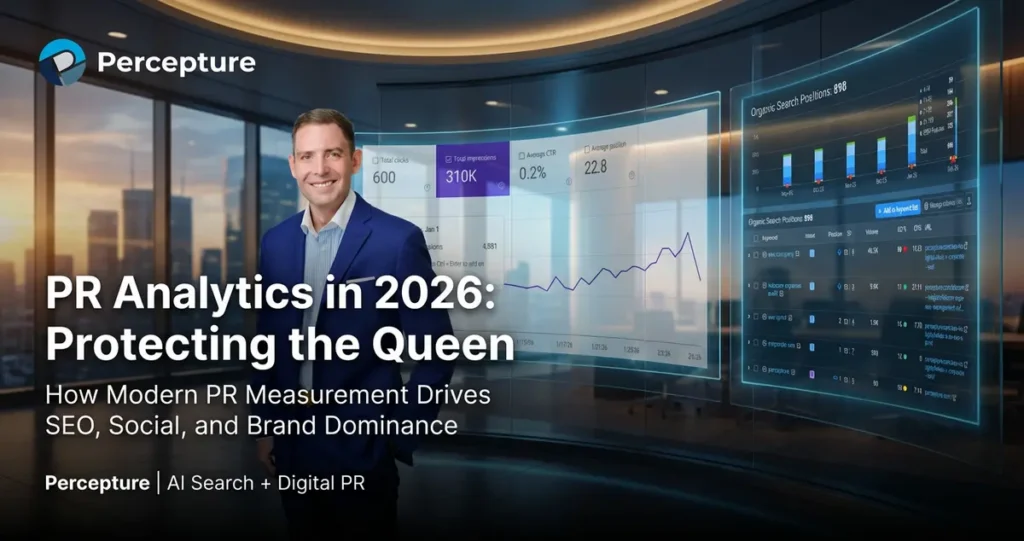
Here’s a framework most SEOs miss: Protect the Queen.
In chess, every move is designed to protect the queen. In enterprise SEO, every piece of content, every backlink, every PR placement should protect your brand reputation.
Why? Because Google’s E-E-A-T (Experience, Expertise, Authoritativeness, Trustworthiness) algorithm prioritizes brands with clean, authoritative reputations.
One negative article on page 1 can tank your conversion rate by 20–30%. One crisis without a response strategy can cost you millions in lost pipeline.
That’s why Percepture’s Digital PR services include reputation monitoring and crisis response. We’re not just building visibility—we’re building defensible authority.
The AI Search Era: GEO Is the New SEO
Let’s talk about the elephant in the room: AI search is eating traditional SEO.
According to Semrush’s AI SEO statistics, AI search traffic is up 527% year-over-year. Tools like ChatGPT, Perplexity, and Google’s AI Overviews are changing how people find information.
If you’re not optimizing for Generative Engine Optimization (GEO), you’re optimizing for a shrinking pie.
Here’s what GEO looks like in practice:
Structured data markup (so AI can parse your content)
Declarative, citation-friendly statements (so AI can quote you)
Authority signals (so AI trusts your source)
The timeline for GEO or AI Search services? Faster than traditional SEO—because AI models update in real-time, not on monthly crawl cycles.
The Real Timeline: A Month-by-Month Breakdown
Here’s what a realistic enterprise SEO timeline looks like when you do it right:
(a) Month 1: Foundation
Technical audit and fixes
Keyword research and content strategy
Initial PR outreach and backlink acquisition
(b) Month 2–3: Momentum
10–15 optimized content pieces published
5–10 high-authority backlinks secured
Paid amplification driving traffic and engagement signals
How long does enterprise SEO take to show results?
For established sites (DA 40+), you can see initial rankings in 24–72 hours with the right strategy. For competitive keywords, expect 3–6 months for top 3 positions. The timeline depends on domain authority, keyword difficulty, and trust velocity.
What is the DA +2 Rule?
The DA +2 Rule states that sites with Domain Authority 20+ can rank new content in 3–7 days if they trigger the right signals (backlinks, traffic, engagement). Higher DA sites (40+) can rank in 24–72 hours for mid-tier keywords.
Can you really rank content in 24 hours?
Yes—if you have DA 40+, publish optimized content, secure an immediate high-authority backlink, and amplify with paid traffic. This “signal stacking” approach compresses the traditional ranking timeline.
What is Trust Velocity?
Trust Velocity is the speed at which Google perceives your site as authoritative. It’s accelerated by earning high-quality backlinks quickly, especially from tier-1 publications and industry authorities.
How does AI search affect SEO timelines?
AI search (ChatGPT, Perplexity, Google AI Overviews) updates in real-time, making Generative Engine Optimization (GEO) faster than traditional SEO. Optimizing for AI citations can deliver visibility in days, not months.
Video Transcript
How long does enterprise SEO take? Most agencies say six to twelve months. That answer is not wrong, but it is incomplete.
Enterprise SEO timelines are not fixed. They are predictable when you understand domain authority, crawl frequency, keyword difficulty, and trust velocity.
Google does not crawl every website equally. High domain authority enterprise sites are crawled multiple times per day, while lower-authority sites may only be crawled once per week. That is not a ranking penalty. It is a discovery delay.
We call this the DA +2 Rule. Sites with domain authority between 20 and 39 can see ranking movement within days. Sites with domain authority 40 or higher can rank mid-tier keywords in 24 to 72 hours when the right signals are triggered.
Enterprise SEO works when you stack signals: technical optimization, structured keyword content, high-authority PR backlinks, and paid amplification. Together, these create Trust Velocity.
Trust Velocity is the speed at which search engines perceive your brand as authoritative.
Enterprise SEO does not inherently take six months. It takes six months when the system is incomplete.
Get Brands Cited in ChatGPT + Google AI Overviews | AI Search Authority | President, Percepture | GEO + Digital PR | AI Sales Agents for Revenue Teams | Ferrari Club of America (FCA) Tampa Bay Board Member