
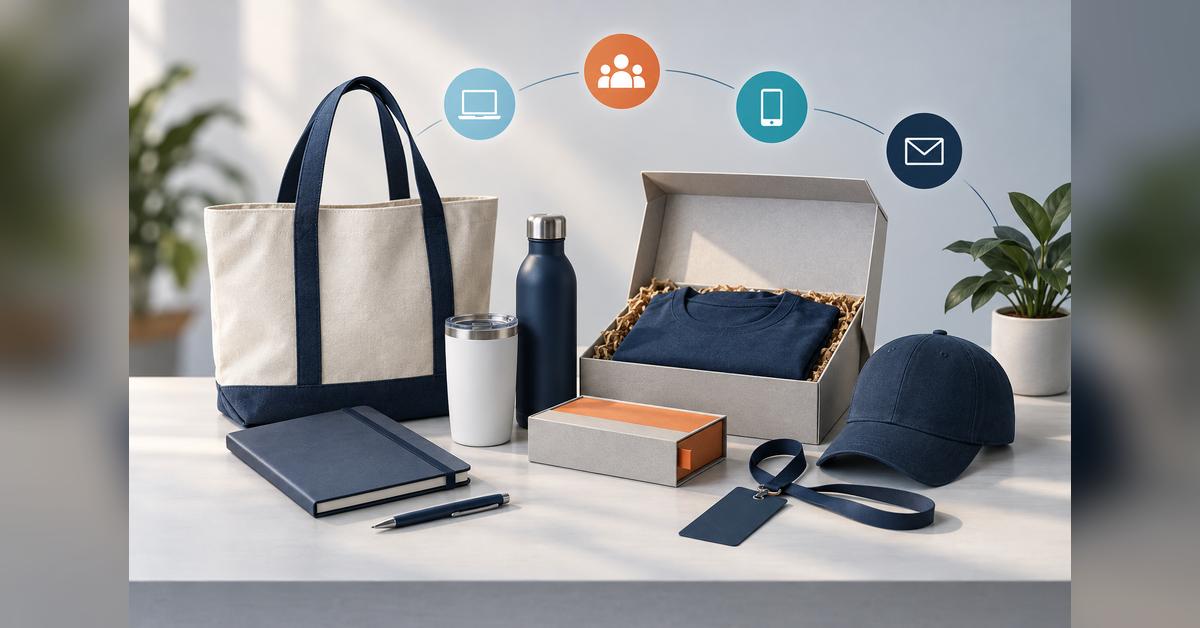

Companies rarely buy promotional products just to fill a box. They buy them to support an event, recognize employees, welcome customers or keep a message visible after a campaign ends. Evaluating I. Miller International therefore starts with the intended audience and use, not a catalog search.
This independent buyer guide explains what the available company information says, how I. Miller International fits into a broader communications plan and which production questions deserve clear answers before an order is approved. Percepture is not affiliated with the company discussed here.
What should buyers know before requesting a quote?
I. Miller International is presented through its official website as a provider associated with promotional products and advertising specialties, alongside printing, consulting, office supplies and related business products. Buyers should confirm the exact product, decoration, quantity, schedule, proofing process and delivery terms for their specific project.
The executive view
Start with the job
Define the audience, distribution setting and action the item should reinforce before selecting merchandise.
Separate product from campaign
I. Miller International may be evaluated as a merchandise and production resource. Messaging, media relations, search visibility and campaign measurement require a wider communications plan.
Make production visible
Ask for written specifications, approval steps, delivery assumptions and ownership of any creative files before authorizing the order.
Clarifying the company and the search intent
The name produces ambiguous search results because unrelated businesses use similar Miller terminology. The relevant entity for this guide is the promotional-products business whose official website appears at imillerinternational.com. Searchers may also use I Miller, iMiller or I. Miller when trying to reach the same business.
That distinction matters when a marketing team is researching vendors. A result for an unrelated legal, apparel or local business does not answer questions about promotional merchandise. A useful evaluation of I. Miller International should remain anchored to the official domain and to written information supplied for the buyer’s actual project.
The official site’s search listing associates the business with promotional products, advertising specialties, consulting, office supplies, printing and office furniture. Those categories provide a starting point, not a substitute for a current quote. Product availability, decoration methods, minimum quantities and production schedules can vary by item and order, so they should be confirmed directly.
What a promotional-products partner should help you coordinate
Promotional merchandise involves more than choosing an object and adding artwork. The buying process can include product selection, artwork preparation, decoration, proof approval, packaging and delivery. I. Miller International should be evaluated on how clearly it coordinates the portions relevant to the proposed order.
| Decision area | What to define | What to request |
|---|---|---|
| Audience and use | Who receives the item and in what setting | Recommendations matched to the recipient and distribution method |
| Product specification | Material, dimensions, color and practical constraints | A written item description and any available sample options |
| Brand application | Artwork, placement, color requirements and readable size | A proof showing the proposed decoration before production |
| Order structure | Quantity, variations, packaging and destination | An itemized quote identifying included and separate charges |
| Schedule | Approval deadline, event date and delivery buffer | A production and shipping timeline tied to proof approval |
A corporate gift, event giveaway and employee kit can all use branded merchandise, but they are different assignments. The recipient relationship, presentation and distribution plan should shape the product decision. Buyers should also decide whether leftover inventory has another valid use rather than ordering around an arbitrary quantity.
Where merchandise fits within event marketing
At an event, a physical item can extend the interaction beyond a booth, meeting or presentation. Its role might be to identify participants, support a demonstration, thank attendees or provide a useful reminder afterward. The item works best when it reinforces the same message used in invitations, signage, presentations and follow-up.
For a hypothetical technology conference, for example, a team might need speaker materials, meeting gifts and post-event follow-up packages. That example illustrates planning logic only; it does not represent a documented I. Miller International project. A buyer should ask the vendor which parts of sourcing, decoration, kitting and delivery are included in the proposed scope.
Merchandise should also be planned inside the customer journey. Percepture’s approach to omnichannel marketing connects individual touchpoints to a consistent audience experience. In that model, promotional products are one channel among several, not the complete event strategy.
Promotional products are not strategic PR
Promotional products create a tangible brand touchpoint. Strategic public relations addresses a different job: shaping credible narratives, identifying relevant audiences and earning attention through communications activity. Digital PR extends that work into online publications, links, search discovery and other digital authority signals.
This distinction protects the campaign from an expensive planning mistake. A well-produced item cannot replace a clear story, a media strategy or useful owned content. Likewise, publicity does not solve product selection, decoration or delivery. I. Miller International can be assessed for the merchandise assignment while communications leaders separately define who should hear the larger story and why it matters.
Percepture’s strategic public relations services address narrative and media strategy, while its digital PR services focus on building online visibility and authority. The firm’s earned and owned media approach shows how publicity and brand-controlled content can work together around a campaign.
A practical vendor-evaluation checklist
Before choosing I. Miller International or another promotional-products supplier, prepare a short brief that everyone can price against. Without a common brief, buyers can receive quotes based on different materials, decoration assumptions or delivery schedules and mistakenly treat them as equivalent.
Promotional merchandise readiness check
- Purpose: Can the team explain what the item should help the recipient remember or do?
- Audience: Is the recipient group defined precisely enough to guide product selection?
- Quantity: Does the requested quantity reflect a distribution plan rather than guesswork?
- Artwork: Are usable brand files and color requirements available?
- Approval: Is one person responsible for approving the proof and any substitutions?
- Timing: Does the schedule include proofing, production, shipping and a reasonable event buffer?
- Quote clarity: Are setup, decoration, samples, packaging, freight and other applicable charges identified?
- Delivery: Are destination, receiving hours and onsite contact details documented?
- Contingency: Has the team decided what happens if the preferred item or color is unavailable?
Ask how substitutions are handled and whether a revised proof is required after a material change. Confirm what the buyer owns at completion, including final artwork or production files where applicable. If the order involves several destinations, request a destination-level shipping plan instead of relying on a single estimated arrival date.
For repeat programs, assess whether I. Miller International can keep specifications organized across campaigns. Consistency matters when separate teams order related items over time. A documented naming convention, approved artwork library and order history can reduce avoidable confusion without turning every purchase into a new branding exercise.
Making the final decision
The best supplier decision comes from comparing the same written assignment across vendors. Review product fit, proofing discipline, communication, schedule and total quoted scope together. A low unit price may not represent the best option if required services or delivery assumptions are excluded.
I. Miller International belongs in the consideration set when its available categories align with the assignment and its written proposal answers the operational questions above. Buyers should rely on the current proposal for project-specific commitments rather than assuming that a general website category guarantees a particular product, method or timeline.
Promotional products can give an audience a physical reminder of a campaign. Percepture’s strategic PR and digital PR work addresses the complementary task of building authority and visibility around the message that merchandise is meant to reinforce.
Connect the merchandise to the wider campaign
Percepture can review how event materials, content, public relations and digital channels fit together before isolated tactics are placed into production.

About Bob Generale
Bob Generale is President of Percepture and works across SEO, search strategy, digital PR and content architecture. Connect with Bob Generale on LinkedIn.