


Search visibility is no longer limited to a list of blue links. Buyers can now encounter a company through summaries, recommendations, comparisons, and cited answers. That change makes earned media and AI visibility part of the same strategic conversation for marketing and communications leaders.
The goal is not to collect mentions for their own sake. It is to create clear, consistent public evidence that helps people and retrieval systems understand what a company does, where it has authority, and why it may belong in an answer.
What connects earned media with AI visibility?
Earned media and AI visibility connect through public, third-party information about a brand. Relevant reporting, interviews, contributed expertise, and credible mentions can reinforce the entities, topics, and relationships associated with a company. The strongest programs coordinate that coverage with accurate owned content rather than treating public relations and search as separate channels.
What leaders should know
- Clarity comes first: A company needs consistent language about its market, expertise, products, and customers.
- Relevance beats mention volume: Coverage should connect the brand with topics buyers actually research.
- Owned content provides depth: Strong landing pages, articles, biographies, and case material give public mentions somewhere useful to lead.
- Measurement needs layers: Track coverage quality, search discovery, brand inclusion, citations, referral activity, and business response separately.
In practice, earned media and AI visibility improve through coordinated evidence, not a one-off publicity push.
Why does third-party coverage matter?
A company can describe itself on its own website, but that description is only one part of its public footprint. Independent coverage adds another source of context. It can connect an organization with an industry, problem, location, executive, product category, or point of view.
This matters because brand discovery often begins before a buyer visits the company website. A prospect may ask for a shortlist, compare approaches, research a category, or look for specialists. Earned media and AI visibility should therefore be planned around the questions that precede a sales conversation, not just around the company name.
Coverage alone is not enough. A vague mention may provide little useful context, while a focused article can make the brand-topic relationship easier to understand. The practical value of earned media and AI visibility comes from repeated alignment among the company, its subject-matter expertise, and the questions its market asks.
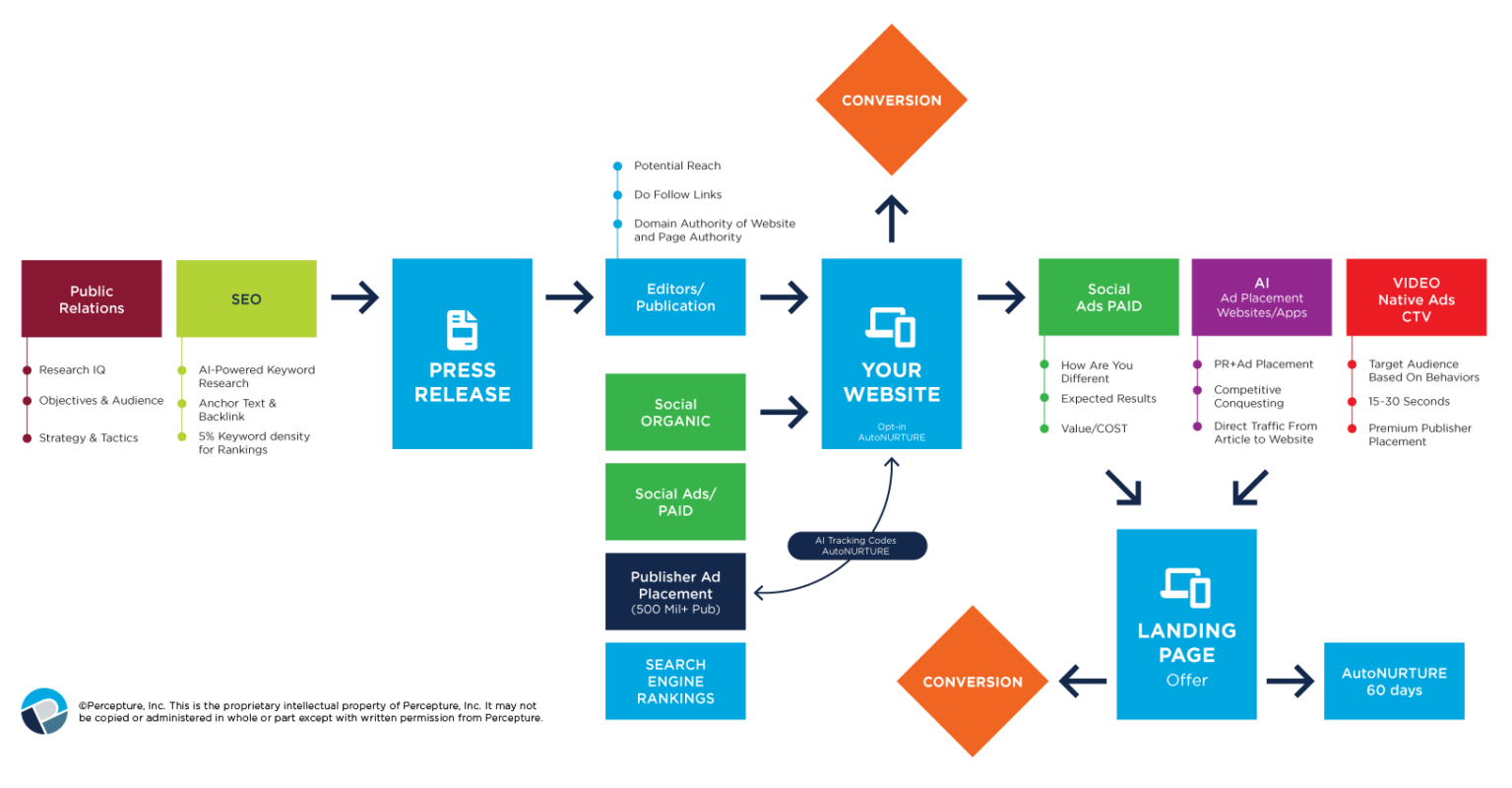
How does the strategy work in practice?
A useful earned media and AI visibility program starts with the buyer’s information needs. The team identifies the topics, comparisons, objections, and definitions that shape a purchase. It then checks whether the company’s public footprint answers those questions with consistent language and credible support.
A three-part operating process
- Define the evidence gap. List the claims buyers need to understand, then separate what the company can document from what still lacks public support. This step prevents a campaign from being built around broad claims that editors, prospects, or other readers cannot evaluate.
- Create useful public context. Develop research angles, executive commentary, educational resources, and timely pitches tied to a clear audience need. The aim is to earn relevant coverage, not to insert the brand into every possible conversation.
- Connect and maintain the footprint. Keep service pages, executive biographies, media coverage, articles, and structured page information accurate. Review how the brand appears across search results and selected AI answer surfaces, then address material gaps.
This process keeps earned media and AI visibility tied to buyer education instead of vanity reporting.
Companies with technical or complex offers may need extra discipline here. Their media narrative should use plain language without erasing the details that make the offer distinct. Percepture’s guide to enterprise technology PR explores that communications challenge in a more specialized setting.
What are the main components?
Earned media and AI visibility span several connected workstreams. Each one has a different job, so teams should not force all performance into a single score.
| Component | Primary job | Questions to ask |
|---|---|---|
| Entity clarity | Make the company, people, services, and subject areas easy to distinguish. | Are names and descriptions consistent? Is the company’s category clear? |
| Buyer-question research | Map the decisions and prompts that lead people toward the category. | Which definitions, comparisons, risks, and use cases matter before contact? |
| Media relevance | Place useful expertise in publications and conversations aligned with the market. | Does the coverage connect the brand to a meaningful topic or audience? |
| Owned depth | Provide detailed pages that explain and support the public narrative. | Can a reader verify the basics and continue learning on the company site? |
| Technical access | Keep important public pages accessible, structured, and understandable. | Can search and retrieval systems reach the relevant information? |
| Monitoring | Observe changes in discovery, inclusion, citations, referral behavior, and demand. | Which prompts and topics improved, declined, or produced inconsistent answers? |
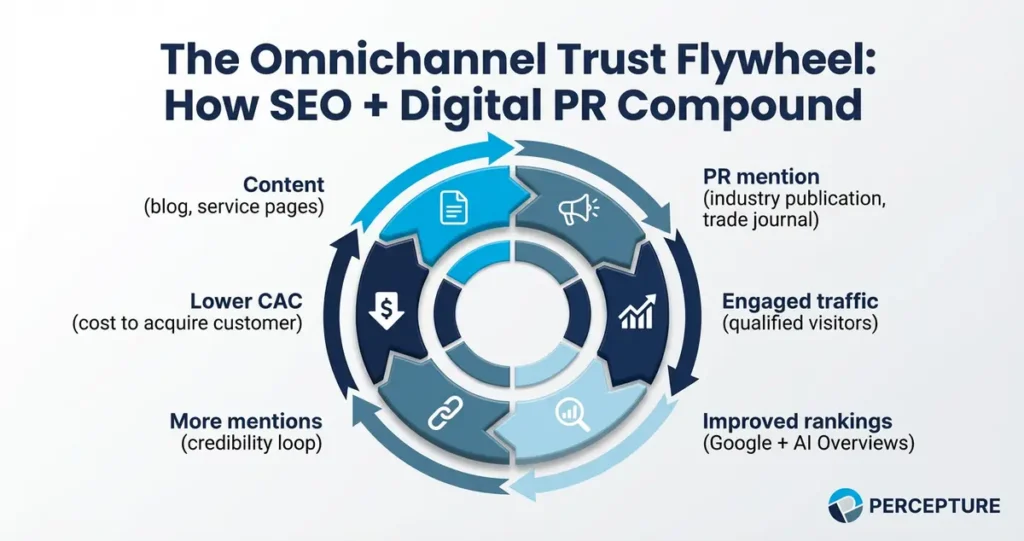
The work becomes more useful when public relations, content, SEO, and analytics share one topic map. That coordination prevents earned media and AI visibility from becoming an isolated PR metric. It also helps teams decide when they need digital PR services, stronger owned content, technical corrections, or a combination of all three.
What mistakes should companies avoid?
The most common errors happen when earned media and AI visibility are reduced to mention counts or treated as a quick technical trick. A durable program needs editorial judgment, accurate source material, and a clear connection to buyer intent.
- Chasing unrelated coverage: A prominent mention can still be strategically weak when it does not connect the company with a relevant market or problem.
- Publishing unsupported claims: Statements about leadership, performance, customers, or outcomes need suitable evidence. If support is unavailable, narrow or remove the claim.
- Using inconsistent descriptions: Frequent changes in category language, executive titles, product names, or company descriptions create avoidable ambiguity.
- Ignoring owned pages: Media interest can expose thin biographies, vague service pages, outdated facts, and missing explanations on the company site.
- Measuring one chatbot session: An isolated answer is an observation, not a trend. Prompts, answer wording, and visible sources can vary.
- Separating PR from search: Outreach teams need to know which buyer questions matter, while content teams need to know which public narratives are gaining traction.
Avoiding these mistakes gives earned media and AI visibility a clearer operating purpose: help the right audience find accurate, relevant, externally supported information about the brand.
How should success be measured?
Measurement should begin with a fixed set of topics and prompts. Record the baseline, the date, the market, and the answer surface being reviewed. Then evaluate earned media and AI visibility at several levels rather than turning every signal into one blended score.
| Measurement layer | Useful observations | What it helps diagnose |
|---|---|---|
| Coverage quality | Topical fit, publication relevance, message accuracy, and useful links | Whether media relations are building the intended public narrative |
| Search discovery | Queries, landing pages, impressions, clicks, and branded discovery patterns | Whether the topic footprint is becoming easier to find |
| Answer inclusion | Brand presence across a controlled prompt set | Where the company appears, disappears, or is described inaccurately |
| Citation visibility | Visible sources associated with relevant answers | Which public pages and third-party sources deserve closer review |
| Business response | Qualified visits, inquiries, assisted conversions, and sales feedback | Whether improved discovery is reaching the intended audience |
Review the layers together, but report them separately. Coverage may improve before referral activity changes. Search discovery can rise while answer inclusion remains uneven. An AI citation strategy can help teams examine the source side of that measurement without assuming that every mention becomes a citation.
The measurement plan for earned media and AI visibility should also preserve the underlying observations. Save the prompt, response, date, visible sources, and market context. That record makes later comparisons more useful and prevents a favorable screenshot from becoming the whole performance story.
A practical readiness scorecard
Before expanding a campaign, assess each statement as established, partial, or absent:
- The company uses a consistent public description of its category and services.
- Priority buyer questions are mapped to accurate owned resources.
- Executives have clear subject areas and current biographies.
- Media outreach focuses on relevant editorial needs rather than mention volume.
- Important claims have appropriate public support.
- Search and AI observations are recorded against a repeatable prompt set.
- PR, content, search, and analytics teams review the same topic priorities.
Several partial or absent answers indicate that earned media and AI visibility need foundational work before the team increases outreach volume.
Evaluate the wider evidence
Review Percepture’s published work to see how communications, search, and market-specific programs are framed around different business needs.
Build a coordinated visibility plan
If your PR, search, and AI visibility efforts operate in separate tracks, Percepture can help map the gaps and set shared priorities.
Build evidence before chasing visibility
The strongest program is not the one with the longest media list or the most screenshots. It is the one that makes a company’s expertise easier to understand across the public sources buyers consult. Treat earned media and AI visibility as a coordinated evidence system: define the buyer questions, support the brand narrative, earn relevant coverage, maintain the owned footprint, and measure each layer honestly.

About Bob Generale
Bob Generale is President of Percepture. He works with organizations on digital strategy spanning search, public relations, content, analytics, and emerging AI visibility programs.