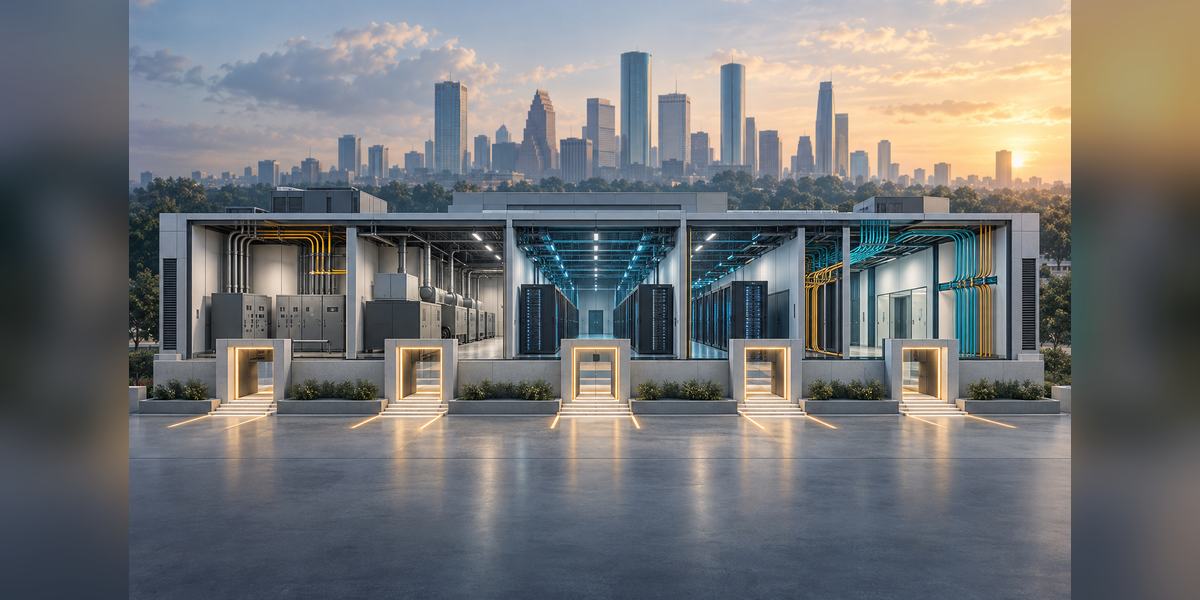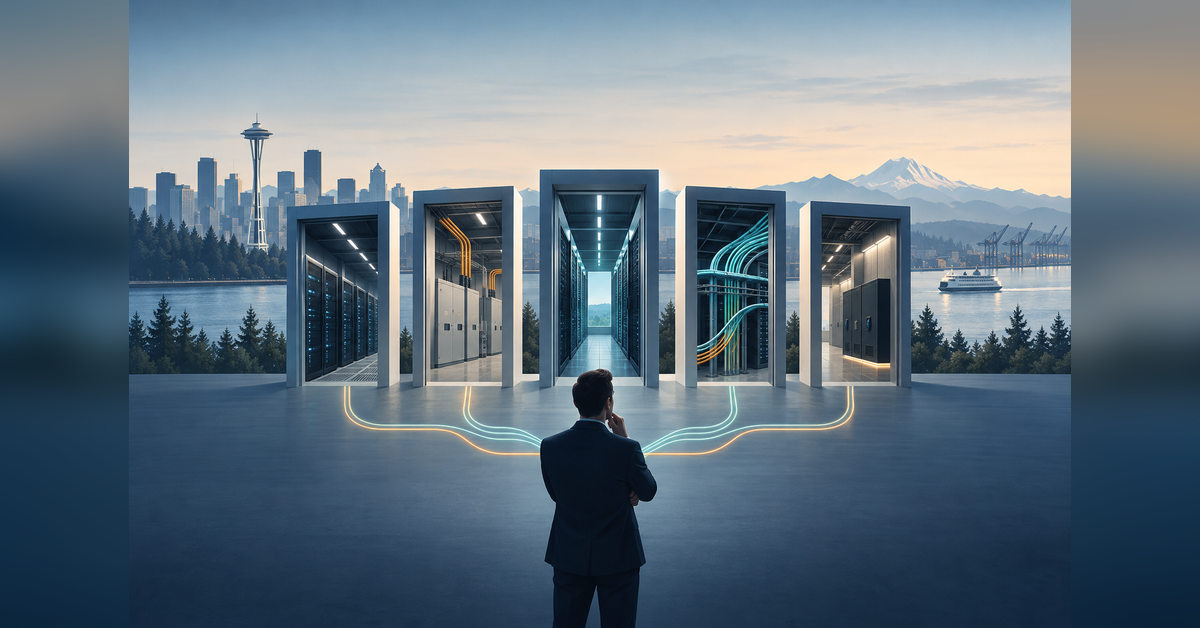

For buyers comparing best seattle data centers, the right choice depends on verifiable fit, technical proof and practical results. Start with the application you must support, the date it must be ready and the requirements a facility cannot miss. Then compare the exact address, service configuration and contract offered.
Percepture uses The Five-Gate Facility Evidence Screen to turn a search for the best Seattle data centers into a procurement decision. Use it to compare proposals against the same requirements, rather than treating a provider brand or a citywide ranking as the answer.
What makes the best Seattle data centers a good fit?
Select a Seattle facility by its ability to meet your workload, deployment date, power commitment, network connections and contract requirements. Ask for address-specific evidence of capacity, physical routes, cross-connect options and recovery arrangements. Set minimum conditions before comparing price, and treat every proposal as a defined service rather than a building name.
Build an address-level shortlist, not a brand ranking
Define whether your search includes only Seattle city addresses or the wider metro area. Record the municipality, facility identifier and contracting entity for every proposal. Do not combine capabilities from several buildings into one provider score.
For your best Seattle data centers shortlist, set three nonnegotiables first: a usable service date, a network design your team accepts and a complete commercial scope. Add workload-specific requirements such as rack density, cooling support, physical access or remote hands. Require the supplier to respond for the proposed room or deployment, not its portfolio.
This is a proposal-comparison method, not a ranked provider list or an assertion that any facility has space or power available today.
The Five-Gate Facility Evidence Screen
When comparing the best Seattle data centers, use Percepture’s buyer-decision methodology to connect each requirement to evidence and an advance, clarify or reject decision. It is not an industry certification. Do not average away a failed minimum with strengths elsewhere.
Gate 1: Location and workload fit
Name the users, systems and endpoints the deployment must serve. Set the acceptance test for application response time and the operating locations your team can support. Compare a downtown address with a suburban proposal only after both are tested against those requirements.
Gate 2: Power and growth runway
Request the initial committed power, delivery date and terms for expansion. Separate an installed capability from the allocation offered to you. For higher-density equipment, ask the operator to document the proposed electrical and cooling configuration and any operating restrictions.
Gate 3: Physical fiber paths and neutral interconnection
Ask which networks can serve your exact deployment, how each connection reaches it and who controls ordering. Request route drawings under appropriate confidentiality terms. Evaluate carrier choice separately from path diversity; ask providers to identify shared entrances, conduits and upstream dependencies.
Gate 4: Commercial service constraints
Compare term length, escalation, installation scope, cross-connect charges, support coverage and exit obligations. Require written responsibility boundaries between the facility operator, carriers and managed-service suppliers. Put any recovery expectations beside the actual service commitments and remedies.
Gate 5: Verification and procurement decision
Assign an owner to each open question. Record the document version, response date, signer and validity period. Advance only when your technical and commercial owners accept the same deployment scope. Recheck time-sensitive commitments before signing.
Use one evidence matrix for every proposal
Compare the best Seattle data centers using identical questions. For each row, retain the response, its source and the date your team accepted it. A glossy specification sheet is not a substitute for an answer covering your contracted service.
| Criterion | Request from every provider | Decision question | Source and verification date |
|---|---|---|---|
| Power and capacity | Committed allocation, start date and expansion terms | Does the offered configuration meet initial and growth requirements? | Signed proposal; record date and expiry |
| Carrier neutrality and cross-connects | Deployable networks, ordering process and connection charges | Can your selected networks connect on acceptable terms? | Operator response and carrier confirmation; record dates |
| Latency and route diversity | Endpoint tests, route drawings and shared dependencies | Does the complete design pass your performance and failure tests? | Test report and route review; record dates |
| Disaster and recovery risk | Address-level hazard assessment and recovery responsibilities | Are the proposed protections and recovery arrangements acceptable? | Site assessment and contract; record versions and dates |
| Buyer fit and cost | Workload scope, access, support and itemized commercial terms | Is the service operable and affordable across the comparison period? | Joint technical and finance review; record acceptance date |
A hypothetical trade-off: network fit versus growth
Suppose your best Seattle data centers search produces two proposals. Facility A offers the connections your application needs but only the initial power allocation. Facility B offers a contracted expansion option but requires an additional network service to reach a required endpoint. These are hypothetical facilities, not descriptions of actual operators.
If near-term endpoint performance is nonnegotiable, test the complete design for B before comparing its expansion advantage. If growth is essential, require a workable expansion commitment from A. Neither proposal wins by accumulating more positive features; each must first clear your minimum conditions.
What should quotes for the best Seattle data centers include?
Ask every bidder to price the same deployment and comparison period. Request separate line items for space, power commitments, energy billing, network services, cross-connects, installation, remote hands and any proposed migration work. Ask which items are included, excluded, usage-based or subject to change.
Have finance compare the full contracted scenario, including one-time charges, recurring charges and stated escalators. Keep optional services separate from required services. Do not infer a facility price from a directory estimate or a quote for another deployment.
Seattle facility buyer questions
Which providers belong on a best Seattle data centers shortlist?
Include providers that will respond for an exact facility and deployment scope. Require an accountable contact, a current proposal and evidence against your minimum requirements. Treat a refusal to document a mandatory requirement as a procurement issue, not a reason to assume compliance.
How should I compare interconnection and latency?
Request the proposed network design and test the endpoints your application actually uses. Specify traffic conditions and acceptance criteria in advance. Ask who owns each link, connection order and fault response.
What should a resilience review cover?
Ask your engineering team to assess the proposed power and network design, shared dependencies, maintenance arrangements and site-specific hazards. Define the failure scenarios the deployment must tolerate, then request evidence for each one.
How do I verify live availability?
Request a dated written offer covering your allocation, configuration, delivery milestones and reservation conditions. Ask what could change before signature and who can commit the operator to the proposed dates.
How do I shortlist the best Seattle data centers for AI inference?
Begin with the actual hardware, rack power, cooling requirements, user endpoints and response-time target. Request a supported deployment design and validate application performance. Do not substitute an AI-ready label for those requirements.
Make the next step a comparable evidence request
Send the same workload brief and evidence matrix to each bidder. Name the technical owner, budget owner and decision date. Your next milestone is a shortlist of proposals with accepted evidence, explicit exceptions and comparable terms, not a longer list of addresses.
When choosing among the best Seattle data centers for your workload, select the proposal that clears your mandatory gates and makes its trade-offs explicit. Keep the evidence pack with the contract so the team operating the service inherits the assumptions behind the purchase.
For facility operators: publish what buyers can verify
If your facility competes for best Seattle data centers searches, align the public page with the evidence your sales team can supply. Use SEO and GEO to organize address-specific answers, digital PR to attribute credible third-party perspectives, and CRO to make the next inquiry specific. Do not turn conditional capacity into an unconditional promise.
Explore Percepture’s omnichannel marketing approach for that discovery-to-inquiry work.

About Bob Generale
Bob Generale is President of Percepture, a digital marketing and public relations agency founded in 2004. He works at the intersection of search strategy, generative AI discovery, digital PR, conversion measurement and the practical decisions that turn visibility into qualified demand. For buyers researching best seattle data centers, his approach begins with the evidence a decision-maker needs, not a generic promise about rankings. He evaluates search intent, technical content structure, public-facing proof, the role of trusted third-party sources and the steps a visitor takes after finding an answer. His editorial philosophy connects the entire path from discovery and credibility to business action. In Percepture’s work across technical B2B categories, he emphasizes clearly named buyer problems, specialist review when a subject carries risk, original examples and transparent measurement. For this guide, his contribution is a buyer-side editorial method that connects workload requirements, procurement questions and accountable next steps. His role is search and AI visibility strategy; facility engineering, capacity commitments and contract acceptance remain decisions for the buyer and the relevant specialists.