


PTC NextWave is a selective program for emerging digital-infrastructure companies seeking access to the operators, investors and leaders connected with the Pacific Telecommunications Council. It leads toward PTC'27 and combines a small cohort with coaching and opportunities connected to Lightning Talks and the Barstool Pitch.
For founders and marketing leaders, the immediate task is not writing a polished pitch. It is confirming that the company, product, traction and infrastructure focus fit the current official criteria before investing time in an application.
What is PTC NextWave?
PTC NextWave is a program that brings a curated group of emerging digital-infrastructure companies into the PTC’27 environment. It is positioned as a selective program rather than an accelerator or startup expo. Applicants should use the official NextWave page for the current application window and controlling eligibility language.
Last updated: September 2026
Program quick facts
Program
PTC NextWave, created around emerging companies serving digital infrastructure.
Organization
Pacific Telecommunications Council, commonly known as PTC.
Cohort
The supplied program information identifies a curated group of eight companies.
Destination
The program leads toward participation connected with PTC’27.
| Question | Practical answer |
|---|---|
| Is it an accelerator? | No. The official positioning distinguishes the program from an accelerator. |
| Who is it for? | Emerging companies working within digital infrastructure, subject to the current published criteria. |
| What should applicants check? | Sector fit, company age, product readiness, commercial traction and the active application dates. |
| Where are dynamic facts published? | On PTC’s official program and PTC’27 pages. |
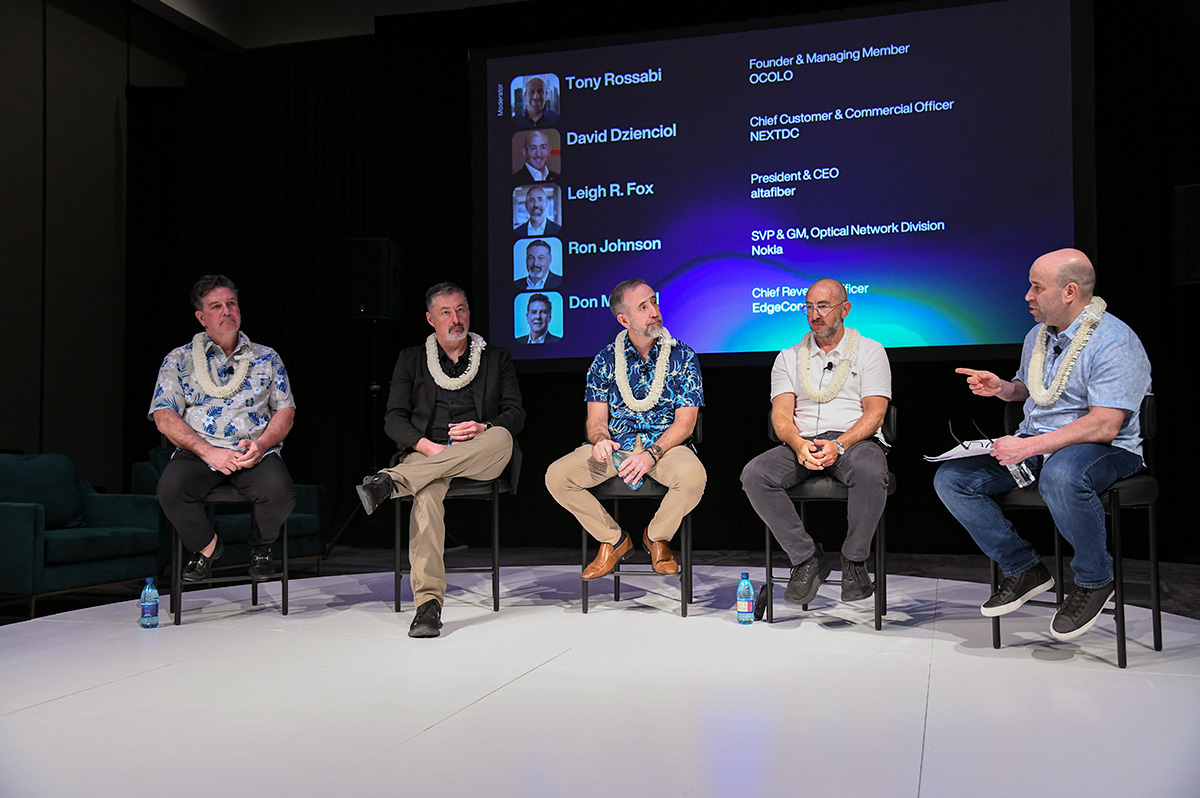
What the program is—and what it is not
PTC NextWave is designed around access within the digital-infrastructure community. The supplied program materials describe connections with operators, investors and industry leaders, placing the emphasis on relevant conversations and industry exposure rather than a broad trade-show audience.
That distinction matters. An accelerator commonly suggests an extended venture-development model, a standard curriculum or an investment structure. None of those assumptions should be imported into PTC NextWave. PTC explicitly positions NextWave differently, so applicants should evaluate the benefits that PTC actually publishes rather than applying an accelerator template.
It should not be described as a startup expo either. The eight-company cohort and selective application process point to a curated program. Selection must never be implied before PTC communicates a decision, and applicants should not present an application as an endorsement.
For business leaders assessing the opportunity, the useful question is straightforward: does the company have a product and market story that will make sense to digital-infrastructure operators, investors and decision-makers at PTC'27? If the answer requires several paragraphs of translation, the positioning may need work before submission.
Who can apply?
PTC NextWave is intended for emerging companies building within digital infrastructure. That broad description is only the first filter. The official criteria also address company age, product stage and traction, and those published requirements should control every go-or-no-go decision.
Before assigning a team to the application, collect the company formation date, a concise product description, evidence of current product readiness and an accurate account of commercial traction. Compare each item with the live wording on the official page. Do not stretch a category, redefine a pilot or overstate customer activity to create apparent eligibility.
A strong fit should be legible without jargon. The reviewer should be able to understand what the company provides, which infrastructure problem it addresses, who uses or buys it and why the product belongs in the PTC community. That clarity is useful even when a company ultimately decides not to apply to PTC NextWave.
Leadership alignment also matters. Someone should own the application, confirm factual statements and remain available for the later program stages. Marketing can shape the narrative, but product and executive leaders should validate descriptions of readiness, deployment and traction before anything is submitted.
Eligible digital-infrastructure sectors
The supplied search and program materials identify a field spanning AI, cloud, data centers and subsea networks. PTC NextWave should therefore be read through a digital-infrastructure lens rather than as a general technology-startup opportunity.
Adjacent companies should examine the official sector language carefully. A product may use artificial intelligence without serving infrastructure, or sell to telecommunications companies without being an infrastructure product. Category fit should come from the problem, buyer and operating environment—not from adding industry terms to the application.
Use this three-part sector test:
- Infrastructure connection: Identify the network, facility, cloud, compute or operational environment the product supports.
- Buyer connection: Name the operator, owner, investor, technical team or infrastructure decision-maker who would care about it.
- Outcome connection: Explain the operational or commercial problem without relying on unsupported performance claims.
The test is an editorial decision aid, not an official PTC scoring system. Its purpose is to expose weak category logic before the official criteria are applied.
Product stage and traction requirements
PTC's program description includes product-stage and traction requirements. Exact thresholds are dynamic application facts, so the live program criteria should be checked immediately before submission.
Product readiness and traction are related but different. Product readiness concerns what can be offered or demonstrated now. Traction concerns credible market activity. Applicants should keep those ideas separate and answer with the exact evidence requested by PTC rather than substituting ambition for current status.
A disciplined evidence file can include the source for the company formation date, the approved product description, the current release or deployment status and records supporting any commercial statements used in the application. The point is not to overwhelm reviewers with material. It is to make every consequential sentence traceable inside the applicant's own organization.
Avoid projections presented as present facts. A planned deployment is not a current deployment, a conversation is not a customer relationship and a total addressable market is not traction. Precise language protects credibility and gives the company a cleaner story if it advances.
The same discipline applies to metrics. Include a number only when the application asks for it, the company can support it and the reporting period is clear. Unsupported growth claims or vague superlatives can weaken an otherwise credible infrastructure narrative.
PTC NextWave application dates and preparation
The PTC NextWave application window and deadline should be taken directly from PTC's official page because those details can change. This guide does not reproduce an unverified deadline. Confirm the active dates before building an internal review calendar.

Work backward from the official deadline. Allow time for eligibility review, evidence collection, executive fact-checking and a final plain-language edit. A rushed application often fails at the seams: the website says one thing, the pitch says another and the supporting evidence uses a third description.
A practical submission file should contain:
- the exact official eligibility language used for the internal decision;
- the company and product facts approved for submission;
- a short explanation of sector fit;
- the evidence behind traction statements;
- the designated program contact; and
- the final submitted version with its submission date.
The primary action is to review the official application information. If the application is open and the company fits, follow PTC's published submission route rather than relying on third-party summaries.
How to interpret the five-step process
The supplied brief describes PTC NextWave as having a five-step process, but the official page should control the current names, dates and obligations for those steps. Applicants should avoid creating schedules from paraphrased or older program information.
For internal planning, the process can be evaluated through five checks. These are Percepture's application-readiness checks, not replacement names for PTC's stages:
- Eligibility check: Compare the company against the live sector, age, product and traction criteria.
- Evidence check: Confirm that important application statements have an internal source and owner.
- Narrative check: Make the infrastructure problem, product and buyer understandable to a mixed executive and technical audience.
- Participation check: Identify the leaders who can support coaching, preparation and event-related opportunities if selected.
- Freshness check: Revisit PTC’s pages for changes to dates, instructions and PTC’27 information before each commitment.
This interpretation adds a decision layer that a program description cannot provide for every applicant. It helps executives determine whether the opportunity is operationally realistic, not merely attractive.
What the eight-company cohort receives
The supplied program information says PTC NextWave will curate an eight-company cohort. It also identifies coaching and opportunities associated with Lightning Talks and the Barstool Pitch. Applicants should consult PTC for the current scope, schedule and participation conditions attached to those elements.
A small cohort changes the preparation standard. The company story must work in several settings: a written application, a coaching conversation, a concise stage presentation and direct discussions with industry participants. One oversized corporate deck is unlikely to serve all four jobs well.
Founders should prepare a stable narrative core: the infrastructure problem, the product, the buyer, the present stage and the reason the PTC community is relevant. Supporting detail can change by format, but the central facts should not.
Selection for PTC NextWave is not guaranteed. Public copy, investor updates and social posts should distinguish clearly between applying, advancing and being selected. That protects both the applicant and the integrity of the program.
Pitch coaching, Lightning Talks and Barstool Pitch
PTC NextWave connects application intent with live communication opportunities. The supplied materials identify pitch coaching, Lightning Talks and the Barstool Pitch, giving selected companies more than one possible format in which to explain their work.

A Lightning Talk rewards compression. The audience should quickly understand the problem, the operating environment and what the company has built. The speaker does not need to force every technical feature into the presentation; the goal is to establish relevance and create a basis for a deeper conversation.

The Barstool Pitch should also be treated as a distinct communication setting, not merely the same deck delivered elsewhere. Applicants can prepare by writing one sentence for the problem, one for the product, one for present market evidence and one for the conversation they want to continue at PTC'27.
Brian Moon and Naaz Bax introduce the program in the supplied NextWave video. The video can provide useful program context, while the official written page should remain the source for controlling application criteria and dates.

Timeline to PTC'27
The PTC NextWave timeline leads toward PTC'27, but application status, deadlines and event details are dynamic. Use the official program page for the application sequence and the official PTC'27 page for current conference information.
Internally, separate the timeline into decision gates rather than guessing dates. Gate one is eligibility. Gate two is a fact-checked submission. Gate three begins only if PTC advances or selects the company. Gate four covers coaching and presentation preparation under the instructions provided. Gate five covers participation at PTC'27.
This structure prevents a common planning error: committing travel, publicity or launch language before selection and participation details are settled. It also gives the executive team clear points at which to approve additional time and expense.
Readers planning for the broader conference can use Percepture's PTC'27 guide. For background on the organization and conference, see what the PTC conference is and the guide to who attends PTC.
A founder’s go-or-no-go scorecard
Before pursuing PTC NextWave, leadership should be able to answer each question with a documented yes or a specific follow-up action.
- Category: Does the product clearly serve digital infrastructure?
- Eligibility: Does the company meet the current official age, product and traction criteria?
- Evidence: Can the team support every material application statement?
- Audience: Will operators, investors or infrastructure leaders understand why the product matters?
- Capacity: Can the right leaders participate in later preparation if the company is selected?
- Message: Can the company explain its problem, product and present stage without inflated claims?
A weak answer does not always mean the company should withdraw. It identifies what must be resolved before the submission is credible.
Frequently asked questions
What is PTC NextWave?
PTC NextWave is a selective program for emerging digital-infrastructure companies that leads toward PTC’27 and includes a curated cohort, coaching and pitch-related opportunities.
Is PTC NextWave an accelerator?
No. PTC explicitly positions the program differently from an accelerator, so applicants should evaluate the benefits and obligations PTC publishes rather than assuming a standard accelerator model.
Who can apply to PTC NextWave?
Emerging digital-infrastructure companies can apply when they meet PTC’s current sector, company-age, product-stage and traction criteria.
What sectors does the program cover?
The supplied program materials identify digital-infrastructure areas including AI, cloud, data centers and subsea networks. The official page controls the complete current sector language.
How old can an applicant company be?
The maximum company age is defined in the current official eligibility criteria. Check the live program page before applying because this guide does not reproduce an unverified threshold.
What traction is required?
The required traction is defined by PTC’s current application criteria. Applicants should distinguish supported present activity from projections, pipeline or general market size.
How many companies are selected?
Eight companies are identified for the curated cohort in the supplied program information. Selection should not be implied until PTC communicates its decision.
When is the PTC NextWave application deadline?
The current deadline is published on PTC’s official program page. Check that page immediately before submission because application dates are dynamic.
What do selected companies receive?
Selected companies receive the cohort experience described by PTC, including coaching and opportunities connected with Lightning Talks and the Barstool Pitch. PTC’s current terms control the exact scope.
How does the Barstool Pitch fit into the program?
The Barstool Pitch is one of the pitch opportunities identified in the program materials. Selected participants should follow PTC’s instructions for its format, timing and preparation.

About Bob Generale
Bob Generale is President of Percepture and writes about executive marketing strategy, search visibility, digital infrastructure and the business decisions surrounding major industry events.