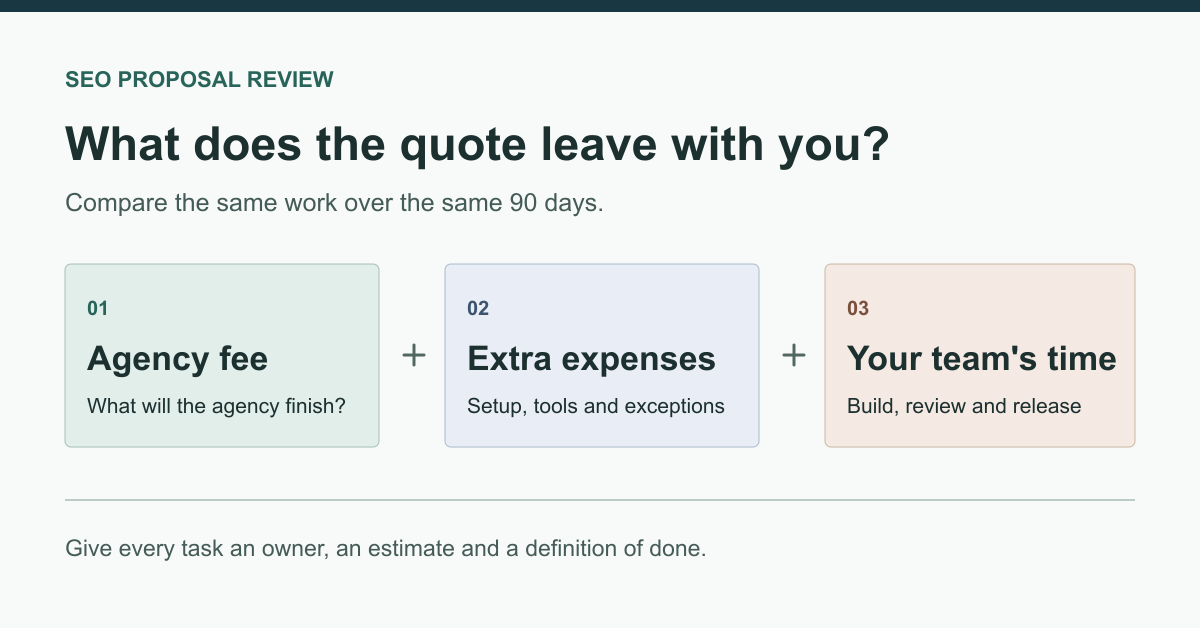

Why does SEO cost so much when two proposals seem to list the same work? An SEO quote can pay for recommendations, completed changes, or a mix of both. The fee only tells you what the agency bills. To see what the project will take, count the changes your developers, subject experts, and reviewers still have to finish.
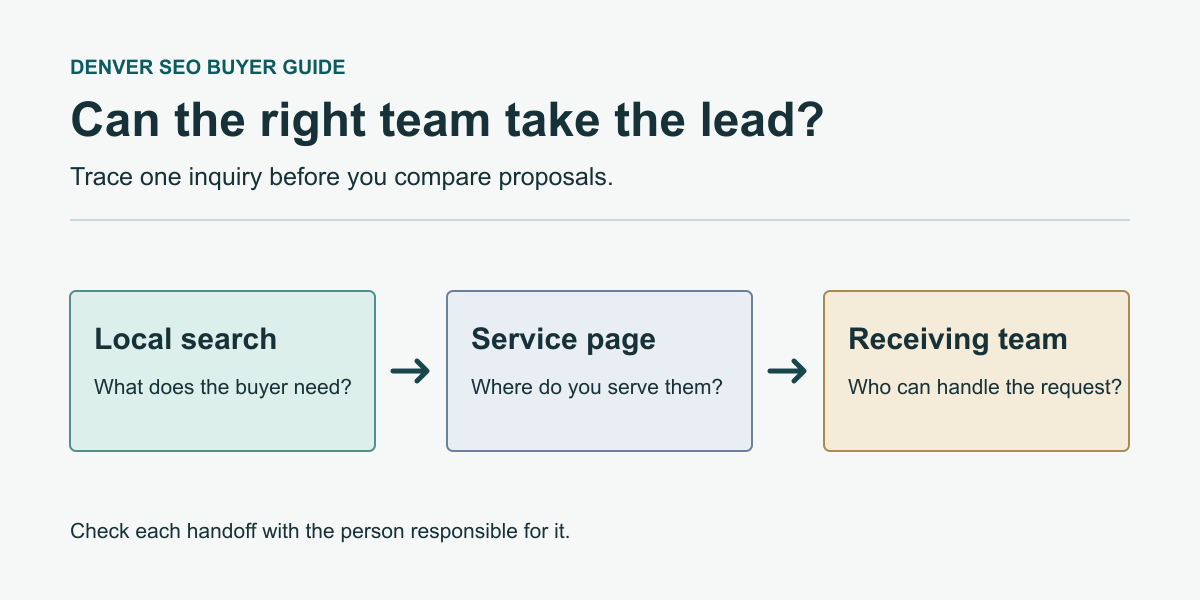
Start with one outcome both vendors can describe. Suppose you want to fix a service-page template and improve three priority pages before the end of the quarter. Ask each vendor who edits the template, who verifies the service claims, who publishes the pages, and who checks the result. Then compare the quote against the people you actually have available.
Ask what each line item buys
"Technical SEO" might mean a report documenting why pages aren't being indexed. It might also mean fixing the underlying template, testing it on staging, releasing the change, and checking the affected pages afterward. Diagnosis is useful, but it isn't implementation. If the proposal promises both, ask to see where it assigns each step.
The same distinction applies to content. An agency can write three drafts without being able to verify where you provide a service, which claims your team can substantiate, or what legal will approve. Those are costs and dependencies on your side even when the agency charges a flat fee.
Google's guide to hiring an SEO recommends asking how the provider will explain its changes and what work its audit estimates. It also advises granting read access only at the audit stage. Once you agree to implementation, document who can change what and who checks it before it goes live.
| What the quote says | Ask who will finish it | What you can check at handoff |
|---|---|---|
| Technical recommendations | Who makes the template change and tests it? | The named pages show the fix on the live site. |
| Three pages optimized | Who supplies and approves the service details? | The agreed pages are published with accurate information. |
| Monthly reporting | Who sets up measurement and fixes missing tracking? | The report uses an agreed baseline and shows the measures both sides can reproduce. |
| Ongoing support | Who handles extra rounds and new requests? | The contract states what's included and what needs a separate quote. |
For the broader list of work an engagement can include, start with our organic SEO services guide. Here the aim is narrower: make sure each necessary task has a person, enough time to do it, and a definition of finished.
Compare two quotes over the same 90 days
The example below uses invented figures for the same agreed pages and acceptance checks. These aren't vendor rates or market benchmarks. The team values developer time at $100 per hour, subject-expert time at $120 and approval time at $90. Use your own planning rates and count any cost only once.
| First-quarter cost | Quote A: team implements more | Quote B: agency implements more |
|---|---|---|
| Agency fee for three months | $12,300 | $15,600 |
| One-time setup | $0 | $600 |
| Separate project tool | $300 | $0 |
| Developer time | 32 hours / $3,200 | 8 hours / $800 |
| Subject-expert review | 12 hours / $1,440 | 6 hours / $720 |
| Approval and release coordination | 8 hours / $720 | 4 hours / $360 |
| First-quarter planning total | $17,960 | $18,080 |
Quote A looks $3,300 cheaper on the agency fee alone. Once both teams account for the work, the modeled difference is $120. The bigger difference is time: 52 hours of work for the client team versus 18. If your developer can't give the project 32 hours this quarter, Quote A may not deliver the agreed changes on time, even though it looks cheaper. If that developer has time and knows the template well, doing more in-house can be the better choice.
Internal time in this example is a planning cost, not necessarily a new cash expense. Separate it from setup, software and vendor invoices for budgeting. Keep it in the comparison so you can see what your staff will have to put aside.
Reduce scope before you remove the work that makes it usable
If the quarter is too expensive, ask the agency to quote fewer pages or one template instead of several. Keep the steps that turn recommendations into finished work: someone to make the change, someone to check the facts, and a check of the live page. Removing those steps may lower the visible price without lowering the cost of getting the job done.
Ask both finalists for the same three commitments:
- Name the handoff. List every decision, file or approval your team must supply and when it is needed.
- Say what counts as done. For example, the pages are live, the intended URLs are in use, and someone has checked the changes against the agreed scope. Rankings can be tracked afterward; they are not an acceptance test for a completed edit.
- Price the exception. Ask what happens if a reviewer needs an extra round or a template change reveals work outside the quote. Agree on who approves an extra charge before anyone starts it.
Get the missing numbers before you sign
Is a higher-priced SEO proposal automatically better? No. Ask what extra work it includes and whether your team needs that work. Higher fees don't prove that a provider will finish more or earn better rankings.
Can we buy just the audit? Yes, when you need diagnosis and have a named person with time to implement the recommendations. Decide how you will prioritize the backlog before treating the audit as the entire project.
What should we compare if the agency doesn't estimate our hours? Ask each client-side owner to estimate their part against the same pages and deadline. Mark uncertain estimates as ranges, and check whether the decision changes at the low and high ends.
Bring the same page list and the same 90-day handoff to both vendors. Ask for a quote that separates their fee, your team's work and the finish line. For Percepture's published package structure, see SEO pricing and packages; use the comparison above to clarify what your own engagement would leave with your team.