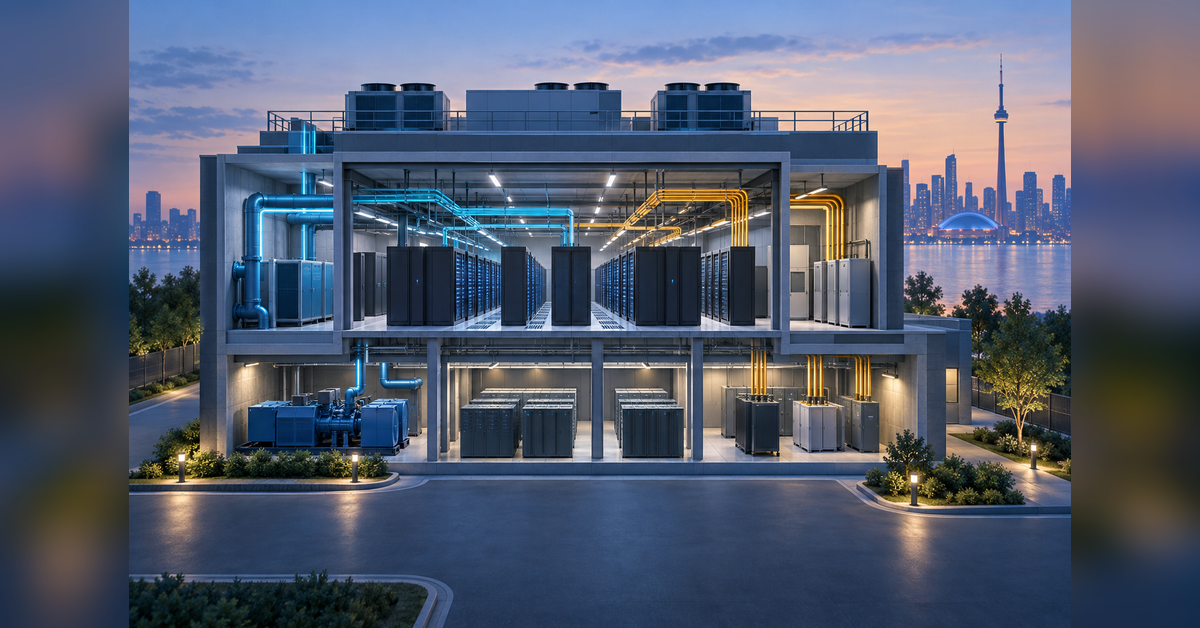

Before you sign or renew a contract, compare the best Toronto data centers against the equipment, connections and operating support your budget must cover. Before signing a Toronto colocation agreement or renewing one, define the facility, power, connections and support you actually need.
This guide helps business owners and executive teams turn that brief into comparable proposals. Start with Toronto versus the Greater Toronto Area, then test each candidate against your workload, operating model and full contract cost.
What makes a Toronto data center the right choice?
Toronto colocation means placing your equipment in a provider-operated facility rather than running the building yourself. Choose the best Toronto data centers for your business by checking the exact site, usable power, required connections, operating responsibilities and contract terms. Set those requirements before comparing proposals, and reject candidates that cannot meet them.
Draw the boundary before collecting quotes
Write down whether the search covers Toronto city limits, the wider Greater Toronto Area, or either. Ask every bidder to identify the municipality and street address in its proposal. Keep that address attached to every technical answer and price.
Do not compare a provider’s entire portfolio with another company’s single building. Give each candidate one record: provider, facility address, proposed room or space, service package and intended delivery date. If one provider proposes two locations, evaluate them separately.
Choose your geographic boundary for a business reason. That might be staff access, a required network destination, customer response time or a recovery plan. Replace “close to Toronto” with a requirement someone can test.
For example, ask your operations team to assess the journey to the proposed address during its actual support hours. Ask the network team to measure the proposed route to the application’s users or endpoints. A map pin is a starting point, not the acceptance test.
Five Toronto and GTA facilities to put on the bid list
Start with five providers at five distinct addresses. Four sites below are in the City of Toronto; Digital Realty's Vaughan location is in the GTA, outside Toronto city limits. This is an unranked shortlist based on provider specifications, not a performance test or a statement that space is available.
Compare the exact location and network offering
| Provider and site | Address and geographic fit | Published network offering |
|---|---|---|
| Equinix TR2 | 45 Parliament Street, Toronto. City of Toronto. | Equinix lists cross-connects, Internet Exchange, Metro Connect and Equinix Fabric. Request the exact carriers and cloud connections available to your proposed cabinet. |
| Cologix TOR1 | 151 Front Street West, Toronto. City of Toronto; identify the offered suite inside the carrier hotel. | Cologix reports 150+ networks in its meet-me room, access to the building’s meet-me room and TorIX, plus diverse fiber entrances. |
| Telehouse 250 Front | 250 Front Street West, Toronto. City of Toronto. | Telehouse describes carrier-neutral colocation and two diverse fiber rings connecting its meet-me rooms at 250 Front, 151 Front and 905 King. |
| eStruxture TOR-3 | 431 Horner Avenue, Etobicoke. City of Toronto, west end; not a separate GTA municipality. | eStruxture describes a carrier-neutral site with nine on-net and 24 in-metro carriers, plus cloud connectivity. Ask which connections are delivered on-site versus through metro services. |
| Digital Realty TOR1 | 1 Century Place, Vaughan. GTA; outside the City of Toronto. | Its property brochure describes carrier-neutral service, a meet-me room, diverse network entrances and Metro Connect. |
Provider names do not establish route diversity. Two sites can depend on the same carrier, duct or interconnection building. Have the network team trace the proposed paths, including the downtown connections used by an outlying site.
Match power and resilience to the offered deployment
| Site | Provider-published power and resilience | When to investigate and what to confirm |
|---|---|---|
| Equinix TR2 | N+1 UPS and cooling redundancy; 120/208V distribution. The page lists a 4 kVA minimum cabinet density, not a maximum usable kW allocation. | Investigate for a Toronto deployment using the listed interconnection services. Ask for contracted usable power, feed design and generator redundancy for the proposed space. |
| Cologix TOR1 | Up to 15 kW per cabinet, with N or 2N power configurations; N+1 in-row cooling. | Investigate for carrier-hotel interconnection. Confirm which power configuration the quote includes; the existence of a 2N option does not make every offered cabinet 2N. |
| Telehouse 250 Front | The site sheet describes redundant utility services, fully redundant UPS systems, four 2.5 MW generators and two independent electrical risers. | Investigate for downtown colocation linked to the Telehouse network. Obtain the cabinet-level allocation and maintenance design; generator nameplate totals are not sellable IT capacity. |
| eStruxture TOR-3 | The page lists 5 MW total facility capacity, N+1 UPS and mechanical components, and cabinet density up to 10 kW, with higher density by request. | Investigate for west-end colocation or a deployment needing the stated density. Get written acceptance of the actual hardware, cooling load and service scope; total site capacity is not available inventory. |
| Digital Realty TOR1 | The current facility page lists N+1 UPS and cooling redundancy, with space options from cabinets to suites. | Investigate when a Vaughan location fits the brief. Request the exact room, usable power, delivery date and network routes rather than assuming a downtown location or a standard allocation. |
Use the fit statements as questions for your shortlist, not endorsements. Ask each provider for a current, address-specific proposal covering the same equipment and term. A published design description is not a negotiated SLA, and it does not settle price, present capacity or your application's recovery needs.
Toronto colocation: settle who operates what
Before comparing buildings, decide which responsibilities you want to keep. Do you need cabinet space for equipment your team manages, a private area with more control, or a larger leased deployment with a different division of work?
Treat these as requested purchasing models, not assumptions about what any particular Toronto provider sells. Ask each bidder to state its available offering and draw the responsibility boundary in writing.
Define the operating model in the request for proposal
| Requested model | Define before comparing | Responsibility to settle |
|---|---|---|
| Cabinet colocation | Cabinet count, usable power, connections and access | Who installs equipment, handles cabling and responds to hardware incidents? |
| Private cage or suite | Space boundary, access rules, power allocation and expansion | Who owns the fit-out, security controls and changes inside the space? |
| Larger leased deployment | Delivery scope, capacity commitment, handover and growth phases | Which building, electrical, cooling and maintenance duties remain with the buyer? |
Have the person who will run the deployment review this boundary before procurement compares prices. Put remote-hands tasks, escalation authority and after-hours access in the same document. Do not leave the operating model to a sales presentation.
Reject mismatches before ranking candidates
Build a shortlist around pass-or-fail requirements first. Reserve weighted scoring for candidates that clear those requirements. Do not let a strong presentation or a low base price compensate for a missing connection or an unacceptable delivery date.
Keep the evidence specific to the proposed site and service. A useful response identifies the requirement, the supporting document, the accountable party and any exception. Request contractual commitments for items that determine whether you can move in or operate safely.
A facility-fit worksheet for Toronto and GTA proposals
| Decision area | Ask the bidder to provide | Resolve before shortlisting |
|---|---|---|
| Location and delivery | Exact address, proposed space and service-ready date | Does the offered deployment meet your geographic and move-in requirements? |
| Power and cooling | Usable allocation, cabinet limits, cooling conditions and expansion terms | Can the proposed equipment operate within the written limits? |
| Connectivity | Required connection options, delivery path, charges and lead times | Can you order and activate the connections needed for launch? |
| Resilience | Relevant design documents, maintenance arrangements and service exclusions | Does the proposed service match your application’s recovery plan? |
| Operations and security | Access rules, escalation process, remote-hands scope and applicable assurance documents | Can your team support the deployment under those rules? |
| Commercial fit | Complete charges, contract term, renewal, expansion and exit provisions | Can the business accept both the operating cost and the commitment? |
Give unresolved items an owner and a deadline rather than assigning them a neutral score. Where a requirement is essential, keep the candidate out of the final commercial comparison until the exception is closed.
If you are also evaluating another metro, carry the same worksheet into your Chicago colocation shortlist. Keep site evidence separate; do not transfer a finding from one city or building to another.
Make power and connectivity concrete
For power, describe the equipment you intend to install—not just the number of cabinets. Include the expected load at launch, the planned growth, the equipment’s feed requirements and the conditions your technical team must approve.
Ask the bidder to distinguish the contracted allocation, the permitted operating load and the billing basis. Have your technical reviewer reconcile those terms with the proposed electrical design. Do not sign until the quote, technical schedule and equipment plan agree.
If AI inference or another dense workload is part of the brief, submit its actual hardware and cooling requirements. Ask for acceptance of that configuration in the proposed space, including any restrictions on deployment or later changes.
For connectivity, name the destinations that matter: offices, customers, cloud environments, exchanges or other facilities. Then request the proposed path and ordering process for each. Distinguish a service delivered within the building from one that requires an additional circuit or third party.
Have the network team review the physical routes behind any proposed diversity claim. Ask for a diagram that identifies shared sections, building entrances and dependencies. Define the measurements and acceptance tests you will use before ordering.
Compare full-term cost, not the cabinet headline
Send every bidder the same commercial worksheet. Specify the currency, term, equipment scope, power assumptions, connection requirements and support allowance. Ask for one-time and recurring charges separately.
Build the comparison around this calculation:
Contract cost = installation and fit-out + recurring space and power + network and connection charges + support + agreed increases + exit costs.
Include a line for each assumption. Ask whether taxes are included, how consumption is measured, when increases apply and what happens if delivery slips. Keep quoted charges separate from estimates your team adds for its own work.
Consider a hypothetical buyer choosing between two proposals. One has a lower base fee but leaves connection charges and after-hours support outside the quoted scope. The other includes those items. Neither proposal is ready for a price ranking until both have been rebuilt around the same requirements.
Run the comparison again for your expected expansion. Ask what is reserved, what requires a new order and what happens if adjacent space or additional power is unavailable. Put any required expansion rights into the agreement rather than the meeting notes.
For renewal, read the notice deadline, automatic-renewal language and rate-change provisions together. For exit, request the process for disconnecting services, removing equipment and restoring space. Assign an internal owner to track those dates.
Test the operating day before signing
Walk through an incident with the people who will support the installation. Use a specific situation: an application is unavailable outside office hours, your engineer is off-site and a hardware task may be needed.
Ask who receives the alert, who can authorize access, which tasks remote hands may perform and how the issue is escalated. Request the relevant response terms and exclusions in writing. Have your team decide whether they fit the application’s needs.
Treat resilience the same way. Give the bidder your maintenance and recovery requirements, then ask it to explain the proposed service against them. Have your engineers assess the supporting documents and any operational dependencies.
For Canadian data-residency requirements, map the intended locations of production data, backups, logs and support access. Give that map and the proposed terms to legal and security reviewers. Use their requirements as procurement gates; do not treat the facility address as legal signoff.
Toronto data center buying questions
How much does Toronto colocation cost?
Request a quote for a defined deployment rather than budgeting from a cabinet headline. Specify space, usable power, connections, support, term and installation scope. Compare one-time charges, recurring costs, increases and exit obligations over the same period.
Should I choose a Toronto city facility or a GTA location?
Set the boundary around your staff-access needs, network destinations, recovery plan and delivery requirements. Evaluate each proposed address against those requirements. Ask your team to test travel and network performance rather than treating a market label as an acceptance test.
Does a Toronto address satisfy my data-residency requirements?
Do not use the address as legal signoff. Document where production data, backups and logs are intended to reside, who may access them and what the agreement commits to. Have legal and security teams approve that arrangement against your specific obligations.
Your next move: send one brief to every candidate
On Monday, put the business owner, technical lead and procurement owner around the same brief. Agree on the geographic boundary, launch date, equipment, usable power, connections, support model and expansion plan. Mark the requirements that cannot be traded away for price.
Send that brief with the same commercial worksheet to each candidate. Compare only proposals tied to an exact address and service scope, and keep unresolved technical exceptions out of the final price ranking.
That is how to turn a search for the best Toronto data centers into a defensible purchase: choose the site and agreement that meet your requirements, with the responsibilities and costs written down.

About Bob Generale
Bob Generale is President of Percepture. His editorial focus is connecting marketing and sales with shared pipeline and revenue goals. He writes for business leaders about search visibility, digital PR and buyer decisions across B2B markets, including telecom and data centers.