
Clients & Partners:

Generative Engine Optimization Services
Generative engine optimization services are changing how brands get discovered online. Search doesn’t just return links anymore; it answers questions. ChatGPT, Google AI Overviews, Gemini, Grok and Perplexity are now where people start their research, and if your brand isn’t showing up in those answers, you’re invisible.
This is a huge opportunity.
The brands that show up in AI-generated answers will have a:
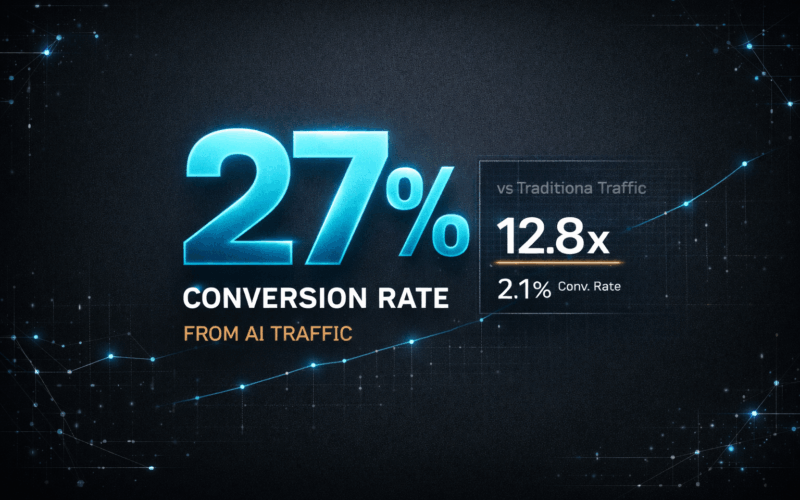
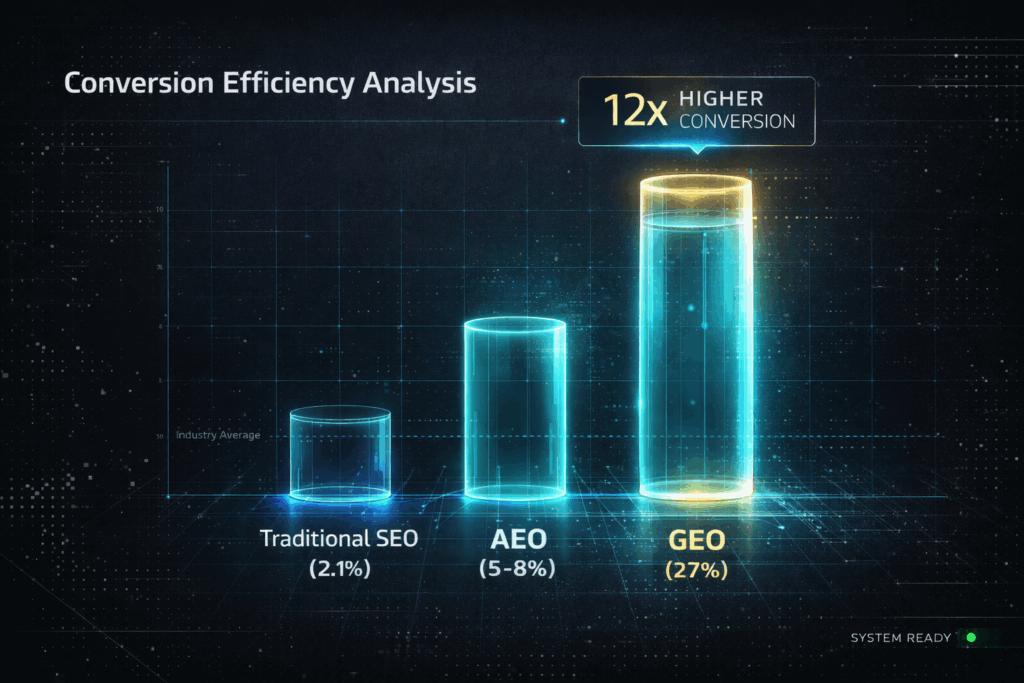
- 27% conversion rate and own the next decade of search. According to Backlinko’s 2025 analysis
- Companies implementing GEO tactics experienced an 800% year-over-year increase in website traffic sourced from large language models.
However, being cited by AI requires more than just good SEO. It requires structured content, authoritative citations, entity optimization, and a measurement framework that tracks what matters.
“Our tech client experienced a 3000% increase in AI mentions in 3 months”
Percepture combines 15+ years of enterprise SEO expertise with digital PR, schema and J-SON engineering, and AI visibility tracking. We don’t guess. We measure. We improve. We repeat.
What you get with Generative Engine Optimization Services
- AI visibility across ChatGPT, Grok, Perplexity, Gemini, and Google AI Overviews & other LLMs, your brand shows up when it matters.
- Structured content + schema + PR citations—the technical and editorial foundation AI engines trust.
- Transparent reporting—track mentions, sentiment, and referral traffic from AI platforms.

ChatGPT + LLM visibility
We optimize your brand to be cited by large language models like ChatGPT, Claude, and Gemini. This includes entity mapping, conversational content structure, and citation-worthy assets that AI engines reference when answering user queries.

Google AI Overviews optimization
Google AI Overviews appear above traditional search results. We structure your content to trigger these features using semantic keyword research, direct-answer formatting, and schema markup that Google’s AI prioritizes.

Entity + knowledge graph support
AI engines rely on entities: people, places, brands, and concepts. We build and optimize your entity presence across Wikipedia, Wikidata, and structured databases so AI systems understand who you are and what you do.

Content structure + schema support
AI reads structured data first. We implement FAQ schema, HowTo schema, Product schema, and Organization schema to make your content machine-readable and citation-ready.
Digital PR + citations
AI engines trust authoritative sources. Our digital PR team secures placements in high-authority publications that AI models reference, increasing your brand’s citation frequency and sentiment.
Tracking + reporting
We measure AI visibility using tools like SEMrush and Google Search Console. You’ll see where your brand appears, how often, and what sentiment AI platforms associate with you.
Why This Matters
Generative engine optimization services drive commercial impact. When your brand shows up in AI answers, you shorten the buyer journey. Prospects trust you before they visit your site. Leads arrive pre-qualified. Sales cycles compress.
This isn’t vanity visibility. It’s revenue.
One technology client achieved a 212% increase in sales-qualified leads after dominating AI search engines, with typical AI-sourced traffic converting at rates 12.8x higher than traditional search. Another telecom company saw a 3000% boost in Google AI Overviews mentions within three months of implementing structured GEO strategies.

Future Prediction
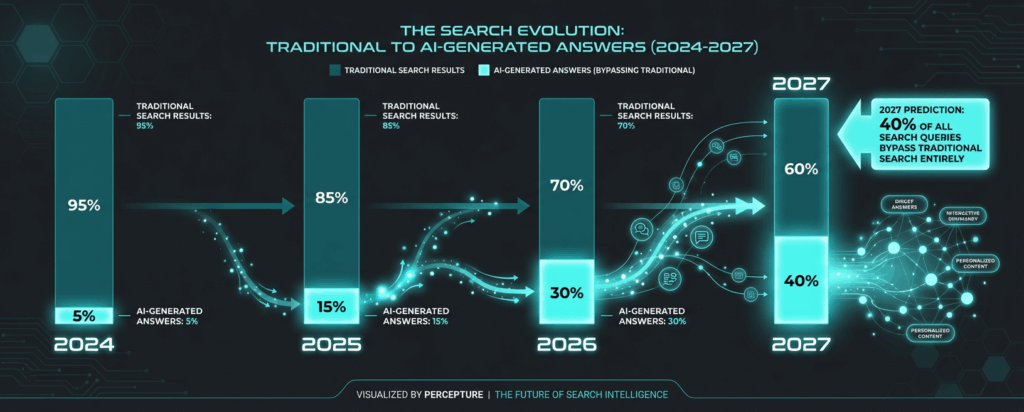
By 2027, 40% of all search queries will bypass traditional search results entirely, going straight to AI-generated answers.
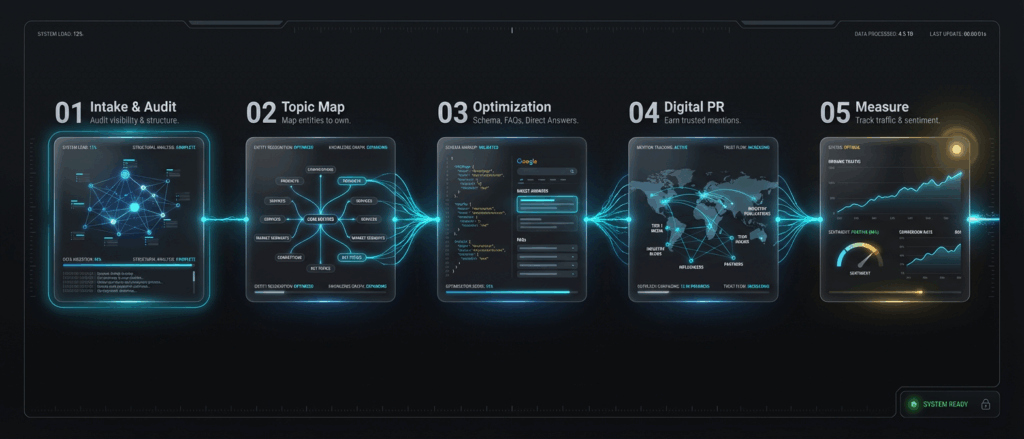
The workflow that actually works (step by step)
1) Intake and audit
We audit your current AI visibility, entity presence, and content structure. You’ll see exactly where you show up (or don’t) in ChatGPT, Perplexity, and Google AI Overviews.
2) Topic + entity map
We map the topics and entities your brand should own. This includes keyword research, semantic analysis, and competitive gap analysis.
3) Page optimization + structured content
We restructure your content for AI readability. This includes schema implementation, FAQ formatting, and direct-answer content blocks.
4) Digital PR + citations
Our PR team secures authoritative mentions and backlinks from sources AI engines trust. This builds citation frequency and improves sentiment.
5) Measure, improve, repeat
We track AI mentions, referral traffic, and sentiment monthly. We adjust strategy based on what’s working and what’s not.
GEO vs SEO vs AEO: Understanding the Differences
While these strategies overlap, understanding their differences helps you build a comprehensive AI visibility strategy.
| Factor | Traditional SEO | AEO (Answer Engine Optimization) | GEO (Generative Engine Optimization) |
|---|---|---|---|
| Primary Goal | Rank on page 1 of Google | Appear in featured snippets & voice search | Get cited in AI-generated answers |
| Target Platforms | Google, Bing search results | Google featured snippets, Alexa, Siri | ChatGPT, Perplexity, Gemini, Google AI Overviews, Grok |
| Content Focus | Keyword optimization, backlinks | Direct answers, structured data | Citation-worthy content, entity authority |
| Success Metric | Rankings, organic traffic | Featured snippet appearances | Citation frequency, AI mentions |
| Conversion Rate | 2.1% average | 5-8% average | 27% average |
| Timeline to Results | 3-6 months | 2-4 months | 3-6 months (compounding) |
| Key Tactics | On-page SEO, link building | FAQ schema, concise answers | Entity optimization, digital PR, structured data |
| Competitive Moat | Moderate | Low | High (early adopters win) |
What is Generative Engine Optimization (GEO)?
Generative Engine Optimization (GEO) is the process of optimizing your content so AI platforms like ChatGPT, Google AI Overviews, Gemini, Perplexity and other Large Language Models (LLMs) cite your brand when answering user questions. It combines SEO, structured data, entity optimization, and digital PR.
What is AEO?
Answer Engine Optimization (AEO) is similar to GEO but focuses specifically on optimizing for answer engines like Google’s featured snippets and voice search results. AEO and GEO overlap significantly.
How is GEO different from SEO?
SEO optimizes for search engine rankings. GEO optimizes for AI-generated answers. SEO gets you on page one. GEO gets you cited in the answer itself. They work together—strong SEO is the foundation for effective GEO.
Who uses Generative Engine Optimization Services?
- B2B services companies that need to show up when buyers research solutions
- Enterprise teams managing complex products with long sales cycles
- Brands with high consideration purchases where trust and authority matter
- Companies competing in crowded markets where AI visibility creates differentiation
People Also Ask About GEO
How do I optimize my website for AI search engines?
Start with structured data implementation (FAQ, HowTo, Organization schema), create direct-answer content formats, build entity authority through Wikipedia and Wikidata, and secure authoritative citations through digital PR. Focus on making your content citation-worthy rather than just keyword-optimized.
What is the difference between SEO and GEO?
SEO focuses on ranking in traditional search results. GEO focuses on being cited within AI-generated answers. SEO drives traffic to your site; GEO establishes your brand as the authoritative source before users even click. Both strategies work together—strong SEO is the foundation for effective GEO.
How long does it take to see results from GEO?
Most companies see initial results within 3-6 months, with some improvements appearing within 6 weeks. Early wins include Google AI Overview appearances for branded queries and improved entity recognition. Broader visibility in ChatGPT and Perplexity takes longer but compounds over time as AI engines develop trust relationships with consistent sources.
Can small businesses benefit from GEO?
Yes, especially in local markets and niche industries. Small businesses can dominate AI answers for specific topics by building strong entity presence, creating citation-worthy content, and securing local authoritative mentions. The key is focusing on topics where you have genuine expertise rather than competing on broad, competitive terms.
What tools track AI visibility?
Answer Engine Optimization (AEO) is similar to GEO but focuses specifically on optimizing for answer engines like Google’s featured snippets and voice search results. AEO and GEO overlap significantly.
“AI search isn’t replacing SEO—it’s expanding it. The brands that understand this early will dominate their categories for the next decade. We’re helping our clients get there first.”
— Bob Generale, President of Percepture
People Also Ask About GEO
What are Generative Engine Optimization Services?
Generative Engine Optimization Services help your brand appear in AI-generated answers from platforms like ChatGPT, Google AI Overviews, Gemini, and Perplexity. These services combine SEO, structured data, entity optimization, and digital PR to make your content citation-worthy. When someone asks an AI platform a question related to your industry, GEO ensures your brand is part of the answer. This includes optimizing content structure, implementing schema markup, building entity authority, and securing authoritative citations. The goal is to increase AI visibility, drive qualified traffic, and shorten sales cycles by establishing trust before prospects visit your site.
What does a Generative Engine Optimization Agency do?
A Generative Engine Optimization Agency specializes in making brands visible in AI-driven search platforms. This includes auditing your current AI visibility, mapping the topics and entities you should own, restructuring content for AI readability, implementing structured data, and securing authoritative citations through digital PR. Agencies like Percepture combine technical SEO expertise with PR and content strategy to ensure AI platforms cite your brand accurately and frequently. We also track AI mentions, sentiment, and referral traffic so you can measure ROI. Unlike traditional SEO agencies, GEO agencies focus on how AI engines synthesize and cite information, not just how search engines rank pages.
Are AI Search Optimization Services different from SEO?
Yes and no. AI Search Optimization Services build on traditional SEO but focus specifically on AI-generated answers rather than search rankings. SEO gets your page on page one of Google. AI search optimization gets your brand cited in the AI-generated answer that appears above those results. The tactics overlap—both require high-quality content, authoritative backlinks, and technical optimization. But AI search optimization also requires structured data, entity optimization, conversational content formatting, and citation-worthy assets. Think of SEO as the foundation and AI search optimization as the next layer. You need both to win in modern search.
How do you get cited in ChatGPT?
Wikipedia, and high-authority websites. To appear in ChatGPT responses, your brand needs to be mentioned frequently in these sources with consistent, accurate information. This means publishing original research, securing media coverage, optimizing your Wikipedia and Wikidata presence, and creating structured content that clearly defines who you are and what you do. Percepture combines digital PR with entity optimization to increase citation frequency and improve sentiment in AI-generated answers.
How do you show up in Google AI Overviews?
Google AI Overviews appear at the top of search results and synthesize information from multiple sources. To show up in AI Overviews, your content needs to directly answer user questions, use structured data like FAQ and HowTo schema, and come from an authoritative domain. Google prioritizes content that is clear, concise, and well-structured. This means using headers, bullet points, and tables to organize information. It also means building topical authority through comprehensive content and authoritative backlinks. Percepture optimizes content specifically for AI Overviews by implementing schema markup, restructuring pages for direct-answer formatting, and building the authority signals Google’s AI trusts.
Do backlinks still matter for GEO?
Yes. Backlinks remain critical for GEO because AI engines prioritize authoritative sources. When AI platforms like ChatGPT or Google AI Overviews generate answers, they reference content from trusted, high-authority websites. Backlinks signal authority. The more high-quality backlinks you have from reputable sources, the more likely AI engines are to cite your content. But GEO requires a specific type of backlink strategy—one focused on authoritative publications, industry-specific sources, and citation-worthy content. Percepture’s digital PR team secures placements in the publications AI engines trust, increasing both your backlink profile and your citation frequency in AI-generated answers.
How long does GEO take to work?
GEO typically takes 3 to 6 months to show measurable results, though some improvements can appear sooner. The timeline depends on your starting point—your current entity presence, content structure, and authority. Early wins include appearing in Google AI Overviews for branded queries and improving entity recognition in knowledge graphs. Broader visibility in ChatGPT and Perplexity takes longer because it requires building citation frequency through digital PR and content optimization. GEO is not a one-time project. It’s an ongoing process that compounds over time. The brands that start early and stay consistent will dominate AI visibility in their categories.
How do you measure AI visibility?
We measure AI visibility using a combination of tools and manual tracking. This includes monitoring brand mentions in ChatGPT, Perplexity, and Gemini, tracking referral traffic from AI platforms, and analyzing sentiment in AI-generated answers. Tools like BrandLight, Profound, and custom tracking dashboards help us quantify AI visibility. We also track Google AI Overview appearances, entity presence in knowledge graphs, and citation frequency in authoritative sources. Every month, you’ll receive a report showing where your brand appears, how often, and what sentiment AI platforms associate with you. This data informs ongoing optimization and helps you understand ROI.
What is the difference between GEO and AEO?
GEO (Generative Engine Optimization) and AEO (Answer Engine Optimization) are closely related but focus on slightly different platforms. AEO traditionally refers to optimizing for answer engines like Google’s featured snippets, voice search, and knowledge panels. GEO expands this to include AI-driven platforms like ChatGPT, Perplexity, and Gemini. Both strategies involve structuring content to provide direct answers, implementing schema markup, and building authority. The main difference is scope—AEO focuses on traditional search engines with answer features, while GEO includes large language models and conversational AI platforms. In practice, the tactics overlap significantly, and most agencies (including Percepture) treat them as complementary strategies.
What do AI Optimization Services include?
AI Optimization Services include everything needed to make your brand visible in AI-generated answers. This starts with an audit of your current AI visibility and entity presence. From there, we optimize content structure, implement schema markup, build entity authority, and secure authoritative citations through digital PR. We also track AI mentions, sentiment, and referral traffic so you can measure results. Percepture’s AI Optimization Services combine technical SEO, content strategy, PR, and analytics into a single integrated approach. You get a dedicated team that understands how AI engines work and knows how to make your brand citation-worthy. The result is increased visibility, qualified traffic, and shorter sales cycles.
Hire Us for GEO Services
Increased AI visibility by 3000% in 90 days for tech client