
Yes, AI agents can make outbound calls. The real question is: can you do it legally, safely, and without damaging trust?
Here’s what you need to know:
- ✅ A clear legality map (TCPA, TSR, DNC, recording)
- ✅ A safe B2B workflow you can copy
- ✅ A tool stack + what to measure
The short answer: AI sales agents can absolutely make outbound calls. But the technology has outpaced most teams’ understanding of compliance, buyer expectations, and what actually works in 2026.
DEFINITION: What Are AI Outbound Calling Agents?
AI outbound calling agents are software systems that use artificial intelligence to initiate phone calls, conduct conversations, qualify leads, book meetings, or deliver information—without a human dialing or speaking. They combine voice synthesis, natural language understanding, and workflow automation to handle tasks traditionally performed by sales development reps (SDRs) or business development reps (BDRs).
In February 2024, the FCC clarified that AI-generated voices are treated as “artificial or prerecorded voice” under the Telephone Consumer Protection Act (TCPA). That means AI voice calls fall under the same legal framework as robocalls—but with far more capability to listen, adapt, and comply.
See AI Outbound Agents in Action
Schedule 15 minutes today
Can AI Agents Make Outbound Calls in B2B?
Yes—and B2B is where AI outbound calling shines.
Here’s why. Most fear-based articles about AI calling focus on consumer robocalls: spam, scams, and violations. But B2B outbound calling operates in a different legal and practical universe.
The B2B Advantage:
✅ Consent is easier. Business-to-business calls are often exempt from Do Not Call (DNC) rules under the FTC’s Telemarketing Sales Rule, as long as you’re calling a business entity about business services.
✅ Relationships matter more than volume. B2B buyers expect outreach. According to Gartner’s 2024 survey, 61% of B2B buyers prefer a rep-free buying experience—but they still want helpful, relevant information.
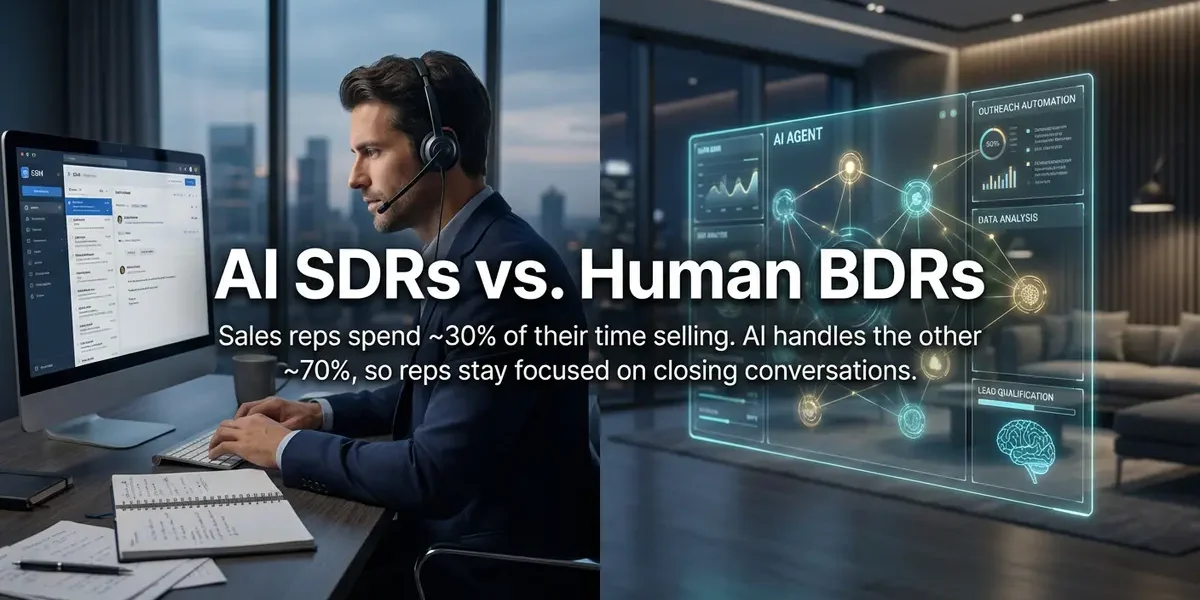
✅ AI can be more compliant than humans. A well-designed AI agent always delivers disclosures, always logs calls, and never deviates from approved scripts under pressure. See the 2026 Performance Analysis for AI SDRs vs. Human BDRs, including the associated costs and ROI.
However, “B2B exempt” doesn’t mean “anything goes.” You still need:
- Clear identification (who’s calling, why, and that it’s AI)
- Respect for internal DNC lists and opt-outs
- Compliance with call recording laws
- Time-of-day limits (8 a.m.–9 p.m. local time in the U.S.)
The Short Answer (30 Seconds)
Are they legal? Yes—if you follow TCPA, FTC, and state rules.
Do you need consent? For consumer telemarketing, yes (prior express written consent). For B2B, it depends on context, but best practice is always to have a legitimate business relationship or opt-in.
Should you disclose it’s AI? Absolutely. Transparency builds trust and satisfies regulatory expectations.
Are AI Outbound Calls Legal?
AI outbound calls are legal—but they’re heavily regulated.
Here’s the legal landscape in plain English.
FCC 2024 Ruling: AI Voices = Artificial Voices
In February 2024, the Federal Communications Commission (FCC) issued a declaratory ruling (FCC-24-17) confirming that AI-generated voices—including neural text-to-speech and voice cloning—are “artificial or prerecorded voice” under the TCPA.
What that means:
- If your AI agent calls a U.S. consumer’s cell phone or residential line for telemarketing, you need prior express written consent.
- That consent must be clear, signed (or digitally agreed), and specifically authorize calls using automated or artificial voice technology.
- Violations carry statutory damages of $500–$1,500 per call.
FTC Telemarketing Sales Rule (TSR)
The FTC’s Telemarketing Sales Rule governs what you say and how you behave on telemarketing calls.
Key requirements:
- Identify yourself and your business at the start of the call
- Disclose what you’re selling
- Respect the National Do Not Call Registry
- Don’t call before 8 a.m. or after 9 p.m. (recipient’s local time)
- Don’t harass, mislead, or pressure
AI doesn’t exempt you from any of this. If your AI script makes false claims or omits required disclosures, you’re violating the TSR.
B2B Exemption (With Caveats)
Most business-to-business calls are exempt from DNC provisions under the TSR—if you’re calling a business entity about business services, like telecom marketing. But:
- Calls to personal cell phones (even for business purposes) may still require consent under TCPA
- State laws vary (Florida, California, and others have “mini-TCPA” rules)
- You must still respect company-specific DNC requests
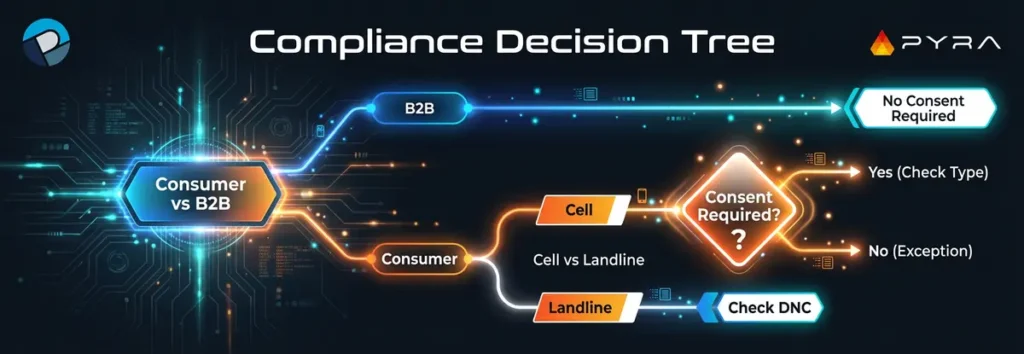
“Consumer vs B2B” → “Cell vs Landline” → “Consent Required?” decision paths]
Call Type vs. Consent vs. Risk
| Call Type | Consent Required? | Risk Level |
|---|---|---|
| B2B to business line (informational) | No (but best practice: yes) | 🟢 Low |
| B2B to business line (sales) | Depends on state; B2B exemption often applies | 🟡 Low-Medium |
| B2C to cell phone (sales) | Yes—prior express written consent | 🔴 High |
| B2C to landline (sales) | Yes—prior express consent | 🟠 Medium-High |
| Inbound (customer calls you) | No | 🟢 Low |
Tools That Power AI Outbound Calling Agents
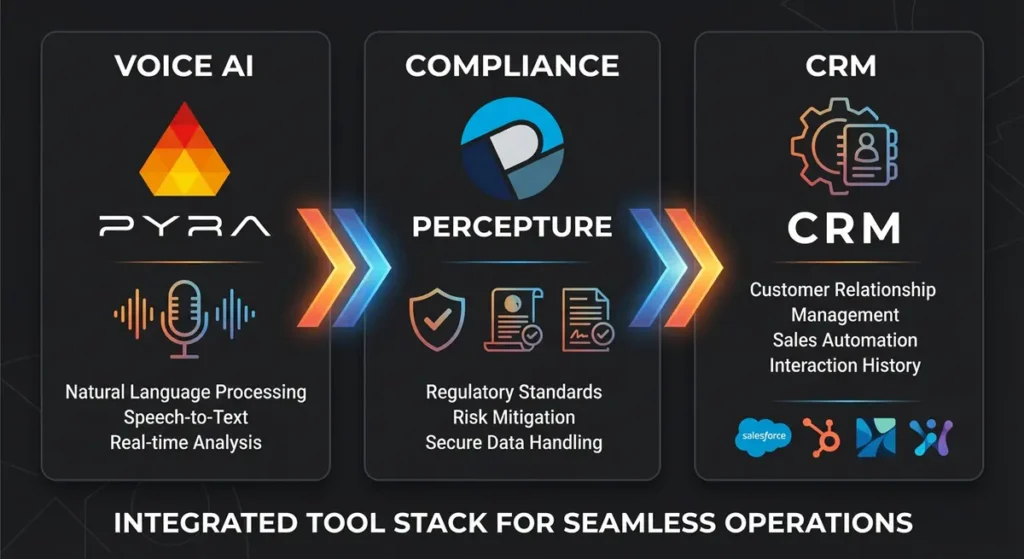
AI outbound calling isn’t one tool—it’s a stack.
1. Voice & Conversation AI
- Platforms: Bland AI, Vapi, Retell AI, Voiceflow, NLPearl, Pyra (via Pyrabuilds.ai)
- What they do: Generate human-like voice, understand natural language, handle interruptions, recognize opt-outs
2. Data & Compliance Layer
- Platforms: PossibleNOW, Gryphon.ai, ActiveProspect
- What they do: Scrub against DNC lists, enforce time-of-day rules, log consent, manage opt-outs
3. CRM & Logging
- Platforms: HubSpot, Salesforce, Pipedrive, Clay
- What they do: Store call outcomes, trigger follow-ups, surface insights, maintain audit trails
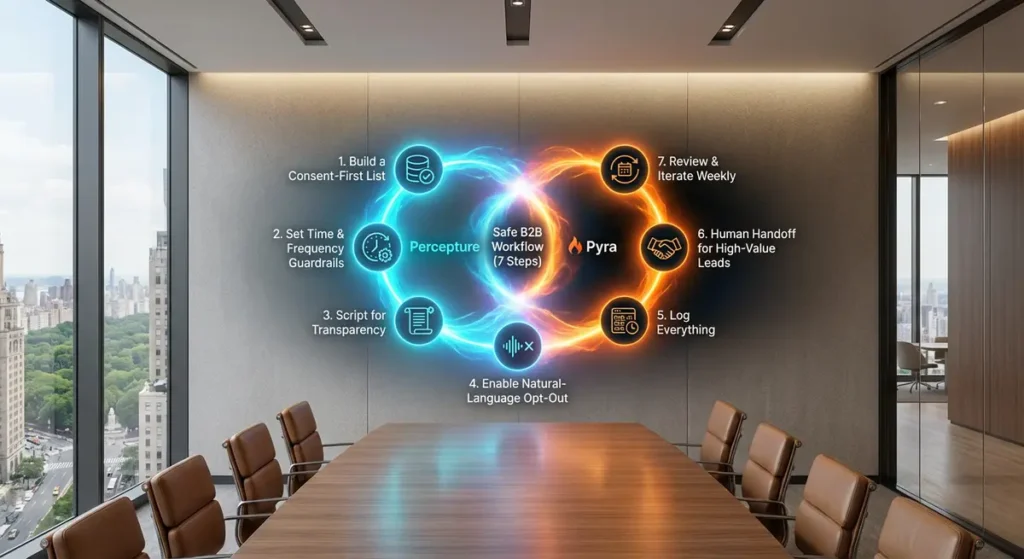
✅ The Safe B2B Workflow (7 Steps)
Here’s how Percepture and Pyra run compliant AI outbound calling for clients in telecom, life sciences, tech, and healthcare.
(1) Step 1: Build a Consent-First List
- Source leads from opt-in forms, LinkedIn engagement, or inbound inquiries
- For cold outreach, prioritize B2B business lines and ensure you have a legitimate business interest
- Scrub against DNC lists (national + internal)
(2) Step 2: Set Time & Frequency Guardrails
- Calls only between 8 a.m.–9 p.m. recipient local time
- Max 1 call per prospect per day; max 3 per week
- No calls on weekends (unless explicitly requested)
(3) Step 3: Script for Transparency
Your AI agent’s opening should sound like this:
“Hi, this is an AI voice agent calling on behalf of [Company]. I’m a virtual assistant, not a human representative. I’m calling to [purpose]. You can reach us at [number] or visit [website]. This call may be recorded for quality and training. Is now a good time?”
Step 4: Enable Natural-Language Opt-Out
Train your AI to recognize phrases like:
- “Don’t call me again”
- “Remove me from your list”
- “I’m not interested”
- “Stop calling”
When detected, the AI confirms, logs the opt-out, and ends the call.
Step 5: Log Everything
Every call should generate:
- Timestamp, duration, outcome
- Transcript (if recorded)
- Opt-out status
- Next-action trigger (e.g., “send follow-up email in 3 days”)
Step 6: Human Handoff for High-Value Leads
AI qualifies. Humans close.
When a prospect says “yes, I’m interested,” the AI books a meeting or transfers to a live rep. This is where conversion rate optimization and B2B lead generation services intersect.
Step 7: Review & Iterate Weekly
Monitor:
- Connect rate
- Opt-out rate
- Meeting-booked rate
- Compliance flags (calls outside hours, missed disclosures)
What Percepture + Pyra Actually Do
At Percepture, we don’t just talk about AI outbound calling—we run it for clients.
Here’s our real-world operating model:
- 13 touchpoints over 30 days: email, LinkedIn, and phone (AI calls after 3 unanswered emails)
- Voice options: robotic (for transparency) or humanized (for warmth)
- Slack alerts: every qualified lead triggers a notification to the sales team
- Call windows: 9 a.m.–6 p.m. local time (tighter than legal minimum)
- Voicemail strategy: AI leaves a short, clear message with callback info
- Escalation to human: high-intent leads are transferred live or booked into calendar
- GDPR/CCPA compliance: opt-out honored within 24 hours; data retention limits enforced
This isn’t theory. It’s how we help clients in telecom, life sciences, and tech scale outbound without scaling headcount.
💬 “AI as teammate, not replacement. We use AI to handle the first 80% of qualification so our human reps can focus on the 20% that closes deals.”
— Percepture Client, Life Sciences
What to Measure (Scorecard)
Track these KPIs:
| Metric | Target | Why It Matters |
|---|---|---|
| Connect rate | 5–10% | Are you reaching real people? |
| Opt-out rate | <2% | Are you annoying prospects? |
| Meeting-booked rate | 1–3% | Is AI qualifying effectively? |
| Compliance flags | 0 | Are you staying legal? |
| Cost per meeting | <$50 | Is AI cheaper than SDRs? |
FAQ: AI Outbound Calling
Can AI agents make outbound calls?
Yes. AI agents can make outbound calls using voice synthesis and natural language processing. However, they must comply with TCPA, FTC, and state telemarketing laws.
Are AI outbound calls legal in the U.S.?
Yes, if you follow the rules. For consumer telemarketing, you need prior express written consent. For B2B, you often benefit from exemptions, but you must still respect DNC lists, time-of-day limits, and disclosure requirements.
Do I need consent for AI outbound calls?
For consumer telemarketing to cell phones or landlines, yes—prior express written consent is required under TCPA. For B2B calls to business lines, consent requirements are more flexible, but best practice is to have a legitimate business relationship or opt-in.
What do I have to say at the start of an AI call?
You should identify yourself, state that you’re using an AI agent, explain the purpose of the call, and disclose if the call is being recorded. Example: “Hi, this is an AI voice agent calling on behalf of [Company]. I’m a virtual assistant. This call may be recorded. Is now a good time?”
Can AI leave voicemails? Should it?
Yes, AI can leave voicemails. However, research from Gong shows that voicemails reduce future connect rates by 28%. Best practice: leave a short, clear message with a callback number and website, but don’t overdo it.
Can AI record and transcribe calls legally?
Yes, but you must comply with federal and state call-recording laws. In “two-party consent” states (California, Florida, Illinois, etc.), you must notify all parties and obtain consent. Best practice: always disclose recording at the start of the call.
What tools are used to run AI outbound calling?
AI outbound calling requires a stack: voice AI platforms (Bland, Vapi, Pyra), compliance tools (PossibleNOW, Gryphon), and CRM systems (HubSpot, Salesforce). Learn more about AI Systems at Percepture.
Are B2B outbound calls exempt from Do Not Call rules?
Most B2B calls to business entities are exempt from the National DNC Registry under the FTC’s Telemarketing Sales Rule. However, you must still respect company-specific DNC requests, state laws, and TCPA rules for calls to personal cell phones.
How do you run AI calls without hurting brand trust?
Transparency is key. Always disclose that the caller is AI, explain the purpose clearly, offer an easy opt-out, and ensure the AI is helpful—not pushy. AI should feel like a helpful assistant, not a spam bot.
What’s the difference between AI outbound calls and robocalls?
Legally, AI outbound calls are a type of robocall (they use artificial voice). Practically, AI calls are interactive, conversational, and can adapt in real time—unlike traditional robocalls that play a fixed message. Well-designed AI calls are far less annoying and more compliant.
Why This Matters Now
The data is clear:
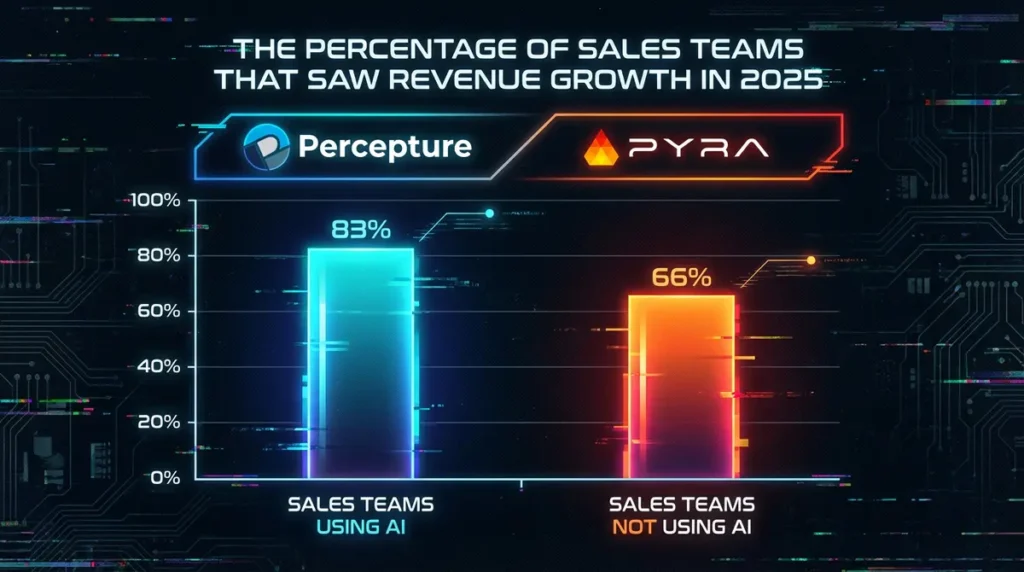
- 81% of sales teams using AI saw revenue growth in 2024, compared to 66% without AI (Salesforce, 2024)
- 83% of sales teams with AI credit it with revenue increases (Salesforce, 2024)
- 61% of B2B buyers prefer a rep-free buying experience (Gartner, 2024)
- Salesforce reports that reps spend only 28% of their week actually selling—the rest is admin, research, and follow-up (Salesforce, 2024)
AI outbound calling isn’t about replacing humans. It’s about freeing them to do what they do best: build relationships, solve complex problems, and close deals.
Here’s what happens next:
- Pilot program: We run a 2-week test with 100–500 calls
- Human approvals: Every script, every disclosure, every workflow is reviewed by your team
- Review-by-exception: You only get involved when something needs attention
- Risk reversal: If it doesn’t work, we refund your pilot investment
Connect with us today!
⚠️ Legal Disclaimer
This article is for informational purposes only and does not constitute legal advice. Telemarketing and call-recording laws vary by jurisdiction and change frequently. Consult qualified legal counsel before launching any AI outbound calling program.